DR Congo declares Ebola outbreak a health emergency with almost 250 suspected cases and nearly 200 deaths.
- DR Congo declares Ebola outbreak a public health emergency
- Nearly 250 suspected Ebola cases reported in recent months
- Almost 200 deaths linked to the outbreak so far
📰 Continuing coverage: WHO declares Ebola emergency as Congo outbreak spreads to Uganda
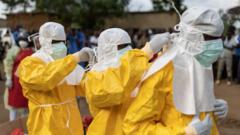
The Democratic Republic of Congo DR Congo has declared its latest Ebola outbreak a public health emergency after health officials confirmed nearly 250 suspected cases, with close to 200 deaths tied to the virus. The World Health Organization WHO made the announcement on Wednesday, marking the second time in two years that DR Congo has raised the alarm over Ebola. The outbreak is centered in the northeastern province of North Kivu, a region still grappling with years of conflict and weak healthcare infrastructure. Experts say the situation is serious but not yet at the scale of the 2014-2016 West Africa Ebola crisis, which killed more than 11,000 people. Still, the death rate in this outbreak is unusually high, hovering around 80%. That’s far above the typical 50% fatality rate seen in past Ebola outbreaks, which makes every case a race against time. Local health workers are struggling to contain the spread because many people refuse to get vaccinated or avoid treatment out of fear or mistrust of authorities. This resistance is fueled by misinformation and the region’s long history of violence and instability, which has made aid work difficult for years. Health teams are also dealing with shortages of protective gear, clean water, and enough burial teams to handle the dead safely. ## Why Ebola keeps coming back in DR Congo Ebola first appeared in DR Congo in 1976, and the country has battled multiple outbreaks since then. The virus spreads through contact with bodily fluids from infected people or animals, often through contaminated surfaces or unsafe burials. This time, the strain is the Zaire ebolavirus—the same one behind the deadliest outbreaks. What’s different now is the scale of the response. The WHO has deployed rapid response teams, and the DR Congo government is working with partners like Doctors Without Borders to isolate cases and trace contacts. Vaccination campaigns have started, but only about 12,000 people have received the experimental Ebola vaccine so far. That’s a fraction of the population at risk in North Kivu, where over 12 million people live in crowded, mobile communities. ## The role of conflict and distrust North Kivu has been a hotspot for armed groups for decades, and many communities distrust government health workers. Some locals believe Ebola is a hoax or a tool used by outsiders to control them. Others fear hospitals more than the virus itself, after years of seeing armed fighters target health facilities. This mistrust slows down efforts to track cases and stop transmission. A recent attack on an Ebola treatment center in Butembo killed a police officer and wounded others, forcing the temporary suspension of operations. The violence has also displaced thousands, making it harder for health teams to reach people in remote areas. ## What’s next for the outbreak? The WHO’s emergency declaration doesn’t impose travel or trade restrictions, but it’s meant to speed up funding and coordination. The UN has already released $1 million in emergency funds, and more is expected from international donors. Still, experts warn that without stronger community engagement and security guarantees, the outbreak could drag on for months. The DR Congo government is urging calm and urging people to report symptoms early. For now, the focus is on isolating cases, vaccinating high-risk groups, and training local health workers to spot and handle Ebola safely. The bigger worry is whether the outbreak will spill over into neighboring Uganda or Rwanda, both of which have porous borders and weaker health systems. So far, no cases have been confirmed outside DR Congo, but the risk remains real. The last time Ebola crossed into Uganda, it took just one infected traveler to spark a deadly outbreak in 2019. For families in North Kivu, the stakes couldn’t be clearer. Many have already lost loved ones, and the fear of more deaths looms large. Health workers are doing everything they can, but without trust and resources, the virus keeps winning.
What You Need to Know
- Source: BBC News
- Published: May 17, 2026 at 13:31 UTC
- Category: World
- Topics: #bbc · #world-news · #international · #ebola · #congo · #ebola-outbreak-dr-congo
Read the Full Story
This is a curated summary. For the complete article, original data, quotes and full analysis:
All reporting rights belong to the respective author(s) at BBC News. GlobalBR News summarizes publicly available content to help readers discover the most relevant global news.
Curated by GlobalBR News · May 17, 2026
Related Articles
- 🎉 250 Articles in World!
- WHO declares Ebola emergency as Congo outbreak spreads to Uganda
- WHO declares Ebola emergency as Congo and Uganda outbreaks surge
🇧🇷 Resumo em Português
O Ministério da Saúde da República Democrática do Congo (RDC) declarou emergência sanitária nacional após registrar mais de 250 casos suspeitos de Ebola, um alerta que reacende o temor de uma crise humanitária em meio à instabilidade política e social do país. A medida, inédita desde a epidemia de 2018-2020, que deixou milhares de mortos, chega em um momento crítico, com a doença avançando em regiões de difícil acesso e alta densidade populacional, onde o sistema de saúde já é frágil.
O surto atual é o mais grave desde a pior epidemia da história do país, que ceifou cerca de 2.200 vidas, e representa uma ameaça direta ao Brasil, dada a crescente circulação de pessoas entre a África Central e a América do Sul, além do risco de disseminação por meio de viajantes assintomáticos. Para os brasileiros, a situação exige atenção redobrada, pois o Ebola, embora com baixa transmissibilidade entre humanos, pode se espalhar rapidamente em áreas sem infraestrutura adequada, como já ocorreu em surtos anteriores na África Ocidental. Especialistas alertam que a proximidade geográfica e os fluxos migratórios tornam a vigilância epidemiológica no Brasil essencial para evitar uma eventual entrada do vírus.
A Organização Mundial da Saúde (OMS) já mobilizou equipes de resposta rápida, mas a situação pede ações coordenadas entre governos africanos e internacionais para conter o avanço da doença antes que ela escape do controle.
🇪🇸 Resumen en Español
El Ministerio de Sanidad de la República Democrática del Congo (RDC) ha elevado la alerta sanitaria al máximo nivel tras confirmar un brote de ébola que ya suma más de 250 casos sospechosos en apenas dos meses.
La declaración de emergencia sanitaria internacional por ébola en la RDC no es un hecho aislado, sino la respuesta a una crisis que se extiende por regiones de difícil acceso y con sistemas de salud frágiles, donde la desconfianza hacia las autoridades y los equipos médicos agrava la propagación. Para los hispanohablantes, este escenario recuerda a epidemias pasadas en África Central, donde la movilidad transfronteriza y la falta de recursos facilitan la expansión de enfermedades infecciosas. La OMS ya advirtió sobre el riesgo de que el virus cruce las fronteras, lo que subraya la importancia de reforzar la vigilancia epidemiológica en países con conexiones aéreas o migratorias con la zona afectada, especialmente en un contexto global donde las pandemias recientes han dejado una huella profunda en la percepción de la salud pública.
BBC News
Read full article at BBC News →This post is a curated summary. All rights belong to the original author(s) and BBC News.
Was this article helpful?

Discussion