Congress’ ‘Maverick Act’ could return F-14 Tomcat jets to U.S. skies with three gifted to an Alabama museum.
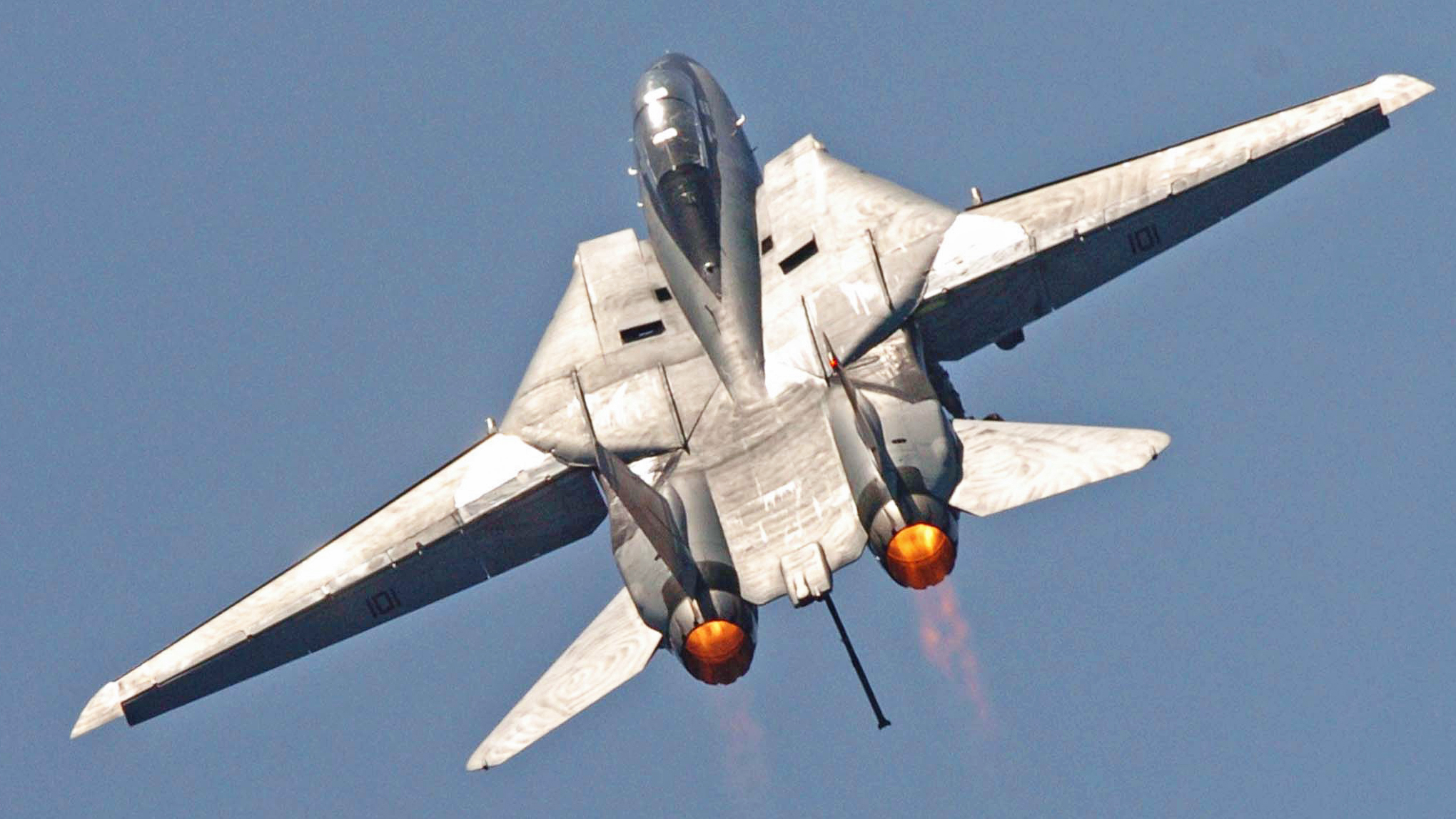
- Congress debates bill to return F-14 Tomcat jets to U.S. skies
- Legislation would gift three F-14Ds to Alabama museum
- Bill dubbed ‘Maverick Act’ after Top Gun franchise
Congress is advancing legislation that could return the legendary F-14 Tomcat to U.S. skies for the first time since the Navy retired the jet in 2006. The ‘Maverick Act,’ introduced in the Senate and House, aims to gift three retired F-14D Tomcats to the U.S. Space Rocket Center museum in Huntsville, Alabama, while also exploring the possibility of returning one of the iconic jets to flight status. Senator Tim Sheehy, a Montana Republican, introduced the Senate version on March 23, with Senator Mark Kelly, an Arizona Democrat, as a co-sponsor. The House companion bill has not yet been assigned a lead sponsor.
The F-14 Tomcat, a twin-engine, twin-tail supersonic fighter, was a cornerstone of U.S. naval aviation for nearly three decades. Originally designed as a fleet defense interceptor in the 1970s, it became famous for its variable-sweep wings and unmatched air-to-air combat capabilities. The jet played a pivotal role in Cold War operations, including during the 1981 Gulf of Sidra incident and the 1986 strikes on Libya. After its retirement in 2006, the F-14 was exclusively flown by Iran, which acquired 44 Tomcats from the U.S. before the 1979 Islamic Revolution.
The ‘Maverick Act’: A push to preserve aviation history
The bipartisan ‘Maverick Act’ bills—named after the fictional Navy Captain Pete Maverick Mitchell from the Top Gun film franchise—seek to preserve the legacy of the F-14 Tomcat by placing three preserved jets in Alabama’s U.S. Space Rocket Center. The museum, known for its vast collection of aerospace artifacts, would gain a significant addition with the Tomcats, which could also be restored to flying condition. The legislation does not specify whether the gifted jets would be airworthy, but it opens the door for future restoration efforts.
The House version of the bill, introduced by Representative Name, aligns with the Senate’s goals but has not yet advanced beyond introduction. If passed, the bill would mark a rare instance of Congress directly influencing military aviation preservation, bypassing the typical process of museums acquiring retired jets through the Department of Defense’s surplus program. The U.S. Space Rocket Center has not yet responded to requests for comment on its plans for the Tomcats.
Why the F-14 Tomcat still captivates aviation enthusiasts
The F-14 Tomcat’s reputation was cemented not only by its combat record but also by its starring role in the 1986 film Top Gun, which immortalized the jet in pop culture. The movie’s fictional depiction of the F-14 as an unbeatable dogfighter—though dramatized—helped cement the jet’s place in aviation history. Enthusiasts argue that restoring a Tomcat to flying condition would honor its legacy and provide a tangible connection to a bygone era of naval aviation.
However, challenges remain. The F-14’s complex systems, including its Pratt & Whitney TF30 engines and variable-sweep wing mechanism, require specialized maintenance. Few remaining airframes have the necessary parts, and skilled mechanics familiar with the jet are increasingly rare. The U.S. Space Rocket Center would need significant resources to restore and maintain a Tomcat, and the Navy has not indicated whether it would provide logistical support.
Broader implications for military aviation preservation
If the ‘Maverick Act’ passes, it could set a precedent for other retired military aircraft to be preserved and potentially returned to flight status. The F-14 is one of the most iconic jets ever built, and its restoration would be a historic achievement for aviation preservationists. Museums across the U.S. have struggled to acquire and maintain Cold War-era jets, often relying on donations or private funding. This legislation could streamline the process for other iconic aircraft, such as the F-15 Eagle or the SR-71 Blackbird.
For now, the bill remains in the early stages of the legislative process. The Senate Armed Services Committee has not scheduled hearings, and the House version has not seen movement. Advocates for the Tomcat’s return hope that the bill’s cultural ties to Top Gun will accelerate its progress. If successful, aviation enthusiasts could see the F-14 Tomcat soaring over U.S. skies within the next few years, a sight not witnessed since the jet’s retirement nearly two decades ago.
What You Need to Know
- Source: The Drive
- Published: May 07, 2026 at 15:28 UTC
- Category: War
- Topics: #military · #weapons · #conflict · #war · #nato · #tomcat-may-actually
Read the Full Story
This is a curated summary. For the complete article, original data, quotes and full analysis:
All reporting rights belong to the respective author(s) at The Drive. GlobalBR News summarizes publicly available content to help readers discover the most relevant global news.
Curated by GlobalBR News · May 07, 2026
Related Articles
🇧🇷 Resumo em Português
O governo dos Estados Unidos estuda ressuscitar um ícone da aviação militar ao propor a volta dos lendários caças F-14 Tomcat ao espaço aéreo norte-americano, mais de duas décadas após sua aposentadoria. Um projeto de lei em tramitação no Congresso busca autorizar a doação de três unidades do modelo F-14D — desativado em 2006 — para um museu no estado do Alabama, reacendendo a nostalgia de uma aeronave que marcou a Guerra Fria e o cinema global.
A iniciativa, apelidada de “Maverick Act” em homenagem ao famoso piloto do filme Top Gun, ganha relevância no Brasil não apenas pela importância histórica do Tomcat, mas também por refletir uma tendência global de preservação de equipamentos militares emblemáticos. Para o País, que mantém uma relação estratégica com a defesa e a indústria aeroespacial, o caso levanta discussões sobre o valor de se manter acervo tecnológico de ponta, seja para estudos, museus ou até mesmo possíveis modernizações futuras. Além disso, o tema pode inspirar debates sobre a gestão de ativos militares no Brasil, especialmente diante da necessidade de renovação da frota de caças da FAB.
Se aprovado, o projeto não só trará de volta ao céu um dos aviões mais icônicos da história, como também pode redefinir como nações lidam com a preservação de sua herança militar no século XXI.
🇪🇸 Resumen en Español
El Congreso de EE.UU. da un paso atrás en el tiempo al impulsar la recuperación de los míticos cazas F-14 Tomcat, desprogramados hace dos décadas, en un guiño nostálgico a la Guerra Fría.
La propuesta, bautizada como Ley Maverick en honor al icónico piloto de Top Gun, busca revivir tres unidades del modelo F-14D para su exhibición en un museo de Alabama, aunque su reactivación operativa sigue siendo un debate abierto. Más allá del simbolismo, el movimiento refleja tensiones entre la preservación histórica y la modernización militar, en un contexto donde Washington reajusta su estrategia frente a Rusia y China. Para el público hispanohablante, subraya cómo Washington equilibra nostalgia y pragmatismo en su arsenal, mientras el mundo observa si estos “gatos de combate” vuelven a rugir.
The Drive
Read full article at The Drive →This post is a curated summary. All rights belong to the original author(s) and The Drive.
Was this article helpful?


Discussion