Hantavirus outbreak strands cruise passengers at sea as health officials warn of possible infections.
- Officials quarantine Antarctic cruise ship over hantavirus outbreak
- Passengers face days at sea as disease may have spread
- Health authorities monitor situation amid calm reports
📰 Continuing coverage: 18 Americans airlifted home after hantavirus outbreak on cruise ship
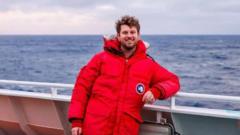
Aboard the MV Hondius, passengers described orderly conditions Sunday despite a sudden quarantine that has left them stranded in Antarctic waters. Norwegian health authorities ordered the lockdown after a crew member tested positive for hantavirus, a rare rodent-borne disease that can cause severe respiratory illness in humans.
While passengers reported no panic, the situation has forced extended delays to their expedition voyage. Authorities confirmed the crew member’s positive test and warned the disease may have spread among others onboard. The Norwegian Institute of Public Health is coordinating the response, though no additional cases have been officially confirmed.
Health protocols underway as passengers await further testing
The MV Hondius, operated by Holland America Line affiliate Hilmar Reksten, remains anchored off the coast of Antarctica as health teams assess the outbreak. Passengers said they are following quarantine instructions but remain uncertain about how long the ordeal will last. Food and supplies are being delivered, and medical staff are monitoring symptoms.
Hantavirus is not contagious person-to-person but spreads through contact with infected rodents or their droppings. Symptoms include fever, muscle aches, and difficulty breathing, which can progress to hantavirus pulmonary syndrome, a life-threatening condition. The virus is rare, with only about 20 cases reported annually in the U.S., according to the U.S. Centers for Disease Control and Prevention.
Cruise industry faces scrutiny over health response
The incident raises questions about preparedness aboard expedition vessels operating in remote regions. Unlike standard cruise ships, expedition ships often carry passengers to isolated destinations with limited access to medical facilities. Authorities have not yet determined the source of the outbreak but are investigating potential exposure routes, including food storage areas or onboard storage facilities.
Passengers described the mood as tense but orderly, with crew members distributing masks and sanitizing common areas. Social media posts from those onboard show passengers in good spirits but eager for resolution. One traveler told reporters the group was “cooperating fully” with health officials while awaiting further guidance.
Health authorities plan to test all passengers and crew for hantavirus antibodies to assess the outbreak’s scope. Results are expected within 48 hours, though officials cautioned that negative tests do not rule out potential exposure. The ship is not permitted to disembark until clearance is granted, delaying return trips for many travelers with scheduled flights home.
The incident underscores the challenges of managing health risks in cramped, high-density environments like expedition ships. Unlike larger cruise liners, these vessels often lack onboard intensive care units, relying instead on rapid evacuation plans if medical emergencies arise. Authorities are reviewing protocols to prevent similar outbreaks in the future.
What You Need to Know
- Source: BBC News
- Published: May 06, 2026 at 11:52 UTC
- Category: Health
- Topics: #bbc · #health · #medicine · #war · #conflict · #cruise
Read the Full Story
This is a curated summary. For the complete article, original data, quotes and full analysis:
All reporting rights belong to the respective author(s) at BBC News. GlobalBR News summarizes publicly available content to help readers discover the most relevant global news.
Curated by GlobalBR News · May 06, 2026
Related Articles
- Why ‘Ballmaxxing’ May Be More Dangerous Than You Think
- Woman thrives 30 years after 1996 HIV diagnosis at age 74
- 18 Americans airlifted home after hantavirus outbreak on cruise ship
🇧🇷 Resumo em Português
Um navio de expedição na Antártida transformou-se em uma armadilha flutuante para centenas de passageiros após a confirmação de um surto de hantavírus a bordo do MV Hondius. Passageiros relataram dias de isolamento em cabines, com relatos de sintomas como febre, dores musculares e dificuldades respiratórias, enquanto as autoridades sanitárias tentam conter a propagação do vírus em alto-mar, onde opções de evacuação são praticamente inexistentes.
O hantavírus, transmitido principalmente por roedores, mas também por aerossóis em ambientes fechados, representa um risco preocupante em um navio lotado, onde o compartilhamento de espaços reduzidos facilita a transmissão. No Brasil, onde doenças como a leptospirose e a febre hemorrágica já são monitoradas em áreas urbanas, o caso reacende alertas sobre a importância da vigilância sanitária em ambientes confinados, especialmente em meio ao turismo de aventura e expedições polares cada vez mais populares. Especialistas destacam que, embora casos de hantavírus sejam raros no país, a situação no MV Hondius serve como um lembrete sobre os riscos de doenças infecciosas em viagens internacionais.
Enquanto a tripulação e autoridades sanitárias buscam conter o surto, a empresa responsável pelo navio já avalia protocolos de evacuação, mas a logística em pleno oceano e as condições climáticas adversas da Antártida tornam a missão extremamente complexa.
🇪🇸 Resumen en Español
Una expedición antártica se ha visto alterada por un brote de hantavirus a bordo del crucero MV Hondius, dejando a decenas de pasajeros varados en alta mar mientras las autoridades sanitarias evalúan el riesgo de contagio.
El brote, confirmado por funcionarios de salud, ha obligado a los pasajeros a extremar precauciones en un entorno cerrado donde el virus puede propagarse por contacto con roedores o sus excrementos. Aunque el hantavirus es poco común en estas latitudes, su aparición en un barco con rutas turísticas hacia la Antártida plantea dudas sobre los protocolos de prevención en expediciones remotas, donde el acceso a atención médica es limitado. Para los viajeros hispanohablantes que planean este tipo de travesías, el incidente subraya la importancia de conocer los riesgos sanitarios en destinos extremos y exigir garantías en las embarcaciones.
BBC News
Read full article at BBC News →This post is a curated summary. All rights belong to the original author(s) and BBC News.
Was this article helpful?


Discussion