Honda cancels EVs after $9B loss and pushes hybrids instead after U.S. EV sales plummet 28%.
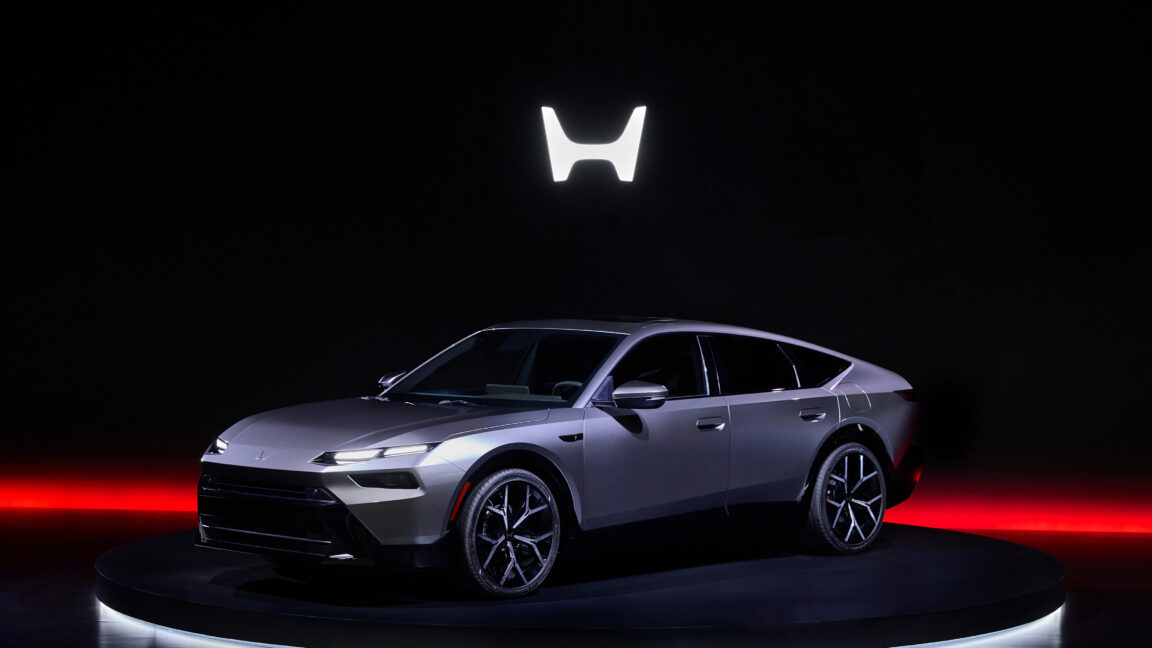
- Honda lost $9 billion on EVs and canceled five planned electric models
- U.S. EV sales fell 28% in early 2025 after tax breaks ended and tariffs hit
- Honda now focuses on hybrids like the new Accord and CR-V hybrids
Honda revealed its latest hybrids for America this week, a sharp turn from the company’s earlier push into all-electric vehicles. The new models—including a hybrid Accord and a hybrid CR-V—come right after Honda wrote off $9 billion tied to its abandoned EV plans. The company also canceled three EVs slated for an Ohio factory and two more planned in Canada, marking a major retreat from its once-bold electric ambitions. Honda hasn’t turned its back on electrification entirely, but it’s clearly hitting pause on the all-EV route for now. The shift reflects a brutal reality hitting automakers: U.S. buyers are walking away from EVs in droves after federal tax credits disappeared and new tariffs made electric cars more expensive. EV sales dropped 28% in the first three months of 2025 compared with last year, according to industry data. That’s a stunning reversal from the EV boom days of 2022 and 2023, when tax credits and corporate promises fueled record growth. Now, automakers are scrambling to recast their strategies, and Honda’s move is one of the boldest so far. The company still plans to sell some battery-only models, like the Prologue SUV built with General Motors, but the focus has shifted to hybrids as a bridge technology. Honda’s U.S. CEO Tsutomu Otani said the company needs to adapt fast or risk losing even more ground to rivals like Toyota, which has leaned harder on hybrids and even mild hybrids as safer bets. The new Accord Hybrid and CR-V Hybrid hit showrooms this fall with better fuel economy and lower prices than their gas-only siblings. Honda claims the Accord Hybrid will deliver up to 48 mpg in the city, while the CR-V Hybrid tops 40 mpg. Those numbers matter because gas prices have stayed stubbornly high, and buyers are hunting for ways to save at the pump without fully committing to an EV. The hybrids also avoid the charging anxiety that’s kept many drivers away from battery-only cars. But the strategy isn’t without risks. Honda’s about-face on EVs could frustrate customers who bought into the company’s green promises. It also raises questions about whether Honda will fall behind in the long run if rivals like Tesla or Ford double down on affordable EVs. The U.S. market is still the world’s biggest for cars, and the stakes couldn’t be higher. Detroit’s Big Three—Ford, GM, and Stellantis—are all betting big on EVs, even as sales slow. Meanwhile, Chinese automakers are flooding the market with cheaper electric models, putting more pressure on traditional players. Honda’s hybrid gamble buys time, but it’s a gamble nonetheless. The company insists it’s not giving up on EVs forever. Executives say they’ll return to the electric game once battery costs drop and the U.S. charging network improves. For now, though, the focus is on hybrids as the most practical way to meet fuel economy rules and keep customers happy. The new models arrive as Honda reports its first annual loss in its 114-year history, a direct result of the EV write-downs and weaker sales. The company lost $1.3 billion in its latest fiscal year, a steep decline from the $4.3 billion profit it posted just two years ago. Investors aren’t thrilled, but Honda’s stock has stabilized after the worst of the sell-off. Analysts say the hybrid push could help the company regain its footing while it waits for the EV market to stabilize. The big question is whether American drivers will buy the change of heart. Hybrid sales have been climbing steadily, but they still make up less than 10% of the U.S. market. Convincing buyers to trust hybrids as a long-term solution—rather than a temporary fix—will be Honda’s next hurdle. For now, the new hybrids are here, and Honda is betting its future on them.
What You Need to Know
- Source: Ars Technica
- Published: May 15, 2026 at 15:56 UTC
- Category: Technology
- Topics: #arstechnica · #tech · #science · #gadgets · #electric-vehicle
Read the Full Story
This is a curated summary. For the complete article, original data, quotes and full analysis:
All reporting rights belong to the respective author(s) at Ars Technica. GlobalBR News summarizes publicly available content to help readers discover the most relevant global news.
Curated by GlobalBR News · May 15, 2026
Related Articles
🇧🇷 Resumo em Português
A Honda decidiu dar um passo atrás nos planos de eletrificação pura nos EUA e aposta agora em híbridos como solução imediata para o mercado norte-americano, após registrar um prejuízo bilionário de US$ 9 bilhões na estratégia de veículos elétricos. A montadora japonesa anunciou o lançamento de novos modelos híbridos para o mercado americano, sinalizando uma mudança de rota diante dos desafios recentes, como a queda de 28% nas vendas de EVs em 2024, influenciada por políticas protecionistas e sobretaxas que encareceram os carros elétricos no país.
No Brasil, onde o debate sobre a transição energética dos veículos ainda ganha força, a decisão da Honda levanta questões sobre o futuro da mobilidade elétrica no mercado nacional. Embora o país ainda não enfrente os mesmos desafios tarifários dos EUA, a estratégia da montadora serve como um termômetro para o setor, indicando que a dependência exclusiva de elétricos pode não ser viável no curto prazo. Especialistas apontam que a aposta em híbridos — que combinam motores a combustão e elétricos — pode ser uma ponte mais realista para a redução de emissões, especialmente em um país com infraestrutura de recarga ainda em desenvolvimento.
A próxima etapa será observar se a estratégia híbrida da Honda será bem recebida pelos consumidores e se outras montadoras seguirão pelo mesmo caminho, redefinindo os rumos da indústria automotiva global.
🇪🇸 Resumen en Español
La multinacional japonesa Honda apuesta por los híbridos en EE.UU. tras registrar pérdidas millonarias en su apuesta eléctrica y desplomar un 28 % sus ventas de vehículos 100 % eléctricos este año. La compañía ha decidido dar un giro estratégico en el mercado estadounidense, donde ahora prioriza modelos con motor de combustión combinado con baterías para adaptarse a las nuevas realidades económicas y regulatorias.
Este cambio refleja las dificultades que enfrentan los fabricantes ante los ajustes en las políticas de incentivos fiscales y los aranceles que han encarecido la producción de coches eléctricos en Norteamérica. Para los consumidores hispanohablantes en EE.UU., especialmente aquellos con menos recursos, la oferta de híbridos —más accesibles y con autonomía extendida— podría suponer una alternativa viable mientras se resuelven los obstáculos que frenan la adopción masiva de la electromovilidad. La decisión de Honda también subraya la volatilidad de un sector en transición, donde las estrategias corporativas se reajustan a ritmo de los vaivenes políticos y las demandas del mercado.
Ars Technica
Read full article at Ars Technica →This post is a curated summary. All rights belong to the original author(s) and Ars Technica.
Was this article helpful?


Discussion