Launch SpaceX’s Starship V3 on May 19 from Texas to test deep-space travel tech.
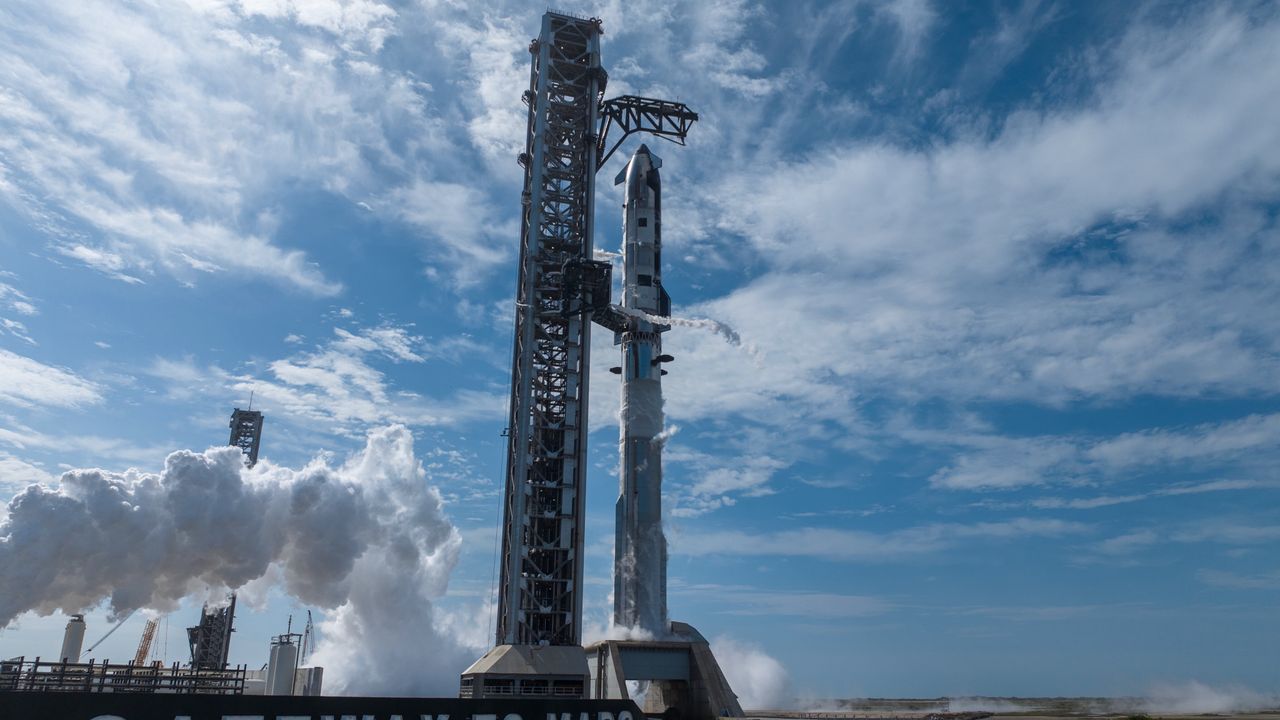
- SpaceX schedules Starship V3 debut for May 19 from Texas
- Rocket designed for moon and Mars missions
- Test flight marks next step in SpaceX’s reusable rocket program
📰 Continuing coverage: SpaceX Starship V3: Key upgrades revealed in next-gen moon rocket
SpaceX Elon Musk’s private spaceflight company has officially set May 19 as the target date for the first launch of its Starship Version 3, a next-generation megarocket poised to advance human exploration beyond Earth. The uncrewed test flight will depart from the company’s Starbase launch site in Boca Chica, Texas, a coastal facility optimized for large-scale rocket development and testing.
The Starship V3 represents a significant evolution from earlier prototypes, incorporating design refinements and performance upgrades aimed at increasing payload capacity, reliability, and reusability. With a planned lift capacity of over 100 metric tons to low Earth orbit, the rocket is central to NASA’s Artemis program, which aims to return humans to the moon and eventually support missions to Mars. SpaceX has emphasized the vehicle’s role in enabling sustainable lunar and Martian settlements.
First integrated test flight
This inaugural flight will be the first integrated test of the full Starship V3 stack, including the massive Super Heavy booster and the upper-stage Starship spacecraft. Unlike previous suborbital tests, this mission will attempt to reach Earth orbit, a critical milestone for SpaceX’s long-term plans. The company has not announced specific orbital parameters but has filed flight plans with U.S. aviation authorities indicating a high-altitude trajectory over the Gulf of Mexico and Pacific Ocean.
Rehearsals completed ahead of launch
On May 11, SpaceX conducted a full launch rehearsal at Starbase, simulating all pre-flight procedures including fueling, countdown, and abort systems. The exercise, known as a wet dress rehearsal, is standard for SpaceX before any major launch attempt. Engineers reviewed data from the test to confirm system readiness, though minor adjustments may still occur before the final launch window opens on the morning of May 19.
Regulatory and technical hurdles cleared
The Federal Aviation Administration (FAA) completed its environmental review of the Starship program in 2023, granting SpaceX clearance for orbital launches from Texas. However, additional safety and mission assurance checks remain under review ahead of liftoff. SpaceX has also updated emergency protocols following lessons learned from earlier Starship tests, including the spectacular—but ultimately unsuccessful—April 2023 integrated flight that ended in an explosion shortly after launch.
What to expect during the flight
During the roughly 90-minute mission, the Super Heavy booster will separate about three minutes after liftoff and attempt a controlled splashdown in the Gulf of Mexico. The upper stage will continue toward orbit, deploying a small payload simulator and conducting several system demonstrations before attempting a soft splashdown in the Pacific Ocean near Hawaii. SpaceX will not attempt to recover either stage during this test flight.
If successful, this mission will validate key technologies that could reduce the cost of space travel by up to 90% compared to traditional expendable rockets, according to industry analysts. Such cost reductions are essential for NASA’s lunar ambitions and for SpaceX’s goal of building a self-sustaining city on Mars. Failure, while possible, would provide critical data to refine the next iteration.
Broader implications for space exploration
Beyond NASA and Mars plans, Starship V3 could transform satellite deployment, in-space manufacturing, and even point-to-point Earth travel. Its massive payload volume—comparable to a small apartment—allows for deploying entire satellite constellations in single launches, potentially accelerating broadband internet and Earth observation networks. Competitors like Blue Origin and international agencies are closely monitoring the outcome, as leadership in heavy-lift rocketry reshapes global space priorities.
What You Need to Know
- Source: Space.com
- Published: May 12, 2026 at 22:34 UTC
- Category: Science
- Topics: #space · #astronomy · #nasa · #science · #starship · #starship-version
Read the Full Story
This is a curated summary. For the complete article, original data, quotes and full analysis:
All reporting rights belong to the respective author(s) at Space.com. GlobalBR News summarizes publicly available content to help readers discover the most relevant global news.
Curated by GlobalBR News · May 12, 2026
🇧🇷 Resumo em Português
A SpaceX marcou o dia 19 de maio para o primeiro lançamento da sua revolucionária Starship V3, a megafoguete que promete redefinir a exploração espacial com missões mais ambiciosas rumo à Lua e a Marte. Com um design aprimorado e capacidade ampliada, a empresa de Elon Musk busca não apenas superar os desafios técnicos de viagens interplanetárias, mas também consolidar o Brasil como um ator estratégico no novo ciclo da corrida espacial.
O Brasil, que já abriga o Centro de Lançamento de Alcântara no Maranhão — uma das bases mais estratégicas do mundo devido à sua proximidade com a Linha do Equador — tem muito a ganhar com esse avanço. A Starship V3, com sua maior capacidade de carga e reutilização otimizada, pode transformar a participação brasileira em parcerias internacionais, atraindo investimentos e tecnologia para o programa espacial nacional. Além disso, o sucesso do lançamento poderia impulsionar a indústria aeroespacial brasileira, que vem ganhando relevância com projetos como o Veículo Lançador de Microssatélites (VLM).
Se o teste for bem-sucedido, a SpaceX não apenas pavimentará o caminho para missões tripuladas à Lua e, futuramente, a Marte, como também abrirá novas possibilidades para o Brasil se posicionar como um hub de lançamentos comerciais na América Latina.
🇪🇸 Resumen en Español
SpaceX marca el 19 de mayo para el primer lanzamiento de su Starship V3, un avance que promete revolucionar la exploración espacial. La compañía de Elon Musk apuesta por esta versión mejorada de su megacohete para impulsar misiones tripuladas a la Luna y Marte, superando los desafíos técnicos que hasta ahora han frenado estos ambiciosos proyectos.
El lanzamiento, programado desde Boca Chica (Texas), no solo será un hito para SpaceX, sino que también redefine las posibilidades de la carrera espacial. Para los hispanohablantes, especialmente en países con creciente interés en ciencia y tecnología, esta prueba simboliza un paso más hacia la colonización de otros planetas. Además, abre nuevas oportunidades en colaboración internacional y en el desarrollo de tecnología accesible, clave para democratizar el acceso al espacio.
Space.com
Read full article at Space.com →This post is a curated summary. All rights belong to the original author(s) and Space.com.
Was this article helpful?


Discussion