UK researchers claim to have found an Anne Boleyn sketch, but historians remain skeptical.
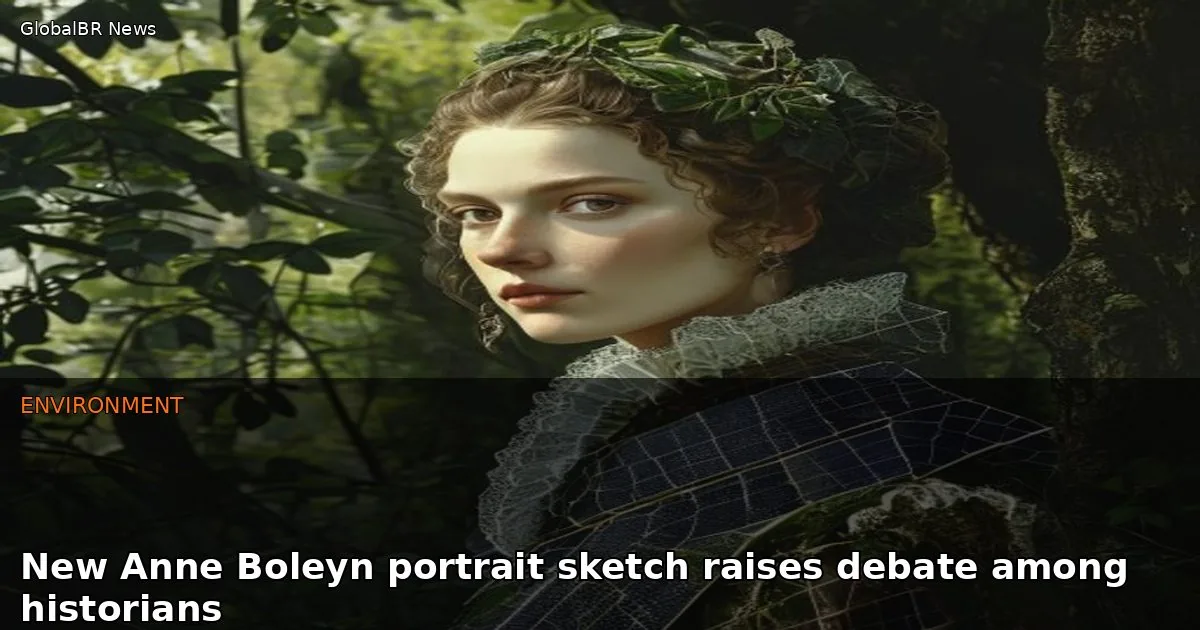
- Researchers say sketch may be first authentic portrait of Anne Boleyn
- Sketch shows Boleyn with distinct features, challenging traditional images
- Historians question sketch’s provenance and dating
A team of computer scientists from University of Durham says it has uncovered a previously unknown sketch of Anne Boleyn, the second wife of King Henry VIII, which could rewrite historical depictions of the controversial figure. The drawing, dated to the 16th century, shows Boleyn with distinct facial features that differ from traditional portraits. However, not all historians accept the claim, citing concerns over authenticity and provenance.
The sketch, held in a private collection, was analyzed using AI-driven facial recognition and historical records. Researchers compared the drawing to verified portraits of Boleyn, including the National Portrait Gallery’s depiction, and found similarities in bone structure and facial proportions. The team argues this is the closest known representation of Boleyn’s real appearance.
AI and History Collide
The discovery has reignited debate over how historical figures should be depicted. Traditional portraits of Boleyn, such as the famous Hever Castle image, were commissioned years after her death and may reflect idealized or politically motivated portrayals. The newly analyzed sketch, if genuine, could challenge long-held assumptions about her appearance.
Historians like Tracy Borman, a biographer of Tudor figures, have expressed skepticism. Borman points out that the sketch lacks clear documentation linking it directly to Boleyn. Without provenance, she argues, the claim remains speculative. Other experts suggest the drawing could be a later copy or even a forgery.
What Happens Next?
The research team plans to submit the sketch for carbon dating and further forensic analysis to determine its age and origin. If the dating confirms a 16th-century origin, it could bolster the case for authenticity. The findings will also be peer-reviewed in a forthcoming academic paper.
The debate extends beyond Boleyn’s appearance. Historians argue that even if the sketch is real, it represents a single moment in time and may not reflect her true likeness in all portraits. The discussion highlights the challenges of reconstructing historical identities from fragmented evidence.
The sketch’s owner, who wishes to remain anonymous, has agreed to allow limited public access for further study. Meanwhile, museums and historians are divided on whether to incorporate the new image into official records or exhibitions.
The discovery underscores the growing role of technology in historical research, but it also reminds us of the limits of evidence when reconstructing the past.
What You Need to Know
- Source: BBC News
- Published: May 01, 2026 at 23:01 UTC
- Category: Environment
- Topics: #bbc · #environment · #climate · #anne-boleyn · #king-henry · #anne-boleyn-portrait-sketch
Read the Full Story
This is a curated summary. For the complete article, original data, quotes and full analysis:
All reporting rights belong to the respective author(s) at BBC News. GlobalBR News summarizes publicly available content to help readers discover the most relevant global news.
Curated by GlobalBR News · May 01, 2026
🇧🇷 Resumo em Português
O mistério em torno da rainha Anne Boleyn, executada há quase 500 anos, ganha um novo capítulo com a suposta descoberta de um esboço inédito que poderia reescrever a história. A imagem, atribuída à segunda esposa de Henrique VIII, foi revelada por cientistas da computação e já acende o debate entre historiadores sobre sua autenticidade.
O desenho em questão, encontrado em um manuscrito do século XVI, retrata uma mulher com traços que coincidem com descrições de Anne Boleyn, como o nariz proeminente e o cabelo escuro. No entanto, especialistas divergem: enquanto alguns veem na obra uma evidência crucial sobre a aparência física da rainha, outros questionam sua proveniência e a técnica utilizada para identificá-la. Para o Brasil, onde a história da monarquia britânica é amplamente estudada, a polêmica resgata discussões sobre a representação de figuras femininas poderosas no passado e como a ciência pode — ou não — desvendar segredos guardados por séculos.
Se comprovada, a descoberta reforçaria a importância de Anne Boleyn não apenas como vítima política, mas como uma das mulheres mais influentes da Inglaterra Tudor, cujo legado ainda reverbera na cultura europeia. Até lá, o mistério permanece aberto, alimentando tanto a curiosidade quanto a cautela dos pesquisadores.
BBC News
Read full article at BBC News →This post is a curated summary. All rights belong to the original author(s) and BBC News.
Was this article helpful?


Discussion