North Korean women’s football team plays historic match in South Korea after eight-year absence.
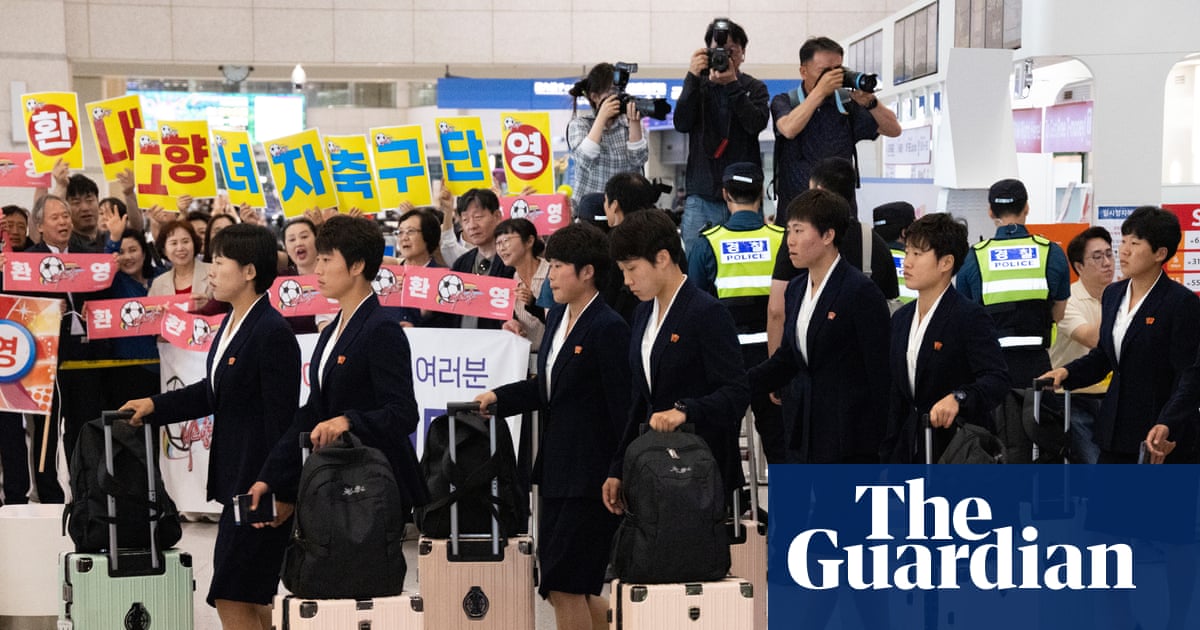
- North Korean women’s team Naegohyang FC arrived in South Korea for the first time in eight years.
- They entered on Sunday ahead of Wednesday’s AFC Women’s Champions League semi-final against Suwon FC Women.
- The 27 players and 12 staff represent the first North Korean athletes to visit the South since 2016.
Twenty-seven North Korean footballers and twelve staff flew into South Korea on Sunday, marking the country’s first sports delegation visit in eight years. The team, Naegohyang FC, landed at Incheon International Airport before traveling to Suwon for Wednesday’s Asian Football Confederation (AFC) Women’s Champions League semi-final against South Korea’s Suwon FC Women. The match is scheduled for 7 p.m. local time at Suwon World Cup Stadium, where fans will get their first glimpse of North Korean athletes on South Korean soil since 2016, when a wrestling team briefly visited for a youth tournament in Gumi. South Korean officials confirmed the delegation entered through the western border city of Paju, the same crossing used for limited sports exchanges in the past, though no inter-Korean sports events have taken place since then. The International Olympic Committee has allowed North Korea’s participation in international competitions, but direct sporting exchanges between the two Koreas remain rare due to political tensions. This visit comes just months after North Korean athletes competed in the 2024 Paris Olympics under the neutral flag of the Korea Mixed Team, a compromise arrangement due to ongoing bans on the country’s national symbols. The team’s arrival follows months of behind-the-scenes negotiations, likely involving the Asian Football Confederation and South Korea’s football association, which approved the travel permits. Naegohyang FC, based in Pyongyang, has won five consecutive women’s league titles in North Korea, but their international record is less known. Their last recorded match outside North Korea was a 2019 friendly in China, where they lost 3-0 to Jiangsu Suning. South Korean football officials say the match is ‘strictly a sporting event’ and not a political gesture, though the timing—just weeks after North Korea’s leader Kim Jong-un reiterated his country’s stance on unification—adds symbolic weight. The AFC Women’s Champions League is Asia’s top club competition, and Suwon FC Women advanced after beating Thailand’s BG Pathum 2-1 in the quarter-finals last month. Suwon, a city just 35 kilometers south of Seoul, is preparing for a rare international crowd that includes diplomats and journalists alongside regular fans. Security around the stadium has been tightened, though South Korea’s unification ministry insists there’s ‘no change in policy’ regarding North Korean visitors. The match will be broadcast live on South Korean TV and streamed internationally, with commentary in Korean, English, and Mandarin. If Naegohyang FC wins, they’ll face the winner of the other semi-final between Chinese Taipei’s Taichung Blue Whale and Vietnam’s Hanoi Women’s in the final on Friday. There’s no word yet on whether the North Korean team will stay for post-match activities beyond the stadium, a common practice in international tournaments where delegations often leave immediately after their games. The visit’s brevity reflects the fragile nature of sports diplomacy between the two Koreas, where even small openings can close quickly. For the players, it’s a chance to test their skills against a different style of football, while for fans on both sides, it’s a rare moment of connection—one that might not happen again soon.
What You Need to Know
- Source: The Guardian
- Published: May 17, 2026 at 08:56 UTC
- Category: World
- Topics: #guardian · #world-news · #international · #sports · #football · #champions-league
Read the Full Story
This is a curated summary. For the complete article, original data, quotes and full analysis:
All reporting rights belong to the respective author(s) at The Guardian. GlobalBR News summarizes publicly available content to help readers discover the most relevant global news.
Curated by GlobalBR News · May 17, 2026
Related Articles
- 🎉 250 Articles in World!
- WHO declares Ebola emergency as Congo outbreak spreads to Uganda
- WHO declares Ebola outbreak in DR Congo a global emergency
🇧🇷 Resumo em Português
Pela primeira vez em oito anos, atletas da Coreia do Norte pisam em solo sul-coreano para uma competição esportiva, marcando um raro momento de distensão entre os dois países rivais. A chegada da equipe feminina de futebol Naegohyang FC a Seul, para enfrentar o Suwon FC Women na semifinal da AFC Women’s Champions League, não é apenas um evento esportivo, mas um sinal simbólico de aproximação entre nações há décadas divididas por um muro político e ideológico.
Embora o torneio seja de futebol, seu significado transcende o esporte. Desde 2016, a Coreia do Norte não permitia que suas delegações participassem de eventos internacionais na Coreia do Sul, em meio a tensões geopolíticas cada vez mais acirradas. A participação da Naegohyang FC, mesmo que em um contexto restrito, pode abrir brechas para novas interações, ainda que tímidas, entre os dois regimes. Para o Brasil, que mantém relações diplomáticas com Pyongyang e Seul, o episódio reforça a importância do esporte como ferramenta de diplomacia, especialmente em um momento em que o mundo assiste a um recrudescimento de conflitos e divisões ideológicas.
O próximo passo será observar se essa participação desencadeará novas aproximações ou se será apenas um lampejo de esperança em meio à frieza das relações intercoreanas.
🇪🇸 Resumen en Español
Tras ocho años de sequía en el intercambio deportivo entre las dos Coreas, la selección femenina de fútbol de Corea del Norte ha cruzado la frontera simbólica para disputar las semifinales de la Liga de Campeones Asiática en Seúl, un gesto que trasciende el deporte y reaviva el debate sobre la diplomacia a través del balompié. El equipo Naegohyang FC, recibido con expectación, afronta un duelo contra el Suwon FC Women en un certamen que, más allá de lo competitivo, sirve como termómetro de las tensas pero fluctuantes relaciones entre ambos países.
El encuentro no solo rompe el hielo en un panorama geopolítico marcado por sanciones y desconfianzas, sino que ofrece a los aficionados hispanohablantes un espejo de cómo el fútbol, a menudo relegado a mero entretenimiento, puede convertirse en un puente inesperado en contextos de división. Para los lectores, este hito recuerda que, incluso en las rivalidades más enconadas, el deporte sigue siendo un lenguaje universal capaz de abrir grietas en muros políticos, al tiempo que invita a reflexionar sobre el papel de los eventos internacionales como catalizadores de acercamiento, más allá de los discursos oficiales.
The Guardian
Read full article at The Guardian →This post is a curated summary. All rights belong to the original author(s) and The Guardian.
Was this article helpful?



Discussion