Hungary’s new PM exposes Orban’s $10 million art collection and luxury offices in viral videos.
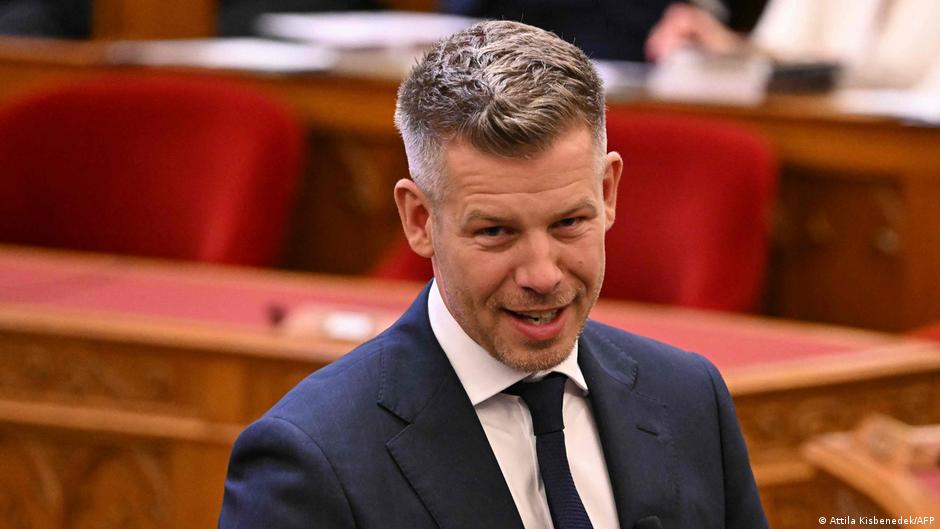
- New PM Peter Magyar releases videos showing Orban’s luxury offices
- Footage reveals nearly 100 paintings from Hungary’s National Gallery
- Videos viewed eight million times in 24 hours
Hungary’s new Prime Minister Peter Magyar has sparked nationwide debate after releasing videos from Viktor Orban’s former official residences and two ministries, exposing lavish spending that starkly contrasts with the ousted leader’s public image. The footage, which includes rooms adorned with gold fixtures, chandeliers, and ornate furnishings, has drawn eight million views in a single day—a significant number in a country of just under 10 million people. Magyar, a pro-European conservative who took office in May 2026, said touring Orban’s Buda Castle residence reminded him of Nicolae Ceausescu’s extravagant palaces in Romania. Orban, who frequently touted his rural upbringing and modest origins, had decorated his official spaces with nearly 100 paintings borrowed from the Hungarian National Gallery, some valued at over $1 million each. Experts estimate the art collection alone could be worth more than $10 million.
Public reaction and political fallout
The videos have gone viral across Hungarian social media, with many users expressing outrage over the contrast between Orban’s austerity rhetoric and the opulent spending. Opposition figures have seized on the footage to demand further scrutiny of Orban’s administration. “This is not about politics; it’s about transparency,” said one Budapest resident. “If our leaders are living like kings while telling us to tighten our belts, something is deeply wrong.” The revelations have also drawn international attention, with European Union officials calling for Hungary to address concerns about public spending and governance. Orban, who ruled Hungary since 2010, has not publicly responded to the videos but has previously defended his use of official residences as necessary for representing the state.
Historical parallels and public memory
The exposure of Orban’s lavish lifestyle echoes past scandals involving deposed autocrats in Eastern Europe. Footage of Nicolae Ceausescu’s gold-plated bathrooms and Viktor Yanukovych’s private estate in Ukraine became symbols of their regimes’ excesses. Analysts suggest Magyar’s move may be an attempt to distance his government from Orban’s legacy of centralized power and perceived corruption. “These images tap into deep public resentment,” said a political scientist at Eötvös Loránd University. “For many Hungarians, Orban’s rhetoric about simplicity and sacrifice rang hollow against the reality of his administration’s spending.”
Legal and institutional responses
Hungary’s new government has announced an audit of all official residences and state-owned properties to review spending and asset use. The move follows promises to restore public trust in government institutions. “We must ensure that public funds are used responsibly,” Magyar said in a statement. The audit could lead to legal action against former officials or staff involved in the procurement and display of the artworks. Meanwhile, critics argue that the damage to Orban’s reputation is already irreversible, with the videos serving as a cautionary tale about unchecked power. The scandal also raises questions about the future of Hungary’s cultural heritage, as some of the paintings in the videos were part of state collections that have faced funding cuts in recent years.
What’s next for Hungary
The fallout from the videos is expected to dominate Hungary’s political discourse in the coming months, with opposition parties pushing for broader reforms. Magyar’s government has pledged to hold Orban’s allies accountable and implement stricter oversight of state spending. However, some analysts warn that without deeper structural changes, public skepticism may persist. For now, the videos have become a symbol of Hungary’s transition—a moment where the curtain was pulled back on a decade of rule marked by centralized control and perceived decadence. The government’s next steps could determine whether this moment leads to lasting reform or merely a temporary shift in public perception.
What You Need to Know
- Source: Deutsche Welle
- Published: May 14, 2026 at 06:10 UTC
- Category: World
- Topics: #europe · #world-news · #politics · #government · #hungary
Read the Full Story
This is a curated summary. For the complete article, original data, quotes and full analysis:
All reporting rights belong to the respective author(s) at Deutsche Welle. GlobalBR News summarizes publicly available content to help readers discover the most relevant global news.
Curated by GlobalBR News · May 14, 2026
Related Articles
- Eurovision 2024 faces scrutiny over Israel’s participation amid war
- War in the Middle East: Israel targets top Hamas leader in Gaza
- US Justice Department preparing indictment against Raúl Castro
🇧🇷 Resumo em Português
O primeiro-ministro húngaro Péter Magyar chocou o mundo ao expor, em vídeos virais, o luxuoso estilo de vida do ex-chefe de governo Viktor Orbán. As imagens, compartilhadas milhões de vezes, revelam residências oficiais repletas de obras de arte valiosas e mordomias incompatíveis com a crise econômica que assola a Hungria, alimentando ainda mais a insatisfação popular com o governo anterior.
A repercussão no Brasil e entre falantes de português não passou despercebida, pois o caso levanta questões universais sobre transparência e uso do dinheiro público, temas que ressoam em um momento em que a população brasileira também debate austeridade e privilégios de autoridades. Além disso, a estratégia de Magyar — que foi até aliado de Orbán — de usar redes sociais para desmascarar o ex-líder aproxima seu governo de um estilo mais aberto, algo que pode inspirar ou ser comparado a movimentos políticos no exterior.
Com a pressão da população e a promessa de reformas, o próximo passo será observar se a Hungria trilhará um caminho de maior accountability ou se o espetáculo midiático esvaziará sem mudanças reais.
🇪🇸 Resumen en Español
El nuevo primer ministro de Hungría, Péter Magyar, ha sacudido el panorama político al airear en redes sociales los lujosos palacios y la colección de arte de su predecesor, Viktor Orbán, desatando una ola de indignación popular. Las imágenes, difundidas masivamente a través de plataformas digitales, han roto el velo de opacidad que durante años protegió la vida privada del líder nacionalista, exponiendo un estilo de vida alejado de las penurias económicas que sufren muchos húngaros.
El impacto de estos vídeos trasciende lo anecdótico: no solo cuestiona la austeridad que Orbán predicó en campaña, sino que refleja la creciente brecha entre las élites políticas y la ciudadanía en Europa del Este. Para los hispanohablantes, el escándalo recuerda a casos similares en la región, como los de antiguos presidentes latinoamericanos que acumularon fortunas mientras sus países enfrentaban crisis sociales. La difusión viral de estas imágenes, además, subraya el poder de las redes sociales para desafiar el poder establecido, incluso en regímenes con fuertes controles mediáticos.
Deutsche Welle
Read full article at Deutsche Welle →This post is a curated summary. All rights belong to the original author(s) and Deutsche Welle.
Was this article helpful?

Discussion