Thousands rallied in Alabama after the Supreme Court weakened voting protections for Black voters.
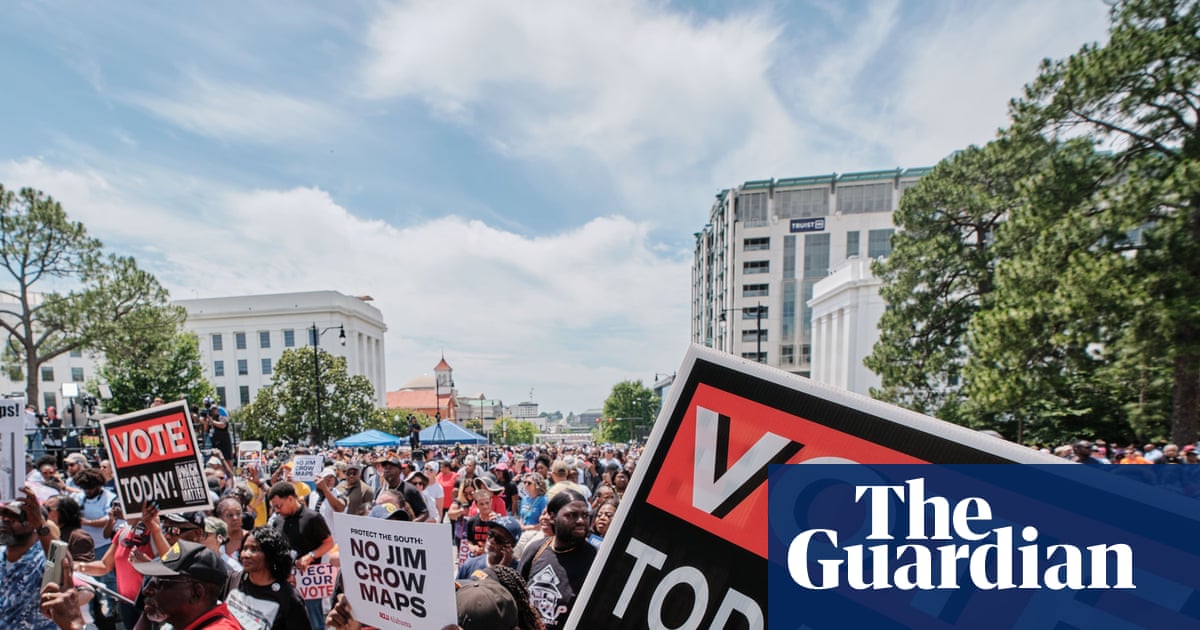
- Supreme Court decision gutted key Voting Rights Act protections in July
- 5,000+ people marched in Montgomery to demand voting rights restoration
- Rally took place at Alabama state capitol where 1965 Selma marches ended
Saturday’s rally in Montgomery, Alabama wasn’t just another protest. It was a direct response to the U.S. Supreme Court’s 6-3 decision in Louisiana v. Callais, issued last month. The ruling essentially neutered a critical part of the Voting Rights Act that blocked discriminatory voting maps before they took effect. Now, states like Alabama can change election rules with far less federal oversight. The crowd knew the stakes: Black voters in Alabama already face some of the country’s toughest barriers to casting ballots. A 2022 study found the state’s Black residents were twice as likely as white residents to wait more than 30 minutes to vote. The Supreme Court’s move only makes that worse. The rally’s organizers made sure the message was unmistakable. The coalition, led by groups like Black Voters Matter and Alabama NAACP, chose Montgomery for a reason. It’s where the 1965 Selma to Montgomery marches ended—a turning point in the civil rights movement. That history hung over the crowd like a shadow. Speakers like Rep. Terri Sewell, Alabama’s only Black congresswoman, didn’t hold back. She called the Supreme Court’s decision “a direct attack on democracy” and vowed to fight it in Congress and the courts. The crowd chanted, “They may draw racist maps, but we are the South.” The phrase was a defiant twist on Alabama’s old tourism slogan, “The South’s Alabama.” It underscored the rally’s tone: this wasn’t just about policy. It was about identity and survival. ## A state with deep racial divides Alabama has long been a flashpoint in the fight over voting rights. In 2022, the state’s Republican-led legislature drew new congressional maps that packed Black voters into one district, diluting their influence across the state. Civil rights groups sued, arguing the maps violated the Voting Rights Act. Lower courts agreed, ordering Alabama to redraw the maps to create a second district where Black voters could elect their preferred candidate. But the Supreme Court’s Callais decision changed everything. Without the ability to block discriminatory maps before they’re used, Alabama—and other states with histories of racial discrimination—now have a green light to make it harder for Black and Latino communities to vote. The rally’s organizers knew the odds were stacked against them. But they also knew the power of numbers. Buses rolled in from as far as New York and California. Local Black church groups organized carpools. Even some white allies from rural Alabama drove down to show solidarity. The energy was electric, but the mood was serious. ## What’s next for voting rights advocates The rally ended with a call to action: register voters, challenge every discriminatory law, and flood the courts with lawsuits. But the road ahead is steep. The Supreme Court’s conservative majority has shown little appetite for defending voting rights. Just last year, in Merrill v. Milligan, the Court upheld Alabama’s original discriminatory maps, gutting a key provision of the Voting Rights Act. Now, with Callais, the Court has made it even harder to stop those maps before they take effect. Civil rights groups say they’re not giving up. The Leadership Conference on Civil and Human Rights has already filed new lawsuits in multiple states, arguing that the Supreme Court’s decision leaves no other option. They’re demanding Congress pass new protections, like the John Lewis Voting Rights Advancement Act, which would restore some of the safeguards the Court just removed. But passing that bill in a divided Congress looks nearly impossible. Meanwhile, states like Alabama are moving forward with new voting restrictions. Earlier this year, Alabama passed a law requiring voter ID for absentee ballots—a change that disproportionately affects Black and low-income voters, who are less likely to have the required documents. The rally in Montgomery wasn’t just about the past. It was a warning about the future. If the Supreme Court keeps chipping away at voting rights, the South—and the rest of the country—could see a return to the kind of disenfranchisement that defined the Jim Crow era. The question now is whether the energy from Saturday can translate into real change before the 2024 elections. For now, the fight is far from over.
What You Need to Know
- Source: The Guardian
- Published: May 16, 2026 at 23:29 UTC
- Category: World
- Topics: #guardian · #world-news · #international · #they · #alabama · #black
Read the Full Story
This is a curated summary. For the complete article, original data, quotes and full analysis:
All reporting rights belong to the respective author(s) at The Guardian. GlobalBR News summarizes publicly available content to help readers discover the most relevant global news.
Curated by GlobalBR News · May 16, 2026
Related Articles
- Zimbabwe’s diaspora reshapes real estate and farming investment trends
- 🎉 250 Articles in World!
- Eurovision 2024 faces scrutiny over Israel’s participation amid war
🇧🇷 Resumo em Português
Milhares de pessoas marcharam nas ruas de Montgomery, no Alabama, em um protesto histórico pela defesa dos direitos de voto da população negra, após a Suprema Corte dos EUA enfraquecer medidas de proteção eleitoral. O ato, que reuniu ativistas, líderes comunitários e figuras nacionais, ecoou o lema “Eles podem traçar mapas racistas, mas nós somos o Sul”, reafirmando a resistência histórica contra a supressão de direitos civis.
O protesto ganha relevância global ao simbolizar a luta contínua dos afro-americanos por igualdade, especialmente em um estado marcante pela segregação racial. Nos anos 1950 e 1960, Montgomery foi palco de batalhas emblemáticas, como o boicote aos ônibus que levou à decisão histórica da Suprema Corte contra a segregação. Hoje, a decisão da Corte em 2023 de minar a Lei de Direitos de Voto de 1965 acendeu o alerta: estados como o Alabama já redesenharam distritos eleitorais para reduzir a influência de eleitores negros, ameaçando décadas de progresso. Para o Brasil, onde a população negra representa mais de 56% e enfrenta desafios semelhantes na representatividade política, a mobilização nos EUA serve como um espelho das próprias lutas por justiça social e democracia racial.
A próxima batalha deve ser travada nos tribunais e nas ruas, com organizações como a NAACP já anunciando novas ações legais para barrar os cortes de direitos.
🇪🇸 Resumen en Español
Decenas de miles de personas se congregaron en Montgomery, Alabama, bajo un cielo cargado de simbolismo, para alzar la voz contra el retroceso en los derechos electorales de la comunidad negra tras un revés judicial histórico. La movilización, marcada por consignas como “Pueden trazar mapas racistas, pero nosotros somos el sur”, reflejó la indignación colectiva ante una decisión que muchos ven como un ataque frontal al legado del movimiento por los derechos civiles.
El escenario no es casual: Montgomery, cuna de figuras emblemáticas como Rosa Parks y Martin Luther King Jr., se convirtió en el epicentro de una lucha que trasciende fronteras. El fallo de la Corte Suprema, que debilitó las protecciones de la Ley de Derechos Electorales de 1965, abre la puerta a que estados como Alabama —y otros con gobiernos conservadores— rediseñen distritos electorales para diluir el peso del voto afroamericano. Para la comunidad hispanohablante, este precedente enciende una alerta: no solo por la posible diseminación de prácticas discriminatorias, sino porque sienta un precedente peligroso para cualquier minoría que vea amenazada su representación política. La histórica marcha, que incluyó a líderes latinos y afroamericanos, subraya que la defensa del sufragio universal sigue siendo una batalla compartida en un país donde el pasado de exclusión aún late bajo la superficie.
The Guardian
Read full article at The Guardian →This post is a curated summary. All rights belong to the original author(s) and The Guardian.
Was this article helpful?


Discussion