US and Nigeria kill Islamic State leader Abu-Bilal al-Minuki in Borno State joint operation.
- US and Nigeria confirm death of Islamic State leader Abu-Bilal al-Minuki
- Operation conducted in Nigeria’s Borno State targeted high-value terrorist
- President Trump calls al-Minuki the world’s most active terrorist
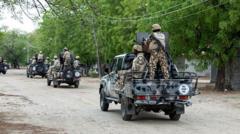
Abu-Bilal al-Minuki, a top commander of the Islamic State (IS) group, was killed in a joint US-Nigeria military operation in Nigeria’s Borno State, President Donald Trump confirmed on Tuesday. The operation targeted al-Minuki, described by Trump as the world’s most active terrorist, in a high-risk region long plagued by insurgent violence.
The US Africa Command (AFRICOM) and Nigerian military forces carried out the operation overnight, according to a statement from the White House. AFRICOM confirmed the strike in a separate release, stating it was conducted in coordination with Nigerian security forces. Nigerian officials have yet to issue a detailed public statement but are expected to provide further updates in the coming hours.
Details of the Operation
Al-Minuki, whose real name remains unverified, was a longtime operative within IS-affiliated factions operating in West Africa. Intelligence reports indicated he played a key role in planning and executing attacks across the Sahel region, including bombings and ambushes targeting civilians and security forces. His death follows months of surveillance by US and Nigerian intelligence agencies working in tandem.
A senior US official, speaking on condition of anonymity, confirmed that al-Minuki was killed during a precision airstrike on a compound in a remote area near Lake Chad. No civilian casualties were immediately reported, though assessments are ongoing. Nigerian military sources described the operation as “highly successful” and part of a broader counterterrorism push in the Lake Chad Basin.
Trump’s Statement and Regional Impact
Trump praised the operation in a tweet, calling al-Minuki “a global terrorist threat” whose network was responsible for hundreds of deaths. The president also thanked the Nigerian government for its partnership in combating extremism. The strike comes amid renewed US-Nigeria cooperation under the Biden administration, which has prioritized counterterrorism efforts in Africa.
Regional analysts suggest al-Minuki’s death could temporarily disrupt IS operations in the region but may also trigger retaliatory attacks. The Islamic State’s West Africa Province (ISWAP) remains active in Borno and neighboring states, frequently clashing with the Nigerian military and rival groups. Security experts warn that leadership decapitations often lead to power struggles within militant organizations.
Broader Implications
The operation underscores the growing role of US military support in African counterterrorism, particularly in the Sahel and Lake Chad regions. Nigeria, Africa’s most populous nation, has faced persistent insurgencies for over a decade, with Boko Haram and ISWAP among the most destabilizing forces. International partners continue to provide training, intelligence, and logistical support to Nigerian forces.
Military analysts say the success of this operation may encourage further joint strikes against high-value targets. However, the long-term effectiveness hinges on sustained governance and development efforts to address the root causes of extremism in the region. Humanitarian agencies warn that military gains must be matched by aid and reconstruction to prevent recruitment by militant groups.
The Nigerian government has not yet released al-Minuki’s remains or confirmed his identity through forensic analysis. Further details on the operation and its aftermath are expected to emerge in the coming days as investigations continue.
What You Need to Know
- Source: BBC News
- Published: May 16, 2026 at 10:42 UTC
- Category: World
- Topics: #bbc · #world-news · #international · #politics · #government · #senior
Read the Full Story
This is a curated summary. For the complete article, original data, quotes and full analysis:
All reporting rights belong to the respective author(s) at BBC News. GlobalBR News summarizes publicly available content to help readers discover the most relevant global news.
Curated by GlobalBR News · May 16, 2026
Related Articles
- Eurovision 2024 faces scrutiny over Israel’s participation amid war
- US Justice Department preparing indictment against Raúl Castro
- US planning to criminally indict ex-Cuban leader Raúl Castro
🇧🇷 Resumo em Português
O líder do Estado Islâmico na África, Abu-Bilal al-Minuki, foi eliminado em uma operação conjunta entre os Estados Unidos e a Nigéria, confirmou o ex-presidente Donald Trump. Considerado um dos terroristas mais ativos do mundo, sua morte marca um golpe significativo para a organização extremista na região, que tem expandido suas ações pela África Ocidental.
A operação reforça a crescente cooperação entre Washington e governos africanos no combate ao terrorismo, especialmente em países como a Nigéria, onde grupos jihadistas como o Boko Haram e a afiliada local do Estado Islâmico representam uma grave ameaça à segurança regional. Para o Brasil, o desmantelamento dessas redes é estratégico, já que o país teme a infiltração de células terroristas sul-americanas ligadas a organizações extremistas globais, além de sofrer com o fluxo de migrantes africanos afetados pela violência.
Especialistas alertam que o vazio de poder deixado por al-Minuki pode desencadear disputas internas dentro do grupo, possivelmente intensificando ataques na região.
🇪🇸 Resumen en Español
El líder del Estado Islámico, Abu-Bilal al-Minuki, considerado uno de los terroristas más activos del mundo, ha sido abatido en una operación conjunta entre Estados Unidos y Nigeria, según confirmó el expresidente Donald Trump. La noticia, dada a conocer en sus redes sociales, marca un golpe significativo contra la organización yihadista, que sigue representando una amenaza global pese a la pérdida de su “califato territorial” en Oriente Medio.
La operación, que refleja la cooperación internacional en la lucha antiterrorista, subraya la persistencia de células activas del grupo en África, donde el Sahel y el lago Chad se han convertido en focos de radicalización. Para los hispanohablantes, este suceso recuerda la necesidad de mantener una vigilancia constante, pues aunque el Estado Islámico ha perdido su base territorial, sus redes siguen operando y reclutando adeptos en múltiples idiomas, incluyendo el español. La noticia también plantea preguntas sobre la estrategia futura de EE.UU. en la región y el papel de Europa y Latinoamérica en la desarticulación de estas estructuras, que explotan vacíos de seguridad y crisis socioeconómicas para expandir su influencia.
BBC News
Read full article at BBC News →This post is a curated summary. All rights belong to the original author(s) and BBC News.
Was this article helpful?

Discussion