NASA's Perseverance rover took a new selfie on Mars in March 2026 while exploring Jezero Crater's western rim.
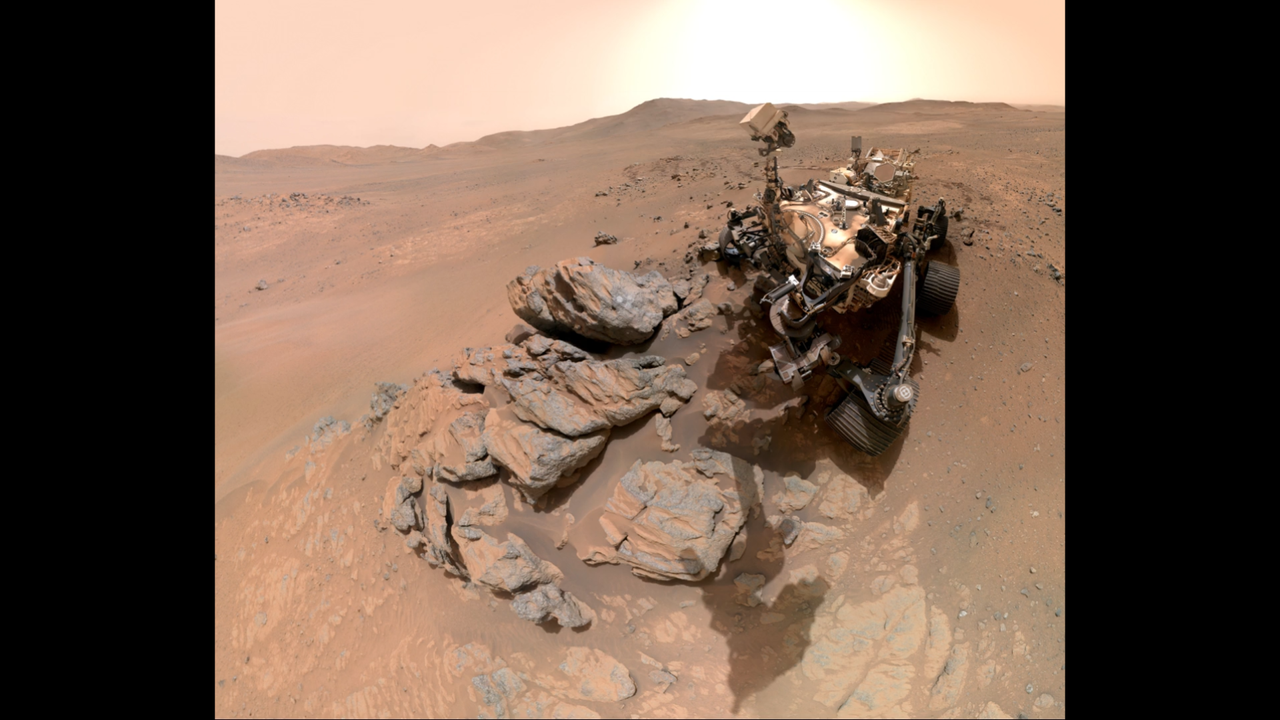
- NASA's Perseverance rover captured a new selfie on Mars on March 11, 2026
- The selfie was taken along the western rim of Jezero Crater
- The rover is exploring ancient rocky terrain in the 'Lac de Charmes' region
NASA’s Perseverance rover has beamed back a fresh self-portrait from the surface of Mars, this time showing its metal frame gleaming against the barren, rust-colored landscape. The image, captured on March 11, 2026, marks another milestone in the rover’s mission to study the geology and climate of Jezero Crater, a 45-kilometer-wide basin believed to have once held a lake billions of years ago.
The latest selfie was taken along the western rim of Jezero Crater, specifically in a region dubbed ‘Lac de Charmes’—French for ‘Lake of Charms’—a nod to the crater’s watery past. Mission scientists say the area contains some of the oldest exposed rocks in the crater, offering clues to Mars’ early history and potential signs of past microbial life.
Perseverance used its robotic arm equipped with a high-resolution camera to stitch together multiple images into a single selfie. The process took about 30 minutes, according to NASA engineers. The resulting composite image shows the rover’s Mastcam-Z and SuperCam instruments prominently, along with its six wheels and the rocky outcrop known as ‘Pico Turquino,’ which the rover has been analyzing for chemical composition.
Perseverance’s Mission Continues Amid New Discoveries
This isn’t the first selfie Perseverance has taken—its previous images, including one with the Ingenuity helicopter, have captured global attention. But this latest shot comes as the rover intensifies its search for biosignatures in Jezero Crater’s sedimentary rocks. Earlier this year, the rover drilled into a rock formation called ‘Mont Mercou,’ collecting samples that may contain organic molecules.
The rover’s primary goal remains collecting at least 30 rock and soil samples for a future return mission to Earth. NASA and the European Space Agency (ESA) are planning a multi-spacecraft campaign to retrieve these samples, tentatively scheduled for the early 2030s. If successful, these would be the first Martian materials brought directly to Earth for study.
Jezero Crater: A Window into Mars’ Watery Past
Jezero Crater was selected as Perseverance’s landing site because orbital images showed a fan-shaped delta at its western edge, a strong indicator of ancient water flow. The crater’s rim, where this selfie was taken, exposes some of the most well-preserved Noachian-era terrain on Mars, dating back roughly 3.7 to 4.1 billion years.
Scientists believe that during this period, Mars had a thicker atmosphere, liquid water flowed on its surface, and conditions may have been favorable for life. The rocks in ‘Lac de Charmes’ could hold mineralogical records of this ancient environment, offering scientists a chance to reconstruct Mars’ climate history.
What’s Next for Perseverance?
Over the next several months, Perseverance is expected to traverse the crater rim toward an area called ‘Séítah,’ a region rich in sand dunes and layered rocks. The rover will continue using its suite of instruments, including the ground-penetrating radar RIMFAX and the weather station MEDA, to gather data on Mars’ geology and atmosphere.
Meanwhile, the Ingenuity helicopter—originally designed for a 30-day technology demonstration—has far exceeded expectations, completing over 50 flights. Though Ingenuity is no longer flying alongside Perseverance as a scout, its legacy paves the way for future aerial exploration on Mars.
NASA officials say the rover’s power supply, fueled by a radioisotope thermoelectric generator (RTG), is expected to last at least another decade. This longevity ensures that Perseverance can continue its mission long after its primary objectives are met, potentially uncovering even more secrets from Mars’ distant past.
What You Need to Know
- Source: Space.com
- Published: May 14, 2026 at 18:00 UTC
- Category: Science
- Topics: #space · #astronomy · #nasa · #science · #perseverance · #mars
Read the Full Story
This is a curated summary. For the complete article, original data, quotes and full analysis:
All reporting rights belong to the respective author(s) at Space.com. GlobalBR News summarizes publicly available content to help readers discover the most relevant global news.
Curated by GlobalBR News · May 14, 2026
Related Articles
- 5 Ways to Vet Social Media Health Advice Before Trying It
- PCOS renamed to PMOS after decades of misdiagnosis confusion
🇧🇷 Resumo em Português
Um robô brasileiro não pôde estar em Marte ainda, mas a NASA acaba de presentear o mundo com uma imagem que faz qualquer um se sentir como se estivesse lá: o rover Perseverance, em março de 2026, registrou um novo selfie no Planeta Vermelho, mostrando um brilho marcante na cratera Jezero. A foto, que viralizou nas redes, não é apenas um marco tecnológico, mas também um lembrete de que a exploração espacial segue avançando a passos largos, mesmo com os desafios terrestres.
O Brasil, que recentemente ampliou sua participação em missões internacionais por meio da Agência Espacial Brasileira (AEB), pode se inspirar nesse feito para reforçar seus próprios projetos, como o desenvolvimento de satélites e a formação de novos cientistas. A imagem do Perseverance não só emociona pela beleza, mas também reforça a importância da colaboração global em ciência e tecnologia, especialmente em um momento em que o país busca ampliar sua presença no setor espacial. Para os falantes de língua portuguesa, essa conquista da NASA serve como um convite para acompanhar de perto as descobertas que virão de Marte.
A próxima etapa da missão do Perseverance promete trazer ainda mais revelações sobre a possibilidade de vida microbiana no passado de Marte.
🇪🇸 Resumen en Español
La NASA ha difundido una impactante imagen en la que el rover Perseverance brilla con luz propia en un nuevo autorretrato tomado sobre la superficie de Marte. La fotografía, capturada en marzo de 2026 desde el borde occidental del cráter Jezero, ha dejado al mundo científico con la boca abierta por su nitidez y el detalle de los instrumentos del vehículo explorador.
Este hito forma parte de la misión Mars 2020, que busca no solo estudiar la geología del planeta rojo, sino también allanar el camino para futuras misiones tripuladas. Para los hispanohablantes, la relevancia de estos avances es doble: por un lado, demuestran el liderazgo global de la NASA, donde ingenieros y científicos de habla hispana tienen un papel clave; por otro, refuerzan la idea de que la exploración espacial es un esfuerzo colaborativo en el que todos, independientemente de su lengua, pueden contribuir a expandir los límites del conocimiento humano.
Space.com
Read full article at Space.com →This post is a curated summary. All rights belong to the original author(s) and Space.com.
Was this article helpful?

Discussion