Long Island Rail Road strike shuts down service Saturday after unions walk out over contract dispute.
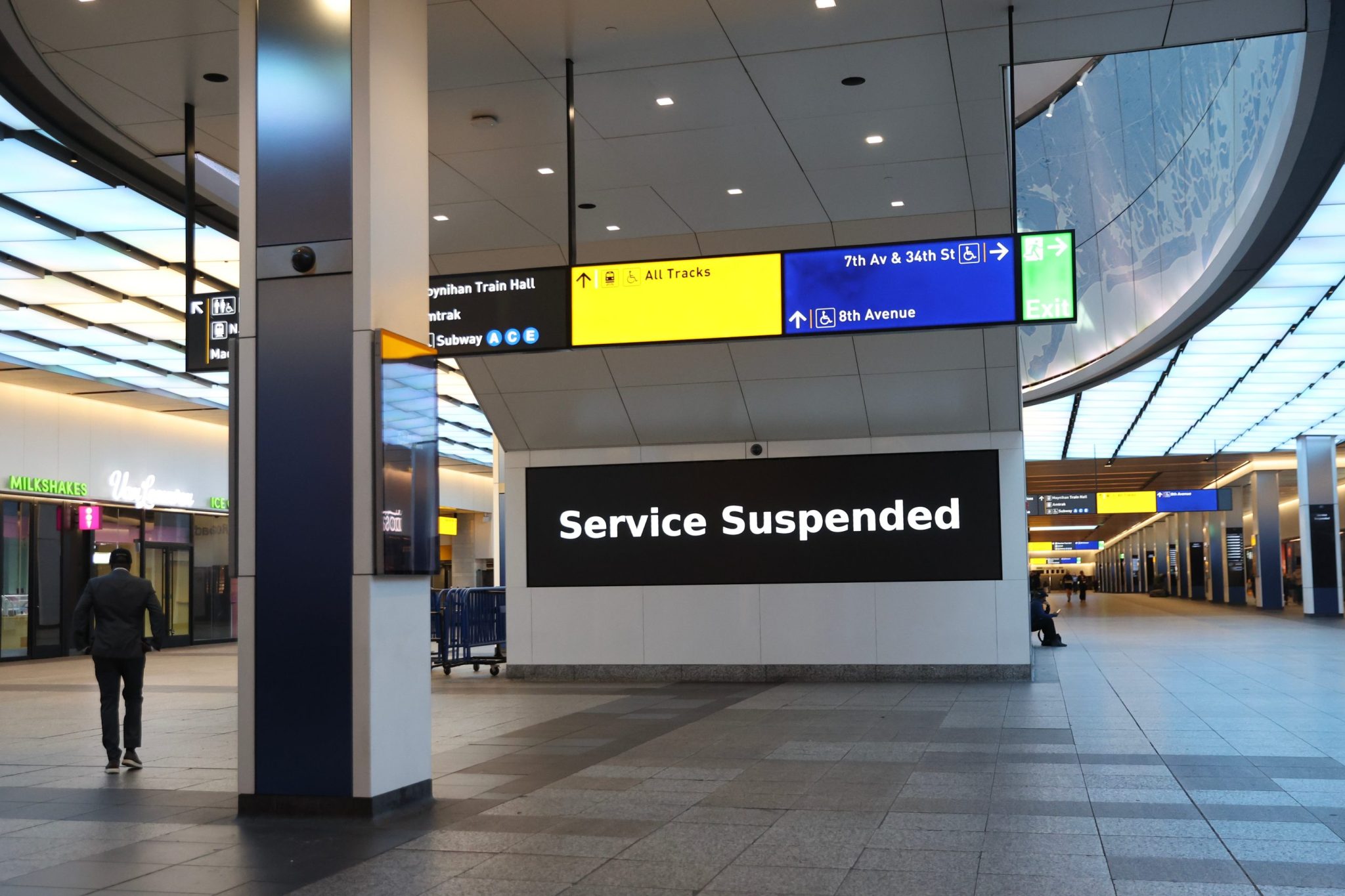
- Strike halts Long Island Rail Road service Saturday morning
- Five unions representing half the workforce walk off job
- Negotiations collapsed despite federal mediation efforts
Long Island Rail Road service came to a standstill Saturday after unionized workers launched a strike at 12:01 a.m., crippling North America’s largest commuter rail system. Five unions representing roughly half of the LIRR’s workforce walked off the job, halting all train service in the New York City suburbs. The strike marks the culmination of months of failed contract negotiations between workers and the Metropolitan Transportation Authority MTA, which operates the rail line.
Federal mediators, including officials from President Donald Trump’s administration, had intervened in recent weeks to broker a deal, but talks broke down without resolution. Kevin Sexton, national vice president of the Brotherhood of Locomotive Engineers and Trainmen, confirmed no new negotiations had been scheduled as of Saturday morning. “We’re far apart at this point,” Sexton said. “We are truly sorry that we are in this situation.”
Why the strike happened
The unions are demanding better pay, benefits, and working conditions amid rising inflation and the lingering economic strain from the COVID-19 pandemic. Workers cite concerns over stagnant wages and increased workloads, while the MTA argues it faces budget constraints and must balance cost-cutting measures. The dispute escalated Friday when unions rejected the MTA’s latest offer, calling it insufficient.
The shutdown immediately affects hundreds of thousands of daily commuters who rely on the LIRR to travel between Long Island and Manhattan. The rail system, which carries over 300,000 passengers on weekdays, is a critical link for workers, students, and businesses in the region. Amtrak Amtrak and Metro-North Railroad Metro-North Railroad have both warned travelers to expect significant delays and alternative routes.
Impact on commuters and businesses
Commuters scrambled Saturday morning to find alternative transportation after the strike announcement took effect. Local bus services and ride-sharing apps reported surging demand, while highways into the city faced heavier traffic. Businesses dependent on LIRR commuters, including retail stores and restaurants in Manhattan’s Penn Station area, anticipated reduced foot traffic and revenue losses.
The strike also threatens to disrupt events in the Hamptons, a wealthy enclave on Long Island that relies heavily on weekend rail service for visitors and residents. Tourism officials warned that last-minute cancellations could hurt businesses already struggling with post-pandemic recovery.
What happens next
The MTA has warned of potential service disruptions lasting weeks if the strike continues. Union leaders have vowed to remain on strike until their demands are met, while the MTA has not ruled out legal action to force workers back. Governor Kathy Hochul Kathy Hochul has not yet commented publicly on the strike, but state officials are reportedly exploring contingency plans to mitigate the impact on commuters.
Without a resolution, the strike could ripple through New York’s economy, affecting everything from corporate commuters to small businesses dependent on rail service. The MTA has not indicated whether it will offer revised contract terms, leaving both sides at an impasse as the work stoppage enters its first full day.
What You Need to Know
- Source: Fortune
- Published: May 16, 2026 at 14:19 UTC
- Category: Business
- Topics: #fortune · #business · #economy · #politics · #government · #spring-hamptons
Read the Full Story
This is a curated summary. For the complete article, original data, quotes and full analysis:
All reporting rights belong to the respective author(s) at Fortune. GlobalBR News summarizes publicly available content to help readers discover the most relevant global news.
Curated by GlobalBR News · May 16, 2026
Related Articles
- Kevin O’Leary: Gen Z founders working 18-hour days make ‘no sense’
- Lawyers sanctioned $110K for fake AI citations in landmark Oregon case
- Taiwan arms sales top Trump-Xi talks agenda as Xi meet ends
🇧🇷 Resumo em Português
Milhões de trabalhadores e moradores da Região Metropolitana de Nova York acordaram neste sábado sem uma das principais opções de transporte público, após a greve dos sindicatos que representam os funcionários da Long Island Rail Road (LIRR), uma das maiores redes ferroviárias suburbanas dos Estados Unidos. O impacto foi imediato: trens cancelados, ruas congestionadas e a rotina de quem depende do sistema ferroviário completamente alterada, num dos maiores centros econômicos do mundo.
A paralisação, que entrou em vigor após meses de negociações estagnadas entre as entidades sindicais e a autoridade de transporte, expõe não só as tensões trabalhistas nos EUA, mas também a fragilidade de infraestruturas críticas em grandes cidades globais. Para o Brasil, país que ainda luta para modernizar seus sistemas de mobilidade urbana, o episódio serve como alerta sobre a importância de investimentos contínuos em transporte público e de políticas que evitem crises como essa, que paralisam economias inteiras. Além disso, a dependência de milhões de pessoas de um único modo de locomoção reforça a necessidade de diversificação e resiliência nos sistemas de mobilidade.
A expectativa agora é de que as negociações voltem à mesa ainda neste fim de semana, com a pressão de milhões de passageiros e do governo local para evitar um colapso ainda maior.
🇪🇸 Resumen en Español
La paralización del transporte público en el área metropolitana de Nueva York amenaza con dejar a millones de usuarios sin su principal medio de movilidad este fin de semana. La huelga indefinida del Long Island Rail Road, la red ferroviaria de cercanías que conecta los suburbios con la Gran Manzana, ha sumido a la ciudad en una crisis logística sin precedentes en años.
El conflicto surge tras el fracaso de las negociaciones entre la empresa operadora y los sindicatos, que exigen mejoras salariales y condiciones laborales acordes con el alto coste de vida en la región. La suspensión del servicio afecta no solo a los trabajadores que dependen del tren para llegar a sus empleos en Manhattan, sino también a turistas y estudiantes, generando un efecto dominó en la economía local. Para los hispanohablantes, muchos de ellos empleados en sectores como la hostelería o la construcción, esta crisis agrava su situación, al añadir barreras adicionales a su ya complicado acceso a oportunidades laborales en el corazón financiero del país.
Fortune
Read full article at Fortune →This post is a curated summary. All rights belong to the original author(s) and Fortune.
Was this article helpful?



Discussion