Chilean kindergarten teacher has spent five years protecting 200 king penguins at Useless Bay, Chile.
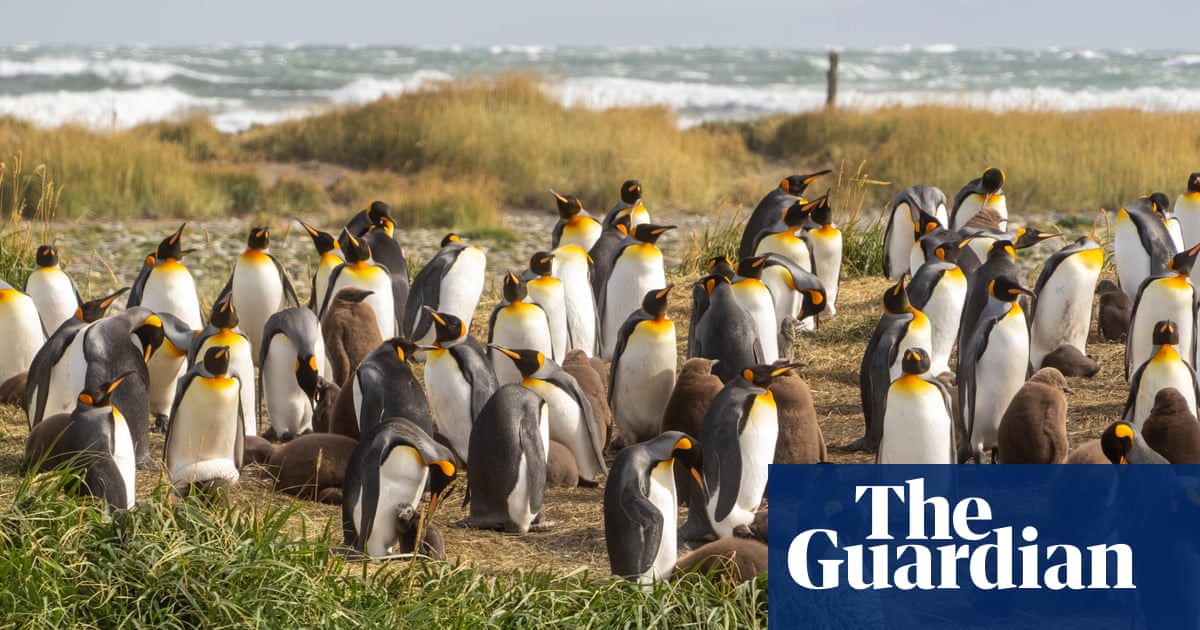
- Chilean teacher guards 200 king penguins at Useless Bay for five years
- Useless Bay offers shallow shores and protection from marine predators
- Cecilia Durán Gafo protects penguins from humans and predators without formal training
The first time Cecilia Durán Gafo saw king penguins waddling onto her land at Useless Bay in 2019, she didn’t know what to do. She’d bought the property in Tierra del Fuego, Chile, to escape the noise of the city and enjoy the quiet. But within days, the birds arrived, drawn to the shallow, sheltered shores that shield them from sharks and orcas. They nested in the same spot generations had used for centuries. “I didn’t plan to be a guardian,” she says. “But once they were here, I couldn’t just ignore them.”
Five years later, Durán Gafo’s land is now one of the few places on mainland South America where king penguins Aptenodytes patagonicus breed outside their usual island habitats. The birds, with their velvety black-and-white coats and bright orange patches near their ears, have made her property their seasonal home. Tourists now flock to Useless Bay—named for its shallow waters that once confused sailors—just to watch the penguins parade along the shore or regurgitate food for their chicks. “They’re not afraid of people,” Durán Gafo says. “But I make sure they stay safe from us.”
The unexpected role of an accidental guardian
Durán Gafo is a kindergarten teacher by profession, not a conservationist. She’s never taken a course in wildlife protection, but she’s learned on the job. The biggest threats to the penguins aren’t just predators like sea lions or skuas—it’s humans. Curious visitors sometimes get too close, stressing the birds or leaving trash that attracts rats. So Durán Gafo set up a simple rope barrier to keep people at a distance. She also installed signs warning visitors not to feed the penguins or touch them. “It’s basic respect,” she says. “They’re not pets.”
The penguins return every year between October and March, the Southern Hemisphere’s spring and summer. They lay eggs, hatch chicks, and teach their young to swim in the bay’s calm waters. Durán Gafo watches over them like a guardian, chasing off stray dogs or reporting suspicious activity to local authorities. She’s even built a small shed to store supplies like fishing nets—useful for keeping predators away—and a first-aid kit for injured birds. “I don’t do it for fame,” she says. “I do it because it’s the right thing.”
Why Useless Bay became a penguin haven
Useless Bay isn’t a tropical paradise. It’s a wind-battered stretch of coastline in southern Chile’s Tierra del Fuego region, where the weather is unpredictable and the ground is often muddy. But for king penguins, it’s perfect. The bay’s shallow waters make it hard for orcas and leopard seals to hunt, and the nearby forests provide shelter from storms. “This spot has been used by penguins for hundreds of years,” says Dr. María José Pérez, a biologist at the University of Magallanes who studies the colony. “It’s one of the few mainland sites where they’ve adapted to land predators.”
The penguins’ presence here is a reminder of how adaptable they are. King penguins typically nest on sub-Antarctic islands like South Georgia or the Crozet Islands, but climate change and overcrowding have pushed some to look for new homes. Useless Bay, with its cold currents and abundant fish, turned out to be an ideal alternative. “They’re not supposed to be here,” Pérez says. “But nature finds a way.”
The challenges of being an unofficial protector
Durán Gafo’s work isn’t easy. She’s spent her own money on supplies and repairs, and she’s dealt with skepticism from neighbors who see the penguins as a nuisance. Some locals worry the birds will scare off tourists or scare away fish stocks. But Durán Gafo insists the opposite is true. “People come to see the penguins,” she says. “They stay in local guesthouses, eat in restaurants, and leave with money in their pockets. It’s good for everyone.”
Still, she’s had to fight to keep the colony safe. In 2022, a group of developers proposed building a resort near the bay. Durán Gafo rallied locals and conservation groups to oppose it, arguing the project would disrupt the penguins’ nesting grounds. After months of protests, the plan was scrapped. “I wasn’t going to let them ruin this,” she says. “These birds trust me. I couldn’t let them down.”
What’s next for Useless Bay’s penguins—and their guardian
The colony at Useless Bay is still small—around 200 penguins—but it’s growing. Pérez and her team are monitoring the birds closely, tagging some to track their movements and health. They’ve found that the penguins here are healthier than those on crowded islands, likely because there are fewer humans and predators. “This could be a model for other places,” Pérez says. “If we protect these spots, the penguins might have a future here.”
Durán Gafo isn’t done either. She’s working with local schools to teach kids about the penguins and the importance of conservation. She’s also pushing for official protection of Useless Bay, so no one can build near the nesting grounds again. “I want this to be their home forever,” she says. “Not just for a few years.” For now, the penguins keep coming back, and Durán Gafo keeps watching over them—one waddle at a time.
What You Need to Know
- Source: The Guardian
- Published: May 14, 2026 at 11:00 UTC
- Category: Environment
- Topics: #guardian · #climate · #environment · #war · #conflict · #useless-bay
Read the Full Story
This is a curated summary. For the complete article, original data, quotes and full analysis:
All reporting rights belong to the respective author(s) at The Guardian. GlobalBR News summarizes publicly available content to help readers discover the most relevant global news.
Curated by GlobalBR News · May 14, 2026
🇧🇷 Resumo em Português
Um professor chileno protegeu 200 pinguins-rei por cinco anos na Baía Inútil — e a lição que o Brasil pode tirar disso
O que começou como uma missão improvável na remota Baía Inútil, no sul do Chile, transformou-se em um exemplo de dedicação ambiental: uma professora pré-escolar, sem formação em biologia, tornou-se a guardiã de 200 pinguins-rei, salvando-os de predadores e da aproximação humana. Longe das câmeras e dos holofotes, ela passou metade de uma década garantindo a sobrevivência da espécie em um dos ecossistemas mais frágeis do planeta, onde o isolamento geográfico e as mudanças climáticas já ameaçam a vida silvestre.
No Brasil, onde a proteção à fauna enfrenta desafios semelhantes — desde desmatamentos até conflitos entre humanos e animais —, a história ressoa como um alerta sobre a importância da preservação mesmo em cenários adversos. A atuação da professora chilena destaca como iniciativas individuais, quando baseadas em respeito e conhecimento empírico, podem ter impacto duradouro, especialmente em regiões onde o Estado nem sempre chega com políticas públicas eficazes. Além disso, o caso reforça a necessidade de conscientização sobre espécies migratórias, como os pinguins-rei, que dependem de habitats costeiros cada vez mais pressionados pela atividade humana.
Agora, com a notícia ganhando repercussão internacional, a pergunta que fica é: será que outras comunidades, incluindo as brasileiras, estão preparadas para assumir o papel de guardiãs da natureza quando o sistema falha?
The Guardian
Read full article at The Guardian →This post is a curated summary. All rights belong to the original author(s) and The Guardian.
Was this article helpful?


Discussion