12 of 14 England river bathing sites show unsafe faecal bacteria levels, health officials say.
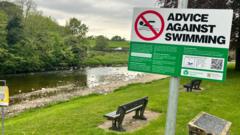
- 12 of 14 sites fail bacteria safety tests
- High faecal bacteria levels linked to sewage pollution
- New bathing sites added despite poor water quality
Health authorities in England have issued warnings against swimming at 12 of 14 designated river bathing sites following tests that revealed unsafe levels of faecal bacteria. The results, published Tuesday, underscore persistent pollution problems in the country’s waterways despite ongoing efforts to improve conditions.
The Environment Agency Environment Agency and local councils tested 14 sites for Escherichia coli (E. coli) and intestinal enterococci, bacteria commonly associated with human and animal waste. Twelve sites exceeded safety thresholds set by the European Bathing Water Directive, which regulates water quality at designated bathing areas. The affected locations span rivers in Yorkshire, Cumbria, and Devon, among others.
New sites added despite pollution risks
Officials announced four new bathing sites this week, including locations on the River Wharfe in Yorkshire and the River Derwent in Derbyshire. The additions come despite the poor water quality revealed in recent tests. Environmental groups criticized the move, calling it premature given the contamination risks.
The new sites were selected based on public demand and perceived accessibility, but critics argue they may expose swimmers to health risks. The Campaign for the Protection of Rural England (CPRE) said the expansion sends mixed signals about water quality improvements.
Sewage discharges and agricultural runoff cited as primary causes
Environmentalists and health officials blame widespread sewage discharges from water companies and agricultural runoff for the high bacteria levels. Water companies have faced criticism in recent years for releasing untreated sewage into rivers, particularly during heavy rainfall. The Water UK industry group acknowledged the issue but noted that investment in infrastructure is underway to reduce discharges.
Agricultural activities, including livestock farming and fertilizer use, also contribute to faecal bacteria pollution. The Department for Environment, Food & Rural Affairs (Defra) has pledged stricter regulations on farming practices to curb runoff, but progress has been slow.
Health risks and public warnings
Swimming in waters with high faecal bacteria levels can cause gastrointestinal illnesses, skin infections, and other health problems. Public Health England Public Health England (now part of the UK Health Security Agency) has warned that vulnerable groups, such as children and the elderly, are at higher risk. Signs warning of poor water quality have been posted at the affected sites, but officials say awareness campaigns are needed.
The Environment Agency has urged the public to avoid swimming at the 12 sites until water quality improves. It is investigating the sources of pollution and working with local authorities to identify short-term solutions. Long-term plans include upgrading sewage treatment plants and implementing buffer zones along riverbanks to reduce agricultural runoff.
Broader implications for river conservation
The findings highlight the broader challenges of river conservation in England, where only a fraction of waterways meet good ecological status under the Water Framework Directive. Campaigners argue that the government’s targets for reducing pollution are not being met, and that stronger enforcement is required.
The issue has gained political traction, with opposition parties calling for urgent action to address sewage pollution. The government has committed £56 billion to water infrastructure projects by 2050, but critics say this is insufficient to tackle the scale of the problem. The new bathing sites may face delays or additional testing as scrutiny over water quality intensifies.
What You Need to Know
- Source: BBC News
- Published: May 15, 2026 at 04:13 UTC
- Category: Environment
- Topics: #bbc · #environment · #climate · #england · #river-bathing-sites-bacteria-levels · #england-river-pollution
Read the Full Story
This is a curated summary. For the complete article, original data, quotes and full analysis:
All reporting rights belong to the respective author(s) at BBC News. GlobalBR News summarizes publicly available content to help readers discover the most relevant global news.
Curated by GlobalBR News · May 15, 2026
🇧🇷 Resumo em Português
O verão brasileiro, marcado por dias ensolarados e busca por lazer em rios e praias, pode esconder um risco invisível: a contaminação por bactérias nas águas. Um alerta semelhante ao que assola a Inglaterra acaba de ganhar contornos preocupantes no Brasil, onde a qualidade dos rios e represas nem sempre recebe a atenção merecida. Enquanto lá os banhistas são desencorajados a mergulhar em 12 dos 14 pontos de banho fluviais testados, aqui no país, a falta de fiscalização e o descaso com o saneamento básico transformam trechos antes procurados para refrescar-se em potenciais focos de doenças.
A notícia serve como um espelho do que ocorre em diversas regiões brasileiras, especialmente no Sudeste e Nordeste, onde rios como o Tietê, em São Paulo, e o Capibaribe, em Pernambuco, ainda sofrem com despejos irregulares de esgoto e resíduos industriais. A ausência de estações de tratamento eficientes e a poluição por agrotóxicos agravam o cenário, expondo moradores e turistas a microrganismos como E. coli e enterococos, responsáveis por infecções gastrointestinales e dermatites. Além do impacto na saúde pública, a degradação desses ecossistemas afeta a biodiversidade e inviabiliza atividades econômicas como o turismo e a pesca.
Diante desse quadro, especialistas cobram urgência na implementação de políticas públicas que priorizem o saneamento e a despoluição dos corpos d’água — um compromisso que, se adiado, pode custar caro não só ao meio ambiente, mas também à saúde de milhões de brasileiros.
BBC News
Read full article at BBC News →This post is a curated summary. All rights belong to the original author(s) and BBC News.
Was this article helpful?


Discussion