Forty white-tailed eagles are set for release on Exmoor this summer despite farmer concerns over livestock safety.
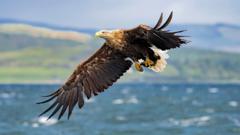
- Release of 40 white-tailed eagles planned for Exmoor this summer
- Farmers warn the birds might prey on lambs and sheep
- Conservationists say the reintroduction will restore a lost ecosystem
The White-tailed eagle, also called the sea eagle, hasn’t nested in England for over 240 years. Now, a project led by the Roy Dennis Wildlife Foundation and Natural England plans to change that. Forty birds, mostly juveniles from Scotland, will be released in the Exmoor National Park over the next five years. The first 20 eagles arrive this summer, with more following annually until 2028. This marks the first attempt to reintroduce the species in England since the 1970s, when efforts in Scotland began restoring populations that had nearly vanished due to persecution and poisoning. Today, Scotland has around 150 breeding pairs, but England has none—until now. The eagles will be fitted with GPS tags to track their movements and ensure they don’t pose risks to local farms. Still, some farmers aren’t buying it. They say the birds, which can weigh up to 16 pounds and have a wingspan of nearly 8 feet, have a taste for lamb. “We’re worried about our sheep,” said one Exmoor farmer who asked to remain anonymous. “These eagles can take down animals bigger than rabbits. We’ve seen what happens in Scotland.” Farmers point to cases where white-tailed eagles have killed lambs, though conservationists argue such incidents are rare and often exaggerated. The Royal Society for the Protection of Birds (RSPB) supports the reintroduction, saying the birds play a key role in healthy ecosystems by scavenging carrion and controlling populations of pests like rabbits and rats. They also bring economic benefits. Wildlife tourism in Scotland has boomed thanks to the eagles, with visitors spending millions on guided tours and accommodations. The same could happen on Exmoor. ## Exmoor’s role in the eagle’s comeback The chosen release site sits on the edge of Exmoor National Park, a rugged landscape of moorland, cliffs, and wooded valleys. Officials picked this spot for its abundant food supply—wildfowl, fish, and carrion—and its relative isolation from dense human populations. The area is already home to red deer, otters, and hen harriers, but it’s missing a top predator. White-tailed eagles once ruled these skies before hunting and habitat loss wiped them out. Reintroducing them isn’t just about bringing back a lost species. It’s about restoring the natural balance. ## How the reintroduction will work The eagles will be released in stages, starting with 20 birds this summer. They’ll be kept in temporary aviaries for a few weeks to acclimate before being set free. Food will be provided at the site to help them settle in. Conservationists will monitor their movements closely using GPS tags, which send real-time location data. If an eagle starts targeting livestock, the team can intervene quickly—either by hazing the bird or relocating it. The project isn’t just about dropping birds into the wild and hoping for the best. It’s backed by years of research. Scientists studied eagle diets in Scotland and found that lambs make up less than 1% of their diet. Most of their food comes from fish, waterfowl, and carrion. Still, farmers remain skeptical. “They’ll say it’s rare, but one eagle can wipe out a flock in a week,” said a sheep farmer from Devon who’s been following the project. “We’ve got enough problems without adding these big birds to the mix.” The reintroduction team plans to work closely with local farmers to address concerns. They’ve already held meetings to explain the project and offer compensation if any livestock losses occur. But trust is fragile. Many farmers recall past conflicts with reintroduced species, like the beaver releases in Devon, which some say damaged farmland. ## The bigger picture: Why this matters beyond Exmoor White-tailed eagles are a symbol of wilderness. Bringing them back to England isn’t just about one bird—it’s about reconnecting people to nature. Conservationists hope the project will inspire similar efforts across the UK, from the Lake District to the Welsh borders. It’s also a test case for how rewilding and human interests can coexist. If the eagles thrive without causing major harm, it could set a precedent for future reintroductions. But if conflicts arise, it might sour attitudes toward rewilding for years. The stakes are high. For now, the focus is on the first batch of eagles. If they settle in well, the project will expand. If problems emerge, it could derail the entire plan. Either way, this summer will be a turning point for England’s wildlife—and for the farmers who share the land with it.
What You Need to Know
- Source: BBC News
- Published: May 13, 2026 at 05:00 UTC
- Category: Environment
- Topics: #bbc · #environment · #climate · #war · #conflict · #white
Read the Full Story
This is a curated summary. For the complete article, original data, quotes and full analysis:
All reporting rights belong to the respective author(s) at BBC News. GlobalBR News summarizes publicly available content to help readers discover the most relevant global news.
Curated by GlobalBR News · May 13, 2026
🇧🇷 Resumo em Português
Asas da esperança voltam a pairar sobre Exmoor: águias-pescadoras são soltas no Reino Unido após décadas ausentes
Após mais de um século extintas na região, as majestosas águias-pescadoras (Haliaeetus albicilla), maiores aves de rapina do Reino Unido, estão prestes a retornar a Exmoor com um ousado projeto de soltura de 40 indivíduos ainda este verão. A iniciativa, liderada por conservacionistas, promete restaurar um elo perdido da biodiversidade britânica, mas acende o debate com produtores rurais, que temem perdas na criação de ovinos. Enquanto o governo britânico apoia a medida como exemplo de recuperação ambiental, os alertas dos fazendeiros sobre possíveis ataques a bezerros e ovinos reacendem velhas tensões entre conservação e agropecuária.
No Brasil, onde a discussão sobre reintrodução de espécies também ganha força — como no caso da onça-pintada no Cerrado ou da ararinha-azul na Caatinga —, o caso britânico serve de referência: prova que, com planejamento e engajamento comunitário, é possível conciliar proteção da fauna e interesses econômicos. Especialistas brasileiros destacam que, embora o contexto ambiental e cultural seja distinto, a lição é clara: a restauração de ecossistemas depende não apenas de vontade política, mas de diálogo constante com quem vive e trabalha no território. A soltura das águias em Exmoor será monitorada por meses, com câmeras e anilhas, oferecendo dados valiosos para projetos semelhantes mundo afora.
A expectativa é que, em poucos anos, as aves voltem a nidificar no local, atraindo turistas e pesquisadores, além de cumes ecológicos. Se bem-sucedido, o projeto pode inspirar outras nações a ousarem em iniciativas de rewilding — mas, como advertem os fazendeiros, sem negligenciar os riscos reais que a fauna local enfrenta.
BBC News
Read full article at BBC News →This post is a curated summary. All rights belong to the original author(s) and BBC News.
Was this article helpful?



Discussion