Seth Rogen says writers who turn to AI for scripts are missing the point of writing entirely.
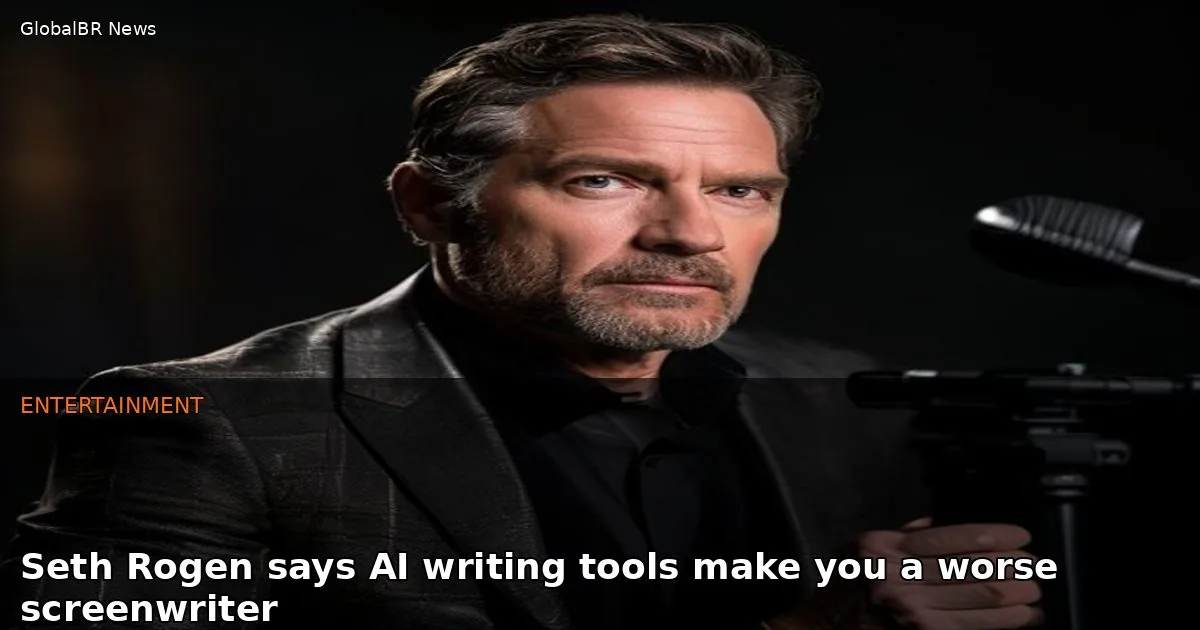
- Seth Rogen told THR AI writing tools signal a writer has given up on craft
- He said if your instinct is to use AI, you shouldn’t be a writer at all
- Rogen made the comment while promoting his new Showtime series 'The Studio'
Seth Rogen has a simple message for any screenwriter tempted to let artificial intelligence draft their scripts: find something else to do. The actor and writer, best known for films like Superbad and Pineapple Express, told The Hollywood Reporter that leaning on AI tools to write scripts is a sign a writer has lost faith in their own skills. “If your instinct is to use AI, you shouldn’t be a writer,” Rogen said during an interview about his new Showtime series The Studio, a half-hour comedy set in a struggling Hollywood production company. “Go do something else.”
Rogen’s blunt take puts him at the center of Hollywood’s simmering debate over AI’s role in creative work. Studios have quietly tested AI-generated scripts for years, using the technology to generate drafts, punch up dialogue, or even brainstorm ideas. But for Rogen, the practice crosses a line. Writing isn’t just about putting words on a page—it’s about wrestling with ideas, refining jokes, and owning your voice. “The whole point of being a writer is to write,” he said. “If you’re not doing that, you’re not a writer.”
The comment isn’t just rhetorical. The Studio follows a young writer navigating the absurdities of a Hollywood system that’s increasingly obsessed with metrics, algorithms, and cost-cutting. The show’s plot feels almost prophetic given the rise of AI tools like those from OpenAI or Google DeepMind. These tools can spit out scripts in seconds, but they lack the human quirks—failures, obsessions, and real-life experiences—that make stories resonate. Rogen’s frustration isn’t just about AI replacing writers. It’s about the erosion of what writing means in an industry that’s more interested in speed than substance.
Why Rogen’s stance matters in Hollywood right now
Hollywood is in a panic over AI. Studios see it as a way to slash costs and churn out endless content quickly. Writers’ rooms are shrinking, budgets are tightening, and the fear is that AI will replace human creativity entirely. Last year, the Writers Guild of America staged a strike partly over studios’ attempts to use AI to write or rewrite scripts without proper compensation or consent. Rogen’s comments echo that frustration. He’s not just talking about AI as a tool—he’s framing it as a threat to the craft itself.
Other writers have echoed similar concerns. Earlier this year, Stranger Things creator Matt Duffer called AI a “tool for lazy people” in a now-deleted tweet. Even James Cameron, known for his tech-forward films, has warned that AI could “destroy storytelling” if misused. The pushback isn’t just coming from creatives, either. Directors like Denis Villeneuve (Dune) have spoken out against AI, arguing that art requires human struggle and imperfection—qualities machines can’t replicate.
But not everyone in Hollywood agrees. Some producers see AI as a way to democratize writing, helping newcomers break into the industry by lowering the barrier to entry. Platforms like Jasper AI and Sudowrite already market their tools to screenwriters, promising faster drafts and better ideas. A few indie films, like Everything Everywhere All at Once’s early drafts, reportedly used AI to refine scripts. Yet Rogen’s point stands: if you’re outsourcing the core of your work to a machine, why bother calling yourself a writer at all?
The human cost of AI in creative industries
What Rogen’s really attacking isn’t just AI—it’s the mindset that treats writing like a factory job. In an era where content is king and attention spans are short, the pressure to produce quickly is intense. Studios want scripts in weeks, not months. AI delivers on that timeline, but at what cost? The result is often work that feels sterile, generic, and devoid of the messy, unpredictable spark that makes art compelling.
There’s also the human element to consider. Writing is a lonely, often thankless job. It requires sitting alone with your thoughts, facing rejection, and pushing through self-doubt. AI removes that struggle. It doesn’t get writer’s block. It doesn’t stare at a blank page wondering if it’s any good. But that struggle is part of the process. It’s what shapes a writer’s voice and makes their work unique. Rogen’s message is a reminder that art isn’t just about the end product—it’s about the journey.
What’s next? The battle over AI in Hollywood heats up
Rogen’s comments come as Hollywood grapples with a rapidly changing landscape. The 2023 Writers Guild strike highlighted the tension over AI, but the issue isn’t going away. Studios are already experimenting with AI to generate pitches, rewrite scenes, and even voice-act characters. The technology is only getting better—and more accessible.
For now, Rogen’s advice is clear: if you’re a writer, write. Don’t outsource the thing that defines you. The industry’s future depends on it. Whether Hollywood listens is another question entirely. But one thing’s for sure—if the only thing a writer has to offer is a prompt, they’re not a writer. They’re a user.
The real test will be whether audiences can tell the difference between something made by humans and something made by machines. So far, the signs aren’t great. But Rogen’s not wrong: the best stories come from people who are willing to fight for them.
What You Need to Know
- Source: Hollywood Reporter
- Published: May 16, 2026 at 23:09 UTC
- Category: Entertainment
- Topics: #hollywood · #movies · #seth-rogen-says · #your-instinct · #write-scripts
Read the Full Story
This is a curated summary. For the complete article, original data, quotes and full analysis:
All reporting rights belong to the respective author(s) at Hollywood Reporter. GlobalBR News summarizes publicly available content to help readers discover the most relevant global news.
Curated by GlobalBR News · May 16, 2026
Related Articles
- Rap shooter gets 20 years for Young Dolph murder case closure
- Oscar nominee Sara Ishaq debuts Cannes women-only gas station film
- ‘Visitation’ Review: Volker Schlöndorff’s Tale of Two Summer Houses Is an Intelligent, Elegantly Crafted Chronicle of German History
🇧🇷 Resumo em Português
O ator e roteirista Seth Rogen, conhecido por seu humor ácido e por sucessos como Superbad e The Interview, surpreendeu o meio cinematográfico ao declarar que ferramentas de IA para escrita de roteiros tornam seus usuários piores escritores — e que, na prática, quem precisa delas não deveria estar no ofício.
Em entrevista recente, Rogen defendeu que a criatividade humana é insubstituível e que a dependência de algoritmos pode esvaziar a essência do storytelling, algo que, segundo ele, já prejudica a qualidade dos roteiros em Hollywood. No Brasil, onde a produção audiovisual cresce a olhos vistos — com destaque para séries como 3% e Coisa Mais Linda — a discussão ganha relevância, especialmente diante do uso crescente de tecnologias de IA no mercado global. Enquanto estúdios buscam cortar custos com ferramentas automatizadas, artistas e roteiristas brasileiros se veem diante de um dilema: abraçar a inovação sem perder a autenticidade que define o cinema nacional.
Rogen não poupou críticas aos estúdios que apostam na IA, afirmando que, se um roteirista não consegue escrever sem ajuda de uma máquina, talvez deva repensar sua carreira — uma provocação que deve acirrar ainda mais o debate sobre o futuro da escrita criativa no entretenimento.
Hollywood Reporter
Read full article at Hollywood Reporter →This post is a curated summary. All rights belong to the original author(s) and Hollywood Reporter.
Was this article helpful?



Discussion