Swindon opens UK’s first women-only mental health crisis house to prevent hospital admissions starting June 15.
- Swindon launches UK’s first women-only mental health crisis house June 15
- Facility provides residential support to prevent hospital admissions
- Designed specifically for women experiencing mental health crises
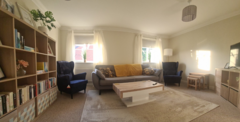
Swindon will open the UK’s first women-only mental health crisis house on June 15, providing intensive residential support as an alternative to hospitalisation for women in acute mental distress. The facility, funded by Swindon Borough Council and run in partnership with Avon and Wiltshire Mental Health Partnership NHS Trust, aims to address gaps in crisis care for women who may feel unsafe or unsupported in mixed-gender hospital wards.
The 12-bed house will operate 24/7, offering short-term stays of up to six weeks for women aged 18 and over experiencing severe anxiety, depression, psychosis, or trauma-related conditions. Staffed by mental health professionals and peer support workers, the facility will provide therapy, medication management, and practical help with daily living. Unlike hospital admissions, the approach prioritises a homely environment to reduce distress and promote recovery.
Women-centred mental health care model
The crisis house is part of a growing shift toward gender-specific mental health services in the UK, responding to evidence that women often face higher risks of misdiagnosis, under-treatment, or retraumatisation in mixed settings. Women are more likely to experience mental health conditions linked to abuse, domestic violence, or reproductive health issues, yet traditional inpatient units may not address these needs effectively.
Local health leaders say the model will reduce pressure on hospital beds while improving outcomes for service users. ‘This is not just about providing a bed—it’s about creating a safe, therapeutic space where women can rebuild their confidence and coping skills,’ said Dr. Sarah Clarke, medical director at the NHS trust. The facility will also offer trauma-informed care, recognising the high prevalence of past trauma among women in crisis.
Funding and community response
The £1.2 million project is funded through a combination of NHS grants and local authority investment, with additional support from Mind, the mental health charity. Community groups and local charities have welcomed the initiative, particularly for women who have historically struggled to access culturally sensitive or gender-appropriate care.
‘For many women, especially those from marginalised backgrounds, hospital wards can feel intimidating or unsafe,’ said Lisa Patel, director of Mind in Swindon. ‘A women-only space can make a real difference in how quickly someone begins to recover.’ The crisis house will also work closely with local women’s refuges and sexual violence support services to ensure seamless referrals for those who need additional safeguarding.
How referrals and admissions will work
Referrals will primarily come from GPs, community mental health teams, and A&E departments, with priority given to women at immediate risk of hospital admission. The assessment process will focus on safety, trauma history, and the likelihood of benefiting from a gender-specific environment. Partners hope the model will eventually be replicated in other parts of the UK, particularly areas with high demand for mental health beds.
For now, the Swindon crisis house will operate as a pilot, with plans to expand capacity or open additional sites if successful. Health officials will monitor outcomes such as readmission rates, patient satisfaction, and staff retention to evaluate the model’s impact.
Nationally, mental health charities are calling for more investment in community-based alternatives like this one, citing NHS England data showing that 1 in 4 women experience a mental health problem each year—but only 1 in 8 receives treatment. The Swindon crisis house could serve as a blueprint for closing that gap.
For women in crisis, the facility represents a chance to access care without the stigma or barriers of traditional hospital care. As one local GP put it: ‘This is about treating people with dignity—and giving them the space to heal.’
What You Need to Know
- Source: BBC News
- Published: May 12, 2026 at 10:13 UTC
- Category: Health
- Topics: #bbc · #health · #medicine · #mental-health · #women · #swindon
Read the Full Story
This is a curated summary. For the complete article, original data, quotes and full analysis:
All reporting rights belong to the respective author(s) at BBC News. GlobalBR News summarizes publicly available content to help readers discover the most relevant global news.
Curated by GlobalBR News · May 12, 2026
Related Articles
- Why ‘Ballmaxxing’ May Be More Dangerous Than You Think
- Weight Loss Surgeries Decline as GLP-1 Use Skyrockets. Why This Matters
- Olympian Allyson Felix on Why Rest and Recovery Beat Hustle Culture
🇧🇷 Resumo em Português
A Inglaterra inova com a primeira casa de crise de saúde mental exclusiva para mulheres, mas o Brasil ainda engatinha quando o assunto é acolhimento especializado para o público feminino em sofrimento psicológico.
A iniciativa, lançada em Swindon, oferece suporte intensivo 24 horas por dia como alternativa ao internamento hospitalar, com foco em segurança e recuperação em ambiente acolhedor. No Brasil, onde a saúde mental feminina enfrenta barreiras como a falta de serviços específicos e a subnotificação de casos — muitas vezes mascarados por diagnósticos genéricos como “ansiedade” ou “depressão” —, a ausência de políticas públicas semelhantes expõe uma lacuna crítica. Dados da OMS revelam que mulheres são 50% mais propensas a buscar ajuda, mas também são mais vulneráveis à violência obstétrica, assédio e sobrecarga doméstica, fatores que agravam transtornos como TEPT e transtornos alimentares. Enquanto países europeus avançam em modelos comunitários, o Brasil segue dependendo de leitos psiquiátricos superlotados ou terapias particulares inacessíveis à maioria.
A experiência britânica pode — e deveria — inspirar o Brasil a repensar seus modelos de cuidado, especialmente em um contexto onde o feminicídio, a pobreza menstrual e a falta de acesso a psicólogos no SUS tornam a saúde mental das mulheres uma emergência silenciosa.
🇪🇸 Resumen en Español
Swindon ha inaugurado la primera casa de crisis de salud mental exclusiva para mujeres en el Reino Unido, un avance pionero para abordar las necesidades específicas de este colectivo en momentos críticos. Este recurso, que evita la hospitalización, ofrece apoyo intensivo en un entorno seguro y comunitario, marcando un hito en la atención psicológica del país.
El modelo, impulsado por autoridades locales y especialistas, responde a la creciente demanda de alternativas menos restrictivas pero igualmente efectivas para mujeres con crisis graves, como depresión, ansiedad o trastornos derivados de violencia de género. Para los hispanohablantes en España o Latinoamérica, este ejemplo subraya la importancia de diseñar servicios inclusivos y adaptados a grupos vulnerables, un debate que gana fuerza también en nuestras sociedades, donde persisten barreras de acceso a la salud mental. La iniciativa británica podría inspirar réplicas en otros países, demostrando que la innovación en cuidados no siempre requiere grandes infraestructuras, sino enfoque y sensibilidad.
BBC News
Read full article at BBC News →This post is a curated summary. All rights belong to the original author(s) and BBC News.
Was this article helpful?
Discussion