Pakistan deliberately avoided using Babur missiles in 2025 to prevent nuclear escalation after Indian strikes.
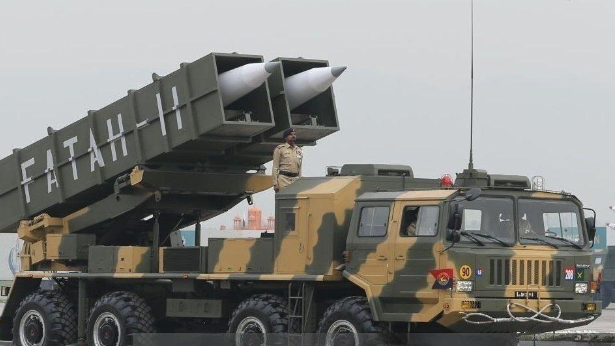
- Pakistan withheld Babur cruise missile in May 2025 despite capability
- Decision aimed to prevent signaling nuclear escalation after Indian BrahMos strikes
- Four-day crisis showed changing logic of limited war in South Asia
In May 2025, Indian BrahMos missile strikes targeted Pakistani air bases, damaging runways, parked aircraft, and critical infrastructure. Islamabad faced a critical choice: respond with its own long-range systems or hold back. Pakistan deliberately chose the latter, withholding the Babur cruise missile despite having the capability to deploy it. The decision was not due to a lack of options but to avoid signaling nuclear escalation, a move that underscored the fragility of crisis management in South Asia’s evolving conflict landscape.
The four-day crisis that followed was intense but remained contained, defined as much by what was withheld as by what was used. Military analysts note that Pakistan’s restraint in using dual-capable systems like the Babur—capable of carrying both conventional and nuclear warheads—highlighted a new strategic calculus. This approach aimed to signal restraint to India while avoiding unintended escalation, but it also exposed the risks of relying on ambiguous signaling in high-stakes confrontations. The episode raised questions about whether such deliberate restraint can consistently prevent miscalculation.
Military leaders and strategic thinkers are now reassessing deterrence strategies in the region. The May 2025 crisis demonstrated that even when both sides exercise restraint, the potential for escalation remains high. Pakistan’s decision to withhold the Babur missile suggested a calculated risk to avoid nuclear signaling, but it also revealed the thin line between limited conflict and uncontrolled escalation. Analysts argue that this moment may have set a precedent for future crises, where the withholding of dual-capable systems could become a norm—or a liability.
The crisis also underscored the evolving role of BrahMos and Babur missiles in South Asian military doctrine. The BrahMos, an Indo-Russian supersonic cruise missile, has become a symbol of India’s precision-strike capabilities, while the Babur—Pakistan’s domestically developed cruise missile—represents Islamabad’s strategic ambiguity. The May 2025 strikes and Pakistan’s restrained response highlighted how these systems are reshaping the dynamics of conventional and nuclear deterrence in the region.
Critics argue that Pakistan’s restraint may not be sustainable in future crises. If India continues to use BrahMos strikes for limited objectives, Pakistan may face increasing pressure to respond in kind, potentially eroding the deterrent effect of its withholding strategy. The risk is that repeated restraint could be misinterpreted as weakness, encouraging further Indian actions that push the boundaries of limited war.
Looking ahead, military planners in both countries are likely to refine their crisis management strategies. The May 2025 episode served as a stress test for South Asia’s deterrence architecture, revealing both its strengths and vulnerabilities. Policymakers may now seek clearer communication channels and more robust escalation control measures to prevent miscalculation in future conflicts. The question remains whether such measures can keep a limited war from spiraling out of control.
For now, the crisis serves as a reminder that in South Asia, the logic of limited war is increasingly fragile. Restraint can be a powerful signal, but it is not a guarantee against escalation. The challenge for both sides will be to balance the need for deterrence with the imperative of avoiding catastrophic miscalculation.
What You Need to Know
- Source: War on the Rocks
- Published: May 13, 2026 at 07:15 UTC
- Category: War
- Topics: #defense · #military · #geopolitics · #war · #conflict · #pakistan
Read the Full Story
This is a curated summary. For the complete article, original data, quotes and full analysis:
All reporting rights belong to the respective author(s) at War on the Rocks. GlobalBR News summarizes publicly available content to help readers discover the most relevant global news.
Curated by GlobalBR News · May 13, 2026
Related Articles
🇧🇷 Resumo em Português
Em maio de 2025, o Paquistão surpreendeu o mundo ao resistir à tentação de retaliar com mísseis Babur contra alvos indianos, após ataques com mísseis BrahMos ao território paquistanês. A decisão, que evitou uma escalada nuclear em pleno sul da Ásia, reacendeu o debate sobre até onde pode ir a estratégia de “guerra limitada” entre potências nucleares rivais, um tema que toca diretamente na segurança global.
O episódio ganha relevância para o Brasil e os falantes de português por dois motivos principais: primeiro, porque expõe as fraturas de uma região onde conflitos históricos, como o da Caxemira, continuam a ameaçar a estabilidade internacional; segundo, porque o uso de tecnologia militar de ponta — como mísseis de cruzeiro supersônicos — mostra como conflitos regionais podem rapidamente se tornar um laboratório de guerras do futuro, com implicações para a não-proliferação nuclear. Para o Brasil, que mantém uma política externa de não-alinhamento e defesa da paz, o caso serve como alerta sobre os riscos de uma escalada descontrolada em zonas de tensão, mesmo quando atores regionais tentam impor limites.
A pergunta que fica é: até quando a lógica de contenção entre Índia e Paquistão será suficiente para evitar um erro de cálculo catastrófico?
🇪🇸 Resumen en Español
La tensión militar entre India y Pakistán alcanza un nuevo umbral estratégico, donde Islamabad opta por contener su respuesta tras ataques indios para evitar una escalada nuclear, redefiniendo las reglas de un conflicto que ya no se limita a las fronteras.
Este episodio refleja cómo Pakistán prioriza la disuasión táctica sobre la represalia inmediata, una estrategia arriesgada que busca evitar una guerra total pero que podría normalizar enfrentamientos limitados sin consecuencias claras. Para el público hispanohablante, el caso subraya la fragilidad de los equilibrios regionales en zonas de alta tensión, donde la moderación militar no siempre garantiza la estabilidad a largo plazo. La pregunta clave sigue abierta: ¿hasta cuándo podrán las potencias nucleares localizadas contener sus pulsiones belicosas sin traspasar líneas rojas impredecibles?
War on the Rocks
Read full article at War on the Rocks →This post is a curated summary. All rights belong to the original author(s) and War on the Rocks.
Was this article helpful?


Discussion