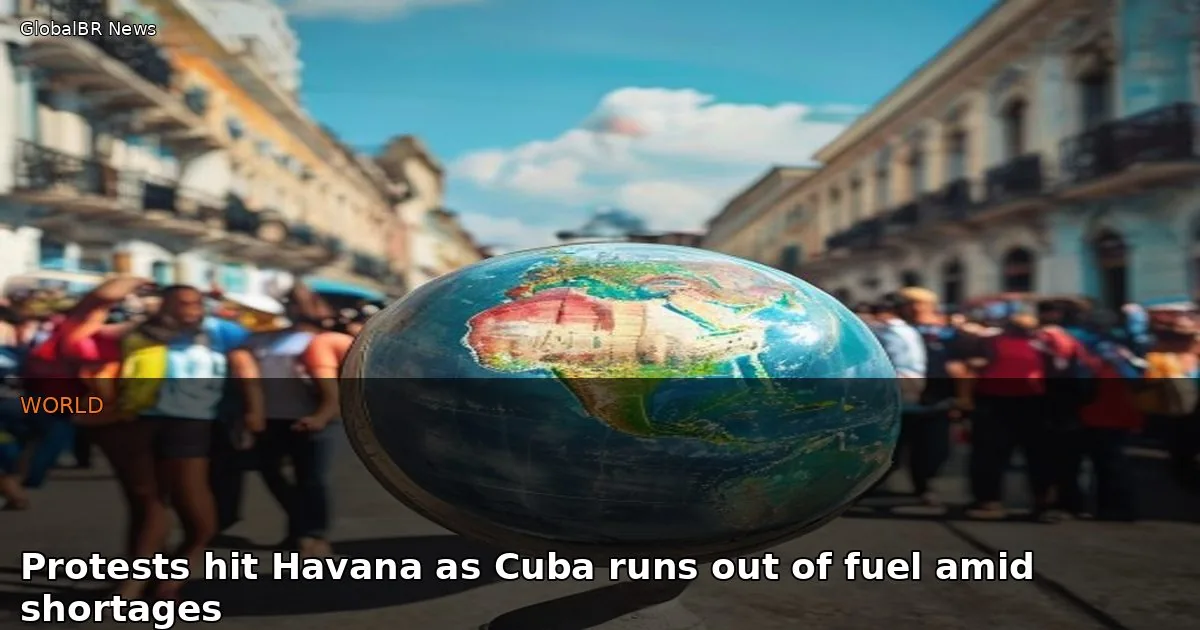
Cuba’s fuel reserves hit zero, sparking protests in Havana over shortages of power, food and transport.
- Protests erupted in Havana over collapsing fuel supply
- Cuba blames US sanctions for shortages
- Residents face blackouts and transport failures
Protests broke out in Cuba’s capital Tuesday as residents took to the streets to demand solutions to worsening fuel shortages that have crippled power, transport, and food supplies. Cuban officials confirmed Tuesday that the country’s fuel reserves had been exhausted, leaving many without access to gasoline, diesel, or public transit. Demonstrators gathered in Havana’s central areas, chanting slogans and blocking streets, according to local reports and social media videos.
Cuban authorities placed blame squarely on U.S. sanctions, particularly those imposed during the Trump administration, which tightened restrictions on oil imports and financial transactions. The Cuban government has long argued that the embargo prevents it from importing sufficient fuel from allies like Venezuela. On Tuesday, officials reiterated that without sanctions relief, the shortages would persist, warning that electricity blackouts and transport disruptions could worsen in the coming weeks.
Fuel crisis paralyzes daily life in Havana
The collapse of fuel reserves has paralyzed life in Havana, where residents now face hours-long blackouts each day and long lines at gas stations that often go dry within hours. Public buses, taxis, and private vehicles are running on fumes, forcing many to walk or rely on overcrowded informal transit. Grocery stores are reporting empty shelves, with staples like rice, beans, and cooking oil becoming scarce. The shortages have deepened economic stress in a country already struggling with hyperinflation and a weakened currency.
State media reported that the government was prioritizing fuel for essential services such as hospitals and water pumps, but acknowledged that many neighborhoods would continue to experience severe disruptions. Cuba’s energy minister told national television that the country was working to secure emergency fuel shipments from allies, but no immediate relief was expected. Social media posts showed long queues at gas stations, with some people waiting overnight only to be turned away.
Protests spread amid growing frustration
While early reports indicated isolated protests in Havana, videos and testimonies suggest the unrest may be spreading to other provinces. Residents described frustration not only over fuel shortages but also over chronic power cuts and food scarcity. Some demonstrations turned tense, with reports of police presence and detentions. The Cuban government, which tightly controls public gatherings, has not yet commented on the scale of the protests or any response beyond blaming foreign policy.
Analysts say the crisis reflects deeper structural problems in Cuba’s centrally planned economy, including reliance on subsidized oil from Venezuela, which has itself faced economic collapse. The loss of Venezuelan supplies over the past year has exposed Cuba’s vulnerability. Meanwhile, U.S. officials have stated that sanctions allow for humanitarian exemptions and do not target basic needs like food and medicine. The State Department has not responded to repeated requests for comment on Cuba’s fuel crisis.
What happens next
With no immediate end in sight to the fuel shortage, Cubans are bracing for further hardship. The government has announced plans to ration electricity in some areas and reduce non-essential services, but residents say these measures will only deepen hardship. Human rights groups have called for restraint and urged authorities to allow peaceful protest. The situation remains fluid, with reports of continued unrest in other cities.
As Cuba navigates one of its worst crises in decades, the fuel shortage has become a flashpoint in a broader debate over sanctions and economic survival. Whether the protests will lead to policy changes or further repression remains uncertain. One thing is clear: without fuel, Cuba’s already fragile systems of transport, power, and food distribution cannot function.
What You Need to Know
- Source: Euronews
- Published: May 15, 2026 at 08:02 UTC
- Category: World
- Topics: #euronews · #europe · #world-news · #war · #conflict · #protests
Read the Full Story
This is a curated summary. For the complete article, original data, quotes and full analysis:
All reporting rights belong to the respective author(s) at Euronews. GlobalBR News summarizes publicly available content to help readers discover the most relevant global news.
Curated by GlobalBR News · May 15, 2026
Related Articles
- US proposes 40% cut in Colorado River water for 3 states amid drought
- Trump urges Taiwan to avoid independence amid rising China tensions
- Xi gives Trump private tour of secret garden in Beijing
🇧🇷 Resumo em Português
Moradores de Havana tomaram as ruas em protestos intensos após o governo cubano declarar a escassez total de combustível no país, deixando a ilha sem diesel nem gasolina e paralisando transporte, distribuição de alimentos e fornecimento de energia. As cenas de empurrões e gritos por combustível se espalharam pela capital, enquanto moradores denunciavam filas de horas para encher tanques que não tinham mais o que oferecer, um cenário que lembra os piores anos da crise dos anos 1990, após o colapso da União Soviética.
A crise atual é agravada pelas sanções impostas pelos Estados Unidos, que restringem o acesso de Cuba a mercados internacionais e dificultam a importação de petróleo, mesmo de aliados como a Venezuela. Para o Brasil, o colapso energético em Cuba representa não apenas um alerta sobre os riscos de dependência externa, mas também uma oportunidade para reforçar laços comerciais alternativos na região, como a venda de etanol ou a ampliação de acordos de cooperação energética. Além disso, a situação expõe a fragilidade de um modelo econômico que já não consegue suprir demandas básicas da população, o que pode influenciar discussões sobre políticas de autossuficiência em outros países latino-americanos.
O governo cubano já anunciou um plano emergencial para racionar o pouco combustível disponível e prometeu repor estoques em breve, mas a população segue cética, temendo que as promessas se repitam como já ocorreu em outras ocasiões.
🇪🇸 Resumen en Español
Un nuevo capítulo de crisis económica sacude a Cuba tras agotarse sus reservas de combustible, dejando a la población sin luz, comida ni transporte en las calles de La Habana. Las protestas, inéditas en los últimos años, estallaron como respuesta a la escasez que ahoga al país, donde el desabastecimiento se ha convertido en el pan de cada día.
La situación refleja el colapso de un modelo que, según el gobierno, se ve agravado por el bloqueo estadounidense, pero que los ciudadanos atribuyen a décadas de mala gestión y corrupción. Para los hispanohablantes, este escenario evoca recuerdos dolorosos de épocas pasadas y plantea una pregunta incómoda: ¿hasta cuándo podrá resistir la isla un sistema que ahoga a su pueblo en la miseria mientras las élites mantienen privilegios? La respuesta, al menos por ahora, sigue siendo un misterio con consecuencias humanas cada vez más visibles.
Euronews
Read full article at Euronews →This post is a curated summary. All rights belong to the original author(s) and Euronews.
Was this article helpful?
Discussion