See the Milky Way, Venus and Mars in May 2026’s new moon darkness.
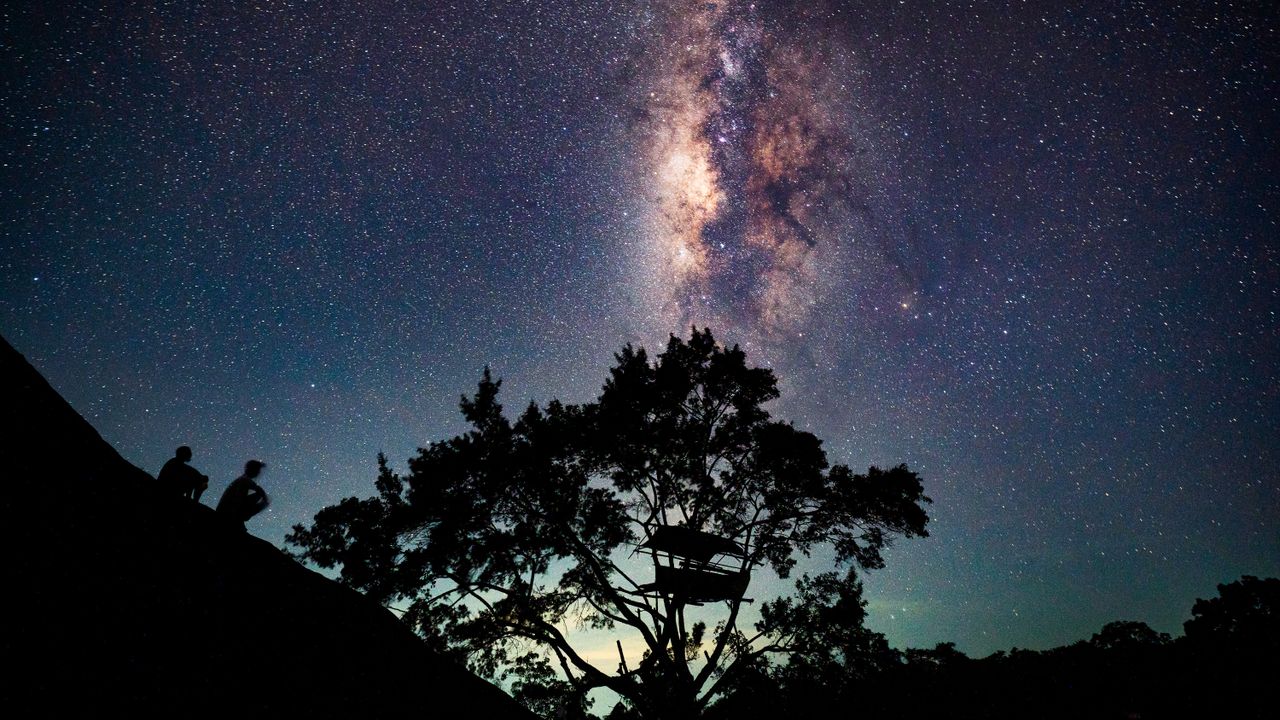
- View Milky Way’s glowing band under May 2026’s new moon
- Spot Venus and Mars in dark night skies after midnight
- Photographers get rare chance to capture Summer Triangle nebulas
The night of May 11, 2026, will bring the darkest skies of the month as the new moon rises, creating perfect conditions for stargazing and astrophotography. The Milky Way’s glowing band will stretch vertically across the sky, visible to the naked eye in areas free from light pollution. Bright planets Venus and Mars will also shine prominently after midnight, offering a rare celestial show.
Astronomers recommend heading to dark-sky preserves or remote locations at least an hour after sunset to let eyes adjust fully to the darkness. The Milky Way will appear most vivid in the eastern sky, rising higher as the night progresses. Venus, often called the “evening star,” will dominate the western horizon before setting around 10:30 p.m. local time, while Mars will rise in the east after midnight, glowing with a distinct red hue.
Photographers can capture stunning images of the Milky Way’s core, especially in regions near the equator where the galaxy’s center appears highest. Renowned astrophotographer Josh Dury’s annotated photo of the Milky Way reveals key features such as the Summer Triangle asterism and prominent nebulas like the North America Nebula and the Lagoon Nebula. These targets are ideal for long-exposure shots with wide-angle lenses.
The constellations of Leo, Lynx, and Leo Minor will guide stargazers to the Milky Way’s path. Leo, with its bright star Regulus, will be visible high in the south after dusk, while Lynx and Leo Minor will appear as faint groupings to the north. Using a star chart or astronomy app can help locate these constellations, especially in areas with moderate light pollution.
For optimal viewing, avoid nights around the full moon, when moonlight washes out fainter stars and nebulas. May’s new moon provides a two-week window of dark skies, with the best visibility between May 11 and May 25. Urban stargazers can still spot Venus and Mars from city parks or rooftops, but the Milky Way will require darker skies.
Astronomy clubs worldwide are planning viewing events for May 2026, with telescopes and guided tours available in many locations. Check local listings for public star parties or join online communities to share tips and photos. The event also serves as a reminder of the importance of preserving dark skies amid growing light pollution.
How to photograph the Milky Way in May 2026
Capturing the Milky Way requires a camera with manual settings, a sturdy tripod, and a wide-angle lens with a fast aperture, such as f/2.8 or lower. Set the ISO between 3200 and 6400, and use a shutter speed of 20-30 seconds to avoid star trails. Focus manually on a bright star or distant light, then switch to manual focus to lock the setting. A remote shutter release helps prevent camera shake during long exposures.
Best locations for May 2026 stargazing
Dark-sky preserves certified by the International Dark-Sky Association offer the clearest views of the Milky Way. In the U.S., locations like Death Valley National Park in California and Big Bend National Park in Texas provide ideal conditions. In Europe, Aoraki Mackenzie Dark Sky Reserve in New Zealand and NamibRand Nature Reserve in Namibia are top choices for Southern Hemisphere observers.
The Milky Way’s core will be visible in the eastern sky during May evenings, rising higher as the night progresses. Venus and Mars will be bright enough to spot even in areas with moderate light pollution, making them accessible targets for urban stargazers. The event highlights the growing public interest in astronomy and the need to protect night skies from artificial light.
What You Need to Know
- Source: Space.com
- Published: May 16, 2026 at 13:00 UTC
- Category: Science
- Topics: #space · #astronomy · #nasa · #milky-way · #venus · #mars
Read the Full Story
This is a curated summary. For the complete article, original data, quotes and full analysis:
All reporting rights belong to the respective author(s) at Space.com. GlobalBR News summarizes publicly available content to help readers discover the most relevant global news.
Curated by GlobalBR News · May 16, 2026
Related Articles
- 5 Ways to Vet Social Media Health Advice Before Trying It
- PCOS renamed to PMOS after decades of misdiagnosis confusion
🇧🇷 Resumo em Português
A noite de maio de 2026 promete ser um espetáculo cósmico para quem gosta de observar o céu: será a melhor oportunidade em anos para admirar a Via Láctea a olho nu, além da brilhante presença de Vênus e Marte, alinhados em um cenário que deve encantar astrônomos amadores e profissionais. O evento, marcado para o dia 15 daquele mês, coincide com a Lua Nova, que, por não refletir luz solar, deixará o céu excepcionalmente escuro — condição perfeita para quem busca registrar ou simplesmente contemplar as maravilhas do universo.
No Brasil, onde a poluição luminosa nas grandes cidades muitas vezes atrapalha a observação astronômica, essa data representa uma chance valiosa para popularizar a ciência entre a população. Regiões afastadas de centros urbanos, como o sertão nordestino ou a Amazônia, podem oferecer condições ideais para a observação, atraindo tanto curiosos quanto estudiosos. Além disso, o fenômeno ganha relevância em um momento em que o país discute políticas de preservação de céus escuros, como a recente criação de reservas de star parks, que incentivam o turismo astronômico e a proteção do meio ambiente. Para os falantes de língua portuguesa, especialmente em países como Angola e Moçambique, onde a astronomia ainda dá seus primeiros passos, a data pode servir como um incentivo para desenvolver projetos de divulgação científica.
Com a aproximação do evento, cientistas e instituições como o Observatório Nacional já começam a preparar ações de conscientização, enquanto fotógrafos e entusiastas se preparam para equipamentos e viagens em busca do melhor ângulo. Seja para inspirar a próxima geração de astrônomos ou simplesmente para proporcionar um momento de contemplação, maio de 2026 promete deixar sua marca na história da observação celeste no Brasil e além.
🇪🇸 Resumen en Español
La noche del 10 de mayo de 2026 promete ser un espectáculo celeste que no se repetirá en décadas.
Durante esa jornada, la ausencia de luna —en fase de novilunio— dejará el firmamento en completa oscuridad, creando las condiciones óptimas para observar la Vía Láctea a simple vista, especialmente en zonas libres de contaminación lumínica. Además, los planetas Venus y Marte brillarán con intensidad en el cielo nocturno, ofreciendo un espectáculo astronómico que captará la atención tanto de aficionados como de expertos. Para los hispanohablantes, este fenómeno representa una oportunidad única de reconectar con el cosmos, ya que regiones como Canarias, Chile o Argentina —con cielos despejados y observatorios de prestigio— serán escenarios ideales para vivir esta experiencia. Más allá del asombro visual, el evento subraya la importancia de preservar los espacios naturales frente a la contaminación lumínica, un desafío creciente en nuestras sociedades.
Space.com
Read full article at Space.com →This post is a curated summary. All rights belong to the original author(s) and Space.com.
Was this article helpful?

Discussion