US Navy deploys over 20 warships, including two carriers, to enforce Iran blockade as of May 11, 2026.
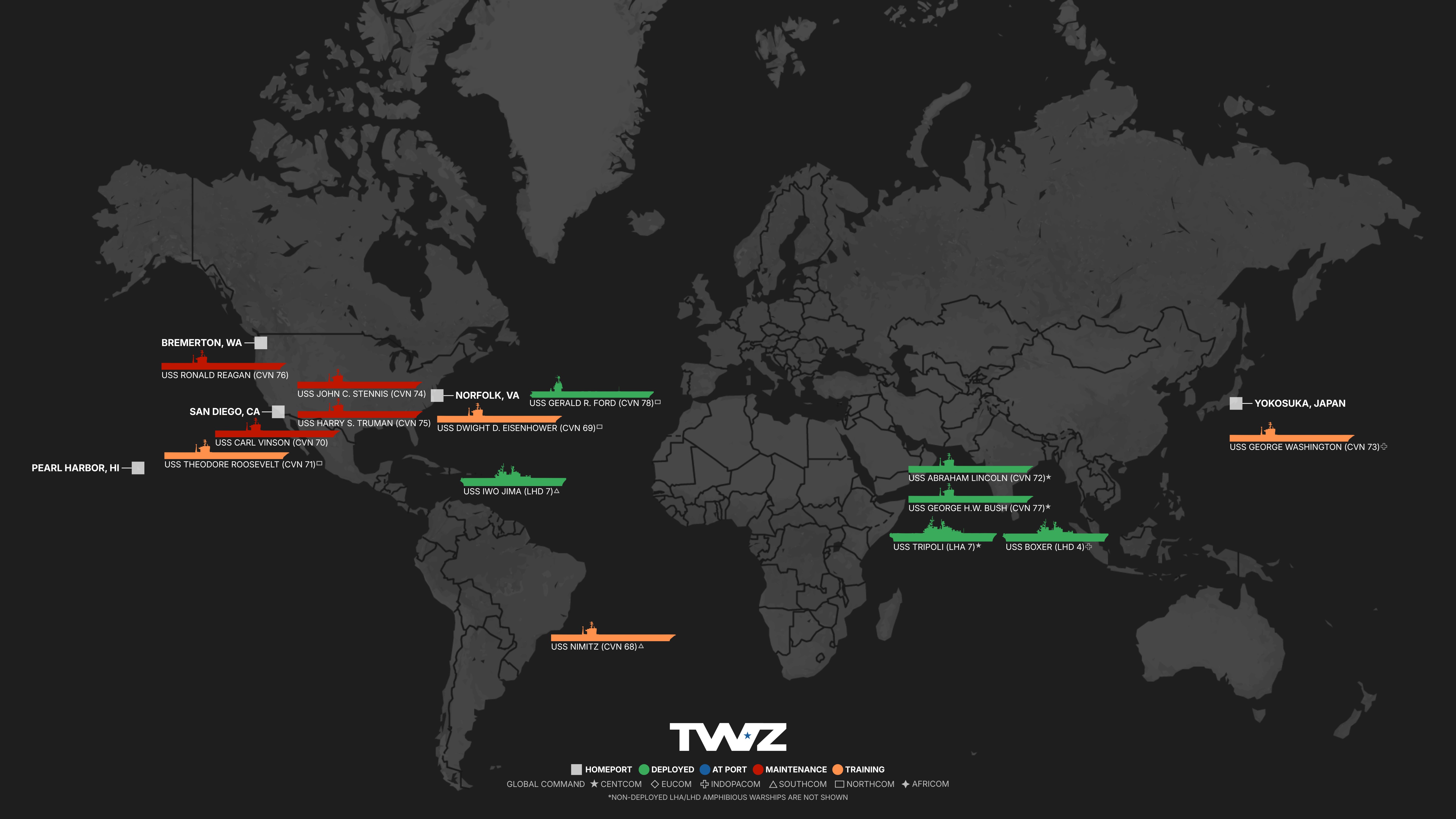
- US Navy enforces Iran blockade with over 20 warships as of May 11, 2026
- Two carrier strike groups part of the enforcement operation
- CENTCOM redirects 61 commercial vessels linked to Iran
The U.S. Navy has deployed more than 20 warships, including two carrier strike groups, to enforce a blockade against Iran as of May 11, 2026. The operation, conducted under U.S. Central Command (CENTCOM), involves multiple naval assets in the Arabian Sea and broader CENTCOM area of responsibility. Among the ships active in the blockade are the USS George H.W. Bush (CVN 77), a Nimitz-class aircraft carrier, and the guided-missile destroyer USS John Finn (DDG 113).
CENTCOM Reports 61 Vessels Redirected, Four Disabled
CENTCOM forces have redirected 61 commercial vessels believed to be linked to Iran since the blockade enforcement began. At least four vessels attempting to evade the blockade have been disabled, according to publicly available reports. The blockade is part of broader U.S. efforts to curb Iran’s alleged support for proxy groups and violations of international sanctions. The operation reflects heightened tensions in the region and the U.S. military’s expanded presence in the Middle East.
Carrier Strike Groups and Amphibious Ready Groups Deployed
The two carrier strike groups currently enforcing the blockade include the USS George H.W. Bush Carrier Strike Group and another Nimitz-class carrier group. These groups typically consist of an aircraft carrier, guided-missile cruisers, destroyers, and support ships. Amphibious Ready Groups (ARGs) are also part of the deployment, providing additional flexibility and firepower in the region. The presence of these groups underscores the U.S. Navy’s commitment to maintaining maritime security and enforcing sanctions.
Publicly Available Open-Source Tracking
The fleet’s movements are tracked weekly by The War Zone, which monitors America’s flattop fleet using open-source information. Last week’s map showed the positioning of U.S. carrier strike groups and amphibious ready groups, providing transparency on naval deployments. This tracking helps analysts and the public understand the scope and scale of U.S. military operations in the region. The transparency aligns with the U.S. Navy’s emphasis on open communication and public accountability.
Broader Implications for Regional Stability
The blockade enforcement comes amid escalating tensions between the U.S. and Iran, with both sides accusing the other of provocative actions. The deployment of over 20 warships signals a significant increase in U.S. military posture in the Middle East. Regional allies and partners are closely watching the situation, as the blockade could impact maritime trade routes and global oil supplies. The U.S. has repeatedly stated that its actions are aimed at preventing Iran from destabilizing the region through proxy groups and sanctions violations.
What You Need to Know
- Source: The Drive
- Published: May 11, 2026 at 04:56 UTC
- Category: War
- Topics: #military · #weapons · #conflict · #war · #carriers · #warships-enforce-iran
Read the Full Story
This is a curated summary. For the complete article, original data, quotes and full analysis:
All reporting rights belong to the respective author(s) at The Drive. GlobalBR News summarizes publicly available content to help readers discover the most relevant global news.
Curated by GlobalBR News · May 11, 2026
Related Articles
🇧🇷 Resumo em Português
A Marinha dos EUA desafia Teerã com mais de 20 navios de guerra, incluindo dois porta-aviões, impondo um bloqueio naval ao Irã em maio de 2026 — uma escalada militar que reacende tensões no Golfo Pérsico e põe à prova a estabilidade global.
O bloqueio, anunciado pela Central Command (CENTCOM), não apenas restringe o fluxo de comércio marítimo, mas também sinaliza uma postura agressiva dos EUA após meses de ataques iranianos a embarcações no Estreito de Ormuz e no Mar Vermelho. Com 61 navios comerciais já redirecionados, a medida afeta rotas críticas para o Brasil, principal exportador de commodities para a Ásia, que depende do Golfo Pérsico para escoar parte de sua produção. Além disso, a presença de dois grupos de ataque de porta-aviões — símbolos do poder naval americano — reforça a mensagem de dissuasão, mas aumenta o risco de um confronto direto com o Irã, aliado de grupos como o Hamas e o Hezbollah.
Se a tensão escalar, o Brasil e outros países sul-americanos podem enfrentar novos gargalos logísticos, enquanto a comunidade internacional observa se Washington optará por negociações ou por uma ação militar mais contundente nos próximos dias.
🇪🇸 Resumen en Español
El mundo militar vive un pulso sin precedentes en el Golfo Pérsico, donde más de 20 buques de guerra estadounidenses, entre ellos dos grupos de portaaviones, han desplegado este mes de mayo de 2026 para imponer un bloqueo marítimo a Irán. La operación, coordinada por el Mando Central de EE.UU. (CENTCOM), ha alterado el tráfico comercial en una de las rutas más estratégicas del planeta: el estrecho de Ormuz.
La presencia de estos 20 buques, que incluye la reasignación de 61 embarcaciones mercantes bajo control militar, refleja la escalada de tensiones en la región tras años de sanciones y enfrentamientos indirectos. Para los hispanohablantes, el conflicto tiene implicaciones económicas y geopolíticas directas: el bloqueo amenaza el suministro global de petróleo y reactiva el debate sobre la dependencia energética de Europa y América Latina. Además, la movilización naval recuerda a los lectores la fragilidad de las rutas marítimas en un contexto donde cualquier choque en la zona podría desestabilizar mercados clave, desde el crudo hasta los alimentos.
The Drive
Read full article at The Drive →This post is a curated summary. All rights belong to the original author(s) and The Drive.
Was this article helpful?

Discussion