US-Niger operation kills Islamic State’s top deputy Abu-Bilal al-Minuki in precision strike.
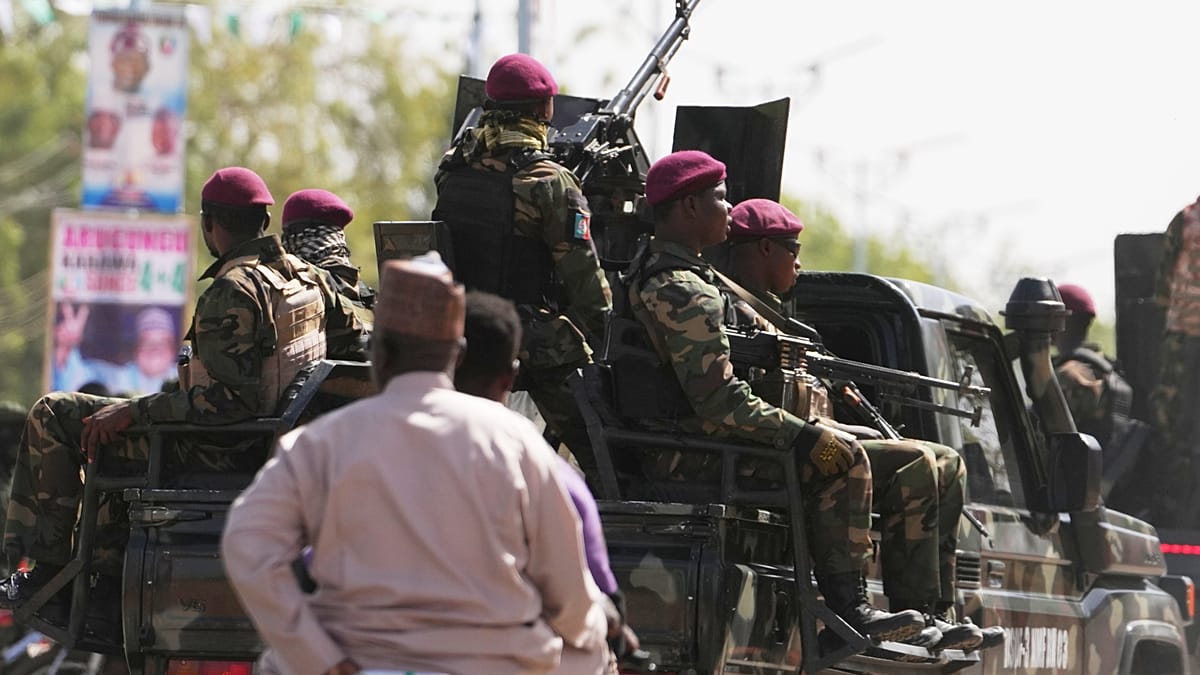
- US and Niger forces eliminate Islamic State’s second-in-command Abu-Bilal al-Minuki
- Trump calls al-Minuki the 'most active terrorist in the world' in operation announcement
- Mission described as 'meticulously planned and very complex' by White House
Abu-Bilal al-Minuki, the Islamic State’s (ISIS) global deputy leader, was killed in a joint US-Niger military operation, President Donald Trump confirmed on Wednesday. The mission, conducted in Niger, targeted al-Minuki in what the White House described as a ‘meticulously planned and very complex’ counterterrorism strike. Trump called al-Minuki the ‘most active terrorist in the world’ during a briefing to reporters.
The operation underscores the ongoing collaboration between the US and African nations to dismantle ISIS affiliates operating across the Sahel region. Niger, a key US partner in counterterrorism efforts, has hosted American military personnel and drone operations for years. The Pentagon confirmed the operation but provided no further operational details, citing the sensitivity of ongoing military actions. Local reports from Niger suggest the strike occurred in the Tillabéri region, an area known for ISIS-affiliated militant activity.
Al-Minuki, whose real name was identified as Mahamat Saleh Al-Minuni, rose through the ranks of ISIS after defecting from Boko Haram, another extremist group operating in West Africa. He was appointed as the group’s deputy leader in 2021, following the death of his predecessor, Abu Musab al-Barnawi. His death represents a major disruption to ISIS’s command structure in Africa, where the group has been expanding its influence in recent years.
The strike comes amid heightened scrutiny of US counterterrorism operations in Africa, particularly after the 2020 Niger ambush that killed four US soldiers. The Biden administration has continued to prioritize counterterrorism efforts in the region, though public details about such operations remain limited. The US Africa Command (AFRICOM) has not yet released a statement on the operation, but military analysts note that al-Minuki’s elimination could temporarily weaken ISIS’s operational capacity in the region.
ISIS leadership decimated in recent years
Al-Minuki’s death follows a series of high-profile strikes against ISIS leadership, including the 2019 killing of Abu Bakr al-Baghdadi, the group’s self-proclaimed caliph, in a US raid in Syria. His predecessor, al-Barnawi, was killed in a Nigerian military operation in 2021, further crippling the group’s regional leadership. Despite these losses, ISIS has continued to regroup, particularly in the Lake Chad basin and the Sahel, where it has exploited local grievances and weak governance to expand its reach.
The operation in Niger highlights the shifting dynamics of counterterrorism in Africa, where US support often relies on partnerships with local militaries. The Nigerian government has not yet commented on al-Minuki’s death, but regional security analysts suggest the strike could disrupt ISIS’s recruitment and fundraising efforts in West Africa. The group has increasingly relied on local alliances to sustain its operations, making leadership decapitations a critical tool in countering its growth.
Broader implications for global counterterrorism
The elimination of al-Minuki may temporarily degrade ISIS’s ability to direct attacks in the region, but experts warn that the group’s decentralized structure could allow it to absorb the loss. The Sahel remains a hotspot for militant activity, with ISIS’s West Africa Province (ISWAP) and other factions vying for control. The US and its allies will likely continue to target high-value ISIS figures, but the long-term effectiveness of such strikes depends on addressing the root causes of instability in the region.
A senior US administration official, speaking on condition of anonymity, indicated that the operation was part of a broader strategy to degrade ISIS’s operational capabilities globally. The official added that the US remains committed to supporting African partners in their fight against terrorism, though the specifics of future operations remain undisclosed. The strike on al-Minuki sends a clear message to ISIS and other militant groups: their leadership is not beyond reach. What happens next will depend on whether the group can recover or if local forces can capitalize on the disruption to dismantle ISIS’s remaining networks in the Sahel.
What You Need to Know
- Source: Euronews
- Published: May 16, 2026 at 06:45 UTC
- Category: World
- Topics: #euronews · #europe · #world-news · #trump · #nigerian · #bilal
Read the Full Story
This is a curated summary. For the complete article, original data, quotes and full analysis:
All reporting rights belong to the respective author(s) at Euronews. GlobalBR News summarizes publicly available content to help readers discover the most relevant global news.
Curated by GlobalBR News · May 16, 2026
Related Articles
- Eurovision 2024 faces scrutiny over Israel’s participation amid war
- War in the Middle East: Israel targets top Hamas leader in Gaza
- US Justice Department preparing indictment against Raúl Castro
🇧🇷 Resumo em Português
A operação conjunta entre os Estados Unidos e o Níger marcou um golpe histórico no combate ao terrorismo global. Na madrugada de ontem, forças especiais dos dois países eliminaram Abu-Bilal al-Minuki, considerado o segundo homem mais poderoso do Estado Islâmico, em uma ação coordenada que pode redefinir a luta contra a organização extremista no continente africano.
O anúncio feito pelo ex-presidente Donald Trump gerou repercussão imediata no Brasil, onde a segurança pública e a cooperação internacional contra o terrorismo ganham cada vez mais atenção diante do crescimento de células extremistas na América do Sul e do avanço de grupos aliados ao ISIS na África. Especialistas brasileiros avaliam que a eliminação de um líder de tal magnitude pode desestabilizar as operações do Estado Islâmico na região do Sahel, um dos focos de recrutamento mais ativos do grupo. Além disso, a operação reforça a importância da parceria entre nações africanas e potências ocidentais, um tema que ganha tração no debate sobre estratégias de defesa global pós-pandemia.
Com a queda de al-Minuki, especialistas preveem uma possível escalada de retaliações por parte do Estado Islâmico, levantando preocupações sobre a segurança de missões humanitárias e interesses brasileiros na África. A próxima semana deve trazer mais detalhes sobre os desdobramentos da operação e possíveis impactos na geopolítica regional.
🇪🇸 Resumen en Español
El Pentágono ha confirmado la muerte de Abu-Bilal al-Minuki, mano derecha de la cúpula del autoproclamado Estado Islámico, en una operación conjunta entre fuerzas estadounidenses y nigerinas, un golpe simbólico contra el terrorismo global. La misión, que combinó inteligencia y acción militar sobre el terreno, marca un hito en la lucha contra la organización yihadista, demostrando la capacidad de colaboración internacional en zonas de alto riesgo como el Sahel.
La noticia adquiere especial relevancia para el público hispanohablante por el creciente interés en la seguridad en África, donde grupos yihadistas como Boko Haram o la propia franquicia del ISIS en la región han ampliado su influencia. Para España y otros países europeos, el éxito de la operación refuerza la importancia de mantener alianzas con socios locales y potencias extranjeras en la lucha contra el terrorismo, un desafío que trasciende fronteras y requiere coordinación constante. Además, el anuncio llega en un momento de debate sobre el papel de Occidente en conflictos africanos, donde la eficacia de las intervenciones militares sigue siendo cuestionada.
Euronews
Read full article at Euronews →This post is a curated summary. All rights belong to the original author(s) and Euronews.
Was this article helpful?


Discussion