Chinese robot makers publicly promise not to weaponize their tech but still sell to military customers through loopholes.
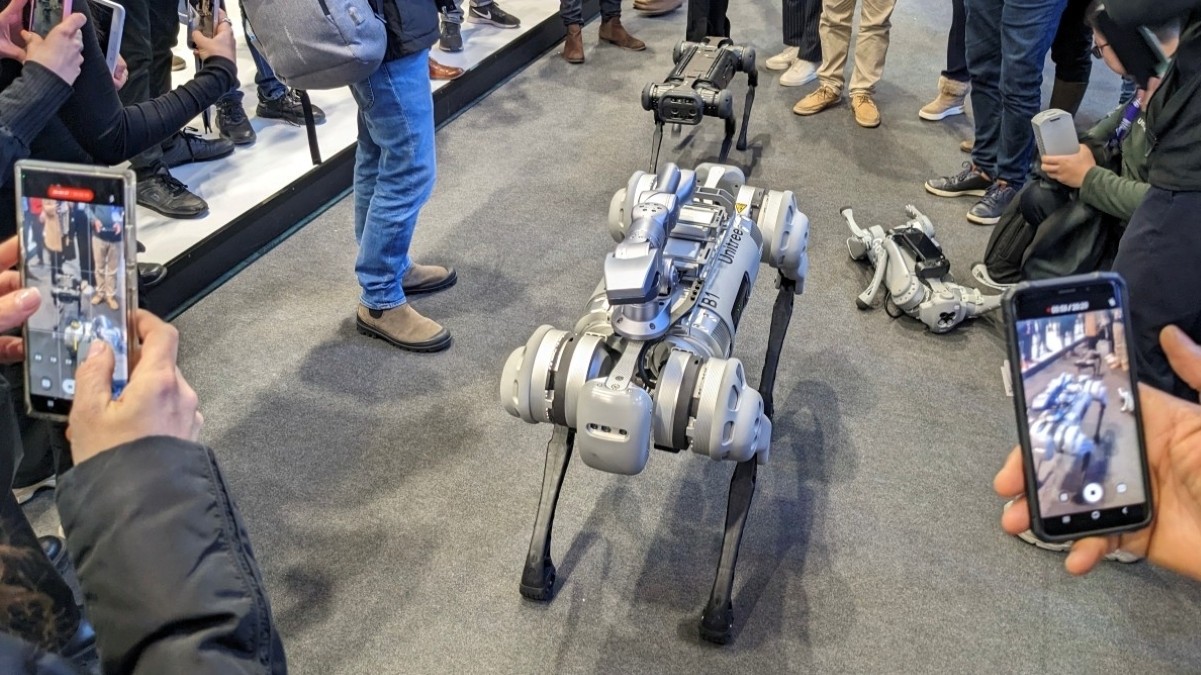
- Unitree Robotics signed a no-weapon pledge in 2022 despite later appearing in PLA propaganda
- The firm holds over 60% of the global quadruped robot market by sales
- Chinese tech startups face pressure to supply the military despite public promises otherwise
Unitree Robotics built its reputation on cheap, reliable quadruped robots. Founded in 2016 by Wang Xingxing, a 26-year-old engineer who left drone giant DJI mid-probation, the Hangzhou-based startup grew fast. By 2023 it sold more quadruped robots worldwide than any competitor, snagging over 60% of the global market by unit sales. Investors like Sequoia China and Meituan piled in, betting on its affordable, dog-like bots for everything from warehouse work to search-and-rescue missions.
The public pledge that wasn’t enough
In October 2022 Unitree joined five other robotics firms—including Boston Dynamics and Agility Robotics—to sign an open letter promising not to weaponize their robots. The signatories vowed to vet customers and refuse sales if there was a risk of military misuse. It looked like a rare moment of industry self-regulation in a field racing ahead of rules. But within months, Chinese state media aired footage of Unitree’s robots patrolling China’s coast with the People’s Liberation Army. The robots weren’t armed, but their presence sent a clear message: China’s military was already using the tech.
The gap between words and reality
Unitree isn’t alone. Across China, dozens of tech startups have grown from scrappy labs into suppliers for the state, even when their public statements suggest otherwise. Some sell directly to military-linked buyers. Others route sales through subsidiaries or third-party distributors to avoid scrutiny. The pattern isn’t new. During the Soviet era, civilian factories doubled as arms producers. Today’s tech boom just makes it easier to hide in plain sight—software updates can turn a logistics bot into a surveillance tool overnight.
The system works because oversight lags behind innovation. China’s export controls on dual-use tech are strict on paper, but enforcement is uneven. Startups often list their products as commercial tools, then pivot when a state buyer comes calling. Unitree, for example, markets its robots for industrial inspection and disaster response. But a 2023 report from War on the Rocks found multiple cases where the same models appeared in military training videos. The company didn’t respond to requests for comment.
Why the military wants these robots
China’s military has a problem: it’s growing fast but still struggles to match the U.S. in high-tech hardware. Quadruped robots like Unitree’s can carry sensors, patrol rugged terrain, or even drag wounded soldiers to safety. They’re cheap compared to drones or armored vehicles, easy to deploy, and hard to detect. State media has shown them inspecting tunnels, mapping coastlines, and even simulating enemy attacks in training drills.
The PLA isn’t just testing the tech—it’s integrating it. In 2023, a military research institute published a paper detailing how quadruped robots could support amphibious landings, a key part of China’s strategy to project power across the South China Sea. The paper cited Unitree’s products by name. The company has never confirmed a direct contract, but the research suggests close collaboration.
The investors caught in the middle
Unitree’s backers include some of China’s most prominent venture firms. Meituan, the food-delivery giant, invested early, betting on robots to automate its warehouses. Sequoia China led later funding rounds, seeing a chance to own a slice of a potential global leader. Neither firm has publicly commented on Unitree’s military ties. For them, the math is simple: the robotics market is worth billions, and China’s domestic demand is insatiable. If a startup can grow fast enough to dominate globally, does it matter who buys the product?
The question is spilling into Washington. U.S. lawmakers have pushed to blacklist Chinese firms that supply the PLA, but the process is slow. Meanwhile, Unitree keeps expanding. In 2024 it launched a new model aimed at consumers, pitching it as a pet substitute. The company’s website still lists military and public safety as target markets. The message is clear: the line between commercial and military tech is blurring, and no pledge can stop it.
What You Need to Know
- Source: War on the Rocks
- Published: April 07, 2026 at 08:00 UTC
- Category: War
- Topics: #defense · #military · #geopolitics · #startups · #turning-chinese-tech · #companies
Read the Full Story
This is a curated summary. For the complete article, original data, quotes and full analysis:
All reporting rights belong to the respective author(s) at War on the Rocks. GlobalBR News summarizes publicly available content to help readers discover the most relevant global news.
Curated by GlobalBR News · April 07, 2026
Related Articles
- 🎉 250 Articles in War!
- 🎉 100 Articles in War!
- Tunisia protests surge as economy tanks and dissent arrests mount
🇧🇷 Resumo em Português
A China está usando fabricantes locais de robótica avançada, como a Unitree Robotics, para abastecer secretamente suas forças armadas, mesmo após empresas assinarem compromissos públicos de não fornecer tecnologia militar. Vídeos recentes mostram cães-robôs da Unitree sendo testados em bases militares chinesas, enquanto a empresa mantém discursos de neutralidade, levantando dúvidas sobre a transparência do setor tecnológico chinês.
O caso evidencia um vazio regulatório na China, onde empresas de robótica e inteligência artificial, essenciais para o desenvolvimento militar moderno, operam sem um controle rígido sobre o destino final de seus produtos. Para o Brasil, que busca modernizar suas Forças Armadas com tecnologias dual-use (civis e militares), a situação serve como alerta sobre os riscos de dependência de fornecedores estrangeiros sem garantias éticas ou jurídicas. Além disso, o episódio reforça a necessidade de o país investir em sua própria indústria de defesa, evitando surpresas como essa em acordos futuros.
A revelação coloca a China sob pressão internacional e pode levar a mudanças nas políticas de exportação de tecnologia militar chinesa nos próximos meses.
🇪🇸 Resumen en Español
China avanza en el desarrollo de robots militares sin romper abiertamente sus compromisos internacionales, demostrando cómo la tecnología civil se integra en el sector de defensa.
Empresas tecnológicas chinas como Unitree Robotics, conocida por sus robots domésticos y de entretenimiento, han vendido unidades avanzadas a unidades militares del país, a pesar de que su sector privado firmó compromisos globales para evitar el uso militar de sus productos. Este fenómeno revela un vacío en la regulación: las firmas eluden restricciones técnicas mediante contratos directos con el ejército o adaptando sus dispositivos para fines estratégicos, como reconocimiento o logística. Para los hispanohablantes, especialmente en Latinoamérica, el caso subraya el riesgo de dependencia tecnológica de China, donde la dualidad civil-militar de sus avances podría normalizarse, normalización que, en otros contextos, choca con los estándares de transparencia occidentales y las políticas de exportación de armamento.
War on the Rocks
Read full article at War on the Rocks →This post is a curated summary. All rights belong to the original author(s) and War on the Rocks.
Was this article helpful?



Discussion