River pollution blocked Jane and Tony Coyle’s home for seven years, forcing them to live in a shed until approval this week.
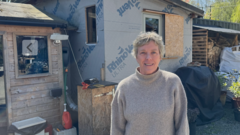
- Jane and Tony Coyle waited 7 years for home planning permission
- River Lugg pollution was the block, not paperwork delays
- They finally got approval this week after living in a shed
Jane Coyle wakes up every morning in a 10-by-8-foot shed behind her in-laws’ house in Herefordshire. The space has two beds, a tiny cooker, and a single lightbulb. The only running water comes from a jug she fills at the kitchen sink inside. Seven years ago, Jane and her husband Tony bought a plot of land in the village of Staunton on Wye with plans to build their retirement home. They paid £150,000 for the land in 2017, got their architect, submitted every form on time, and waited. And waited. Their build never started because the local council refused planning permission—not because of their design, but because the River Lugg running past their land was too polluted to approve new drainage or sewage connections. The Lugg is a tributary of the River Wye, one of the UK’s most famous salmon rivers. For years, the council said they couldn’t issue permits until the river met water quality standards. Jane and Tony’s story isn’t unique. Across Herefordshire, dozens of families have seen their home dreams stall for the same reason. The Lugg has suffered for decades from agricultural runoff—especially from chicken farms upstream in Shropshire and Powys. Chicken manure carries high levels of phosphorus and nitrogen, which feed algae blooms that suck oxygen from the water, killing fish and making it unsafe for new developments to discharge treated waste. The pollution got so bad that in 2021, the Environment Agency labeled the Lugg as “unfavourable declining” under its conservation targets. That same year, campaigners from Fish Legal sued the council for failing to act on illegal sewage discharges from a nearby chicken farm owned by Avara Foods, one of the UK’s biggest poultry producers. The case dragged on for months. In 2023, the farm agreed to reduce pollution after a judge ruled it had breached environmental laws. But by then, Jane and Tony’s permission was still stuck. ## What changed this week? On Monday, after years of appeals and meetings, Herefordshire Council finally granted planning permission for Jane and Tony’s build—but only after the council confirmed the River Lugg had met new water quality thresholds set by the Environment Agency. The council’s decision came with strict conditions: their new home must use sustainable drainage systems and limit any extra water runoff. They’ll now have to wait at least another year before the shed becomes a memory. Tony still works full-time as a delivery driver to pay the mortgage on a house that doesn’t exist. Jane runs a small craft shop from their in-laws’ garden to help cover costs. They’ve spent £30,000 on architects, surveys, and appeals—money they’ll never see again. “We’re not angry anymore,” Jane says. “We’re just tired. Tired of waiting, tired of being told we’re the problem when it’s the river that’s broken.” ## Why this matters beyond one couple’s shed The Lugg isn’t just a local issue. It’s part of a much bigger problem across the UK, where intensive farming and weak regulation have turned once-pristine rivers into ecological disaster zones. The River Wye itself has seen salmon numbers crash by 90% since the 1980s, with pollution from chicken farms a major factor. Campaigners say the system is rigged: developers can’t build homes without clean water permits, but councils won’t issue permits until pollution drops—even if the pollution comes from farms, not homes. Last month, the government announced a £55 million fund to tackle agricultural pollution in the Wye catchment, including grants for farmers to reduce runoff. But critics say it’s too little, too late. “This isn’t about one farm or one river,” says Dr. Dylan Bright, director of the Salmon & Trout Conservation charity. “It’s about a broken system where industrial agriculture gets a free pass while families pay the price.” For Jane and Tony, the fight may finally be over—but the scars remain. Their shed has become a symbol of a wider failure: a system that prioritizes profit over people, and profit over rivers.
What You Need to Know
- Source: BBC News
- Published: April 26, 2026 at 06:20 UTC
- Category: Environment
- Topics: #bbc · #environment · #climate · #jane · #tony-coyle · #river-lugg
Read the Full Story
This is a curated summary. For the complete article, original data, quotes and full analysis:
All reporting rights belong to the respective author(s) at BBC News. GlobalBR News summarizes publicly available content to help readers discover the most relevant global news.
Curated by GlobalBR News · April 26, 2026
🇧🇷 Resumo em Português
O sonho de construir uma casa no campo virou um pesadelo de sete anos para o casal inglês Jane e Tony Coyle, obrigados a viver em um galpão de ferramentas enquanto a poluição do Rio Lugg, na Inglaterra, atrasava indefinidamente a liberação de sua licença de construção. A história, que viralizou nas redes sociais, expõe não só a burocracia britânica, mas também os impactos invisíveis da degradação ambiental em projetos residenciais — um problema que, embora distante geograficamente, toca em questões cada vez mais relevantes para o Brasil.
No Brasil, onde a lentidão em licenciamentos ambientais e a poluição de rios já atrapalham empreendimentos imobiliários e agrícolas em estados como Minas Gerais e São Paulo, o caso dos Coyle serve como um alerta. O Rio Doce, por exemplo, ainda sofre com as consequências do rompimento da barragem de Mariana em 2015, enquanto catorze anos após o desastre, a recuperação da bacia segue incompleta. A demora para regularizar áreas ambientalmente degradadas não apenas impede famílias de realizar sonhos, como também perpetua ciclos de degradação que custam caro à saúde pública e à economia.
A história do casal britânico pode inspirar brasileiros a cobrar mais agilidade dos órgãos ambientais e a pressionar por soluções que equilibrem desenvolvimento e preservação — um debate urgente diante das mudanças climáticas e da escassez de recursos hídricos.
BBC News
Read full article at BBC News →This post is a curated summary. All rights belong to the original author(s) and BBC News.
Was this article helpful?

Discussion