Confirm divers identify dead humpback whale off Denmark as ‘Timmy’ after weeks stranded in Germany’s Baltic Sea.
- Divers confirm dead humpback whale off Denmark is ‘Timmy’
- Whale spent weeks stranded in Germany’s Baltic Sea
- Animal likely died from injuries from stranding period
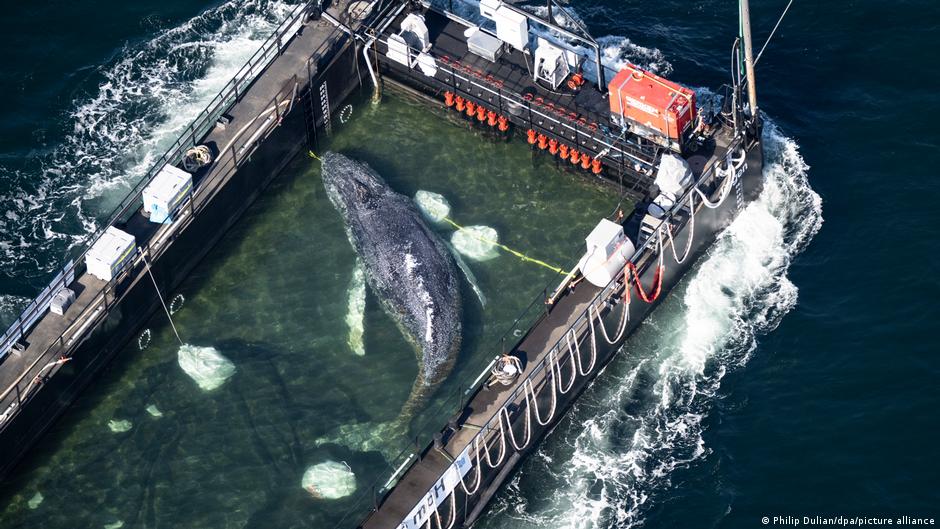
Divers confirmed Friday that a dead humpback whale spotted off Denmark’s Anholt island is ‘Timmy,’ the same creature that spent weeks beached along Germany’s Baltic Sea coast. Marine biologists and local officials identified the whale through distinctive markings after it was first sighted in distress near the German island of Fehmarn in late April. The animal had become a local symbol of concern as rescue attempts and public attention grew over its prolonged struggle to free itself from shallow waters.
The whale’s condition had deteriorated significantly by the time a private barge rescue operation was attempted at the end of April. Marine experts had warned the attempt was unlikely to succeed given ‘Timmy’s’ weakened state and the logistical challenges of moving a large whale in shallow, tidal waters. Rescue teams worked for hours but were unable to free the animal, which had become trapped in a cycle of beaching and partial refloating as tides shifted.
On Friday, Danish authorities confirmed the whale had died and floated offshore, where it was spotted by divers conducting routine marine surveys. A necropsy is planned to determine the exact cause of death, though initial assessments suggest complications from its time stranded, including dehydration, starvation and possible blunt-force trauma from repeated beaching. Environmental groups have called for stricter protections for marine mammals in the Baltic Sea, where shipping lanes and shallow waters pose increasing risks to large cetaceans.
Global attention on stranded marine mammals
The case of ‘Timmy’ drew international attention, with social media campaigns and local protests demanding urgent intervention. Marine biologists from Germany’s Federal Agency for Nature Conservation and Denmark’s Danish Agency for Water and Nature Management coordinated efforts to monitor the whale’s condition and advise on potential interventions. Despite public pressure, experts emphasized the inherent dangers of attempting to relocate an adult humpback whale, a species known for its size and unpredictable behavior.
The whale’s ordeal also coincided with heightened scrutiny of human impacts on marine ecosystems in the Baltic Sea, a semi-enclosed body of water bordered by nine countries. Environmentalists point to rising water temperatures, increased shipping traffic and pollution as factors contributing to the growing number of marine mammal strandings in the region. The Baltic Sea’s unique geography and brackish water make it particularly vulnerable to ecological disruption.
Sports world reacts as Bundesliga relegation drama unfolds
While the humpback whale’s story dominated headlines, Germany’s Bundesliga was focused on a different kind of drama Friday as relegation decisions were finalized. St. Pauli and Heidenheim were automatically relegated following the conclusion of the regular season, while Wolfsburg secured a reprieve by qualifying for the relegation playoff. The final matchday featured intense pressure on multiple clubs, with fans and analysts dissecting every result that could alter the league’s competitive landscape for next season.
The contrasting stories—one of nature’s fragility and human intervention, the other of athletic competition and financial stakes—highlighted the diversity of issues capturing public attention in Germany on Friday. For marine conservation advocates, ‘Timmy’s’ death underscores the need for stronger protections and international cooperation to safeguard vulnerable species in shared waters. Meanwhile, football fans are already looking ahead to summer transfers and the challenges facing relegated clubs as they prepare for life in the second division.
What You Need to Know
- Source: Deutsche Welle
- Published: May 16, 2026 at 15:40 UTC
- Category: World
- Topics: #europe · #world-news · #germany · #dead · #denmark
Read the Full Story
This is a curated summary. For the complete article, original data, quotes and full analysis:
All reporting rights belong to the respective author(s) at Deutsche Welle. GlobalBR News summarizes publicly available content to help readers discover the most relevant global news.
Curated by GlobalBR News · May 16, 2026
Related Articles
- Zimbabwe’s diaspora reshapes real estate and farming investment trends
- 🎉 250 Articles in World!
- Eurovision 2024 faces scrutiny over Israel’s participation amid war
🇧🇷 Resumo em Português
Um gigante dos mares brasileiro que encalhou na Europa não resistiu e foi encontrado morto após semanas de sofrimento: é o caso de “Timmy”, uma baleia-jubarte que se tornou símbolo da luta pela sobrevivência de animais marinhos em águas europeias. O cetáceo, que ganhou fama por suas tentativas frustradas de retornar ao oceano após ficar preso no Mar Báltico, entre Alemanha e Dinamarca, foi identificado por mergulhadores e desativado por autoridades locais, encerrando uma saga que mobilizou ambientalistas e deixou lições sobre a saúde dos ecossistemas marinhos.
A história de Timmy expõe os riscos enfrentados por baleias ao adentrarem regiões de baixa profundidade e alto tráfego de embarcações, como o Báltico, onde a poluição e a interferência humana agravam o estresse dos animais. Para o Brasil, país que recebe anualmente milhares de baleias-jubarte em suas águas durante a temporada reprodutiva, o caso serve como alerta sobre a necessidade de proteger corredores migratórios e evitar incidentes semelhantes, como os recorrentes encalhes em áreas costeiras. Além disso, o episódio reforça a importância de acordos internacionais, como o da Comissão Internacional da Baleia (CIB), para a conservação das espécies, tema que ganha peso em um momento em que o governo brasileiro discute a expansão de atividades offshore na costa.
O desfecho trágico de Timmy deve acelerar discussões sobre protocolos de resgate e monitoramento de baleias em zonas de risco, com possíveis reflexos nas políticas ambientais europeias — e, por tabela, nas brasileiras.
🇪🇸 Resumen en Español
Un joven ejemplar de ballena jorobada, bautizado como Timmy por los biólogos marinos, ha sido encontrado muerto en aguas danesas tras semanas de agonía en las costas alemanas del mar Báltico. El hallazgo confirma los peores presagios: el cetáceo, que se convirtió en símbolo de los riesgos para la vida marina en la región, no logró recuperarse de su largo calvario.
El caso de Timmy ha conmocionado a Europa por su simbolismo: su encallamiento en aguas poco profundas del mar Báltico, un ecosistema ya de por sí frágil y sobreexplotado, refleja los peligros que enfrentan las especies migratorias ante el cambio climático y la contaminación. Para los hispanohablantes, especialmente en países con costas en el Atlántico o el Mediterráneo, la historia resuena como advertencia sobre la necesidad de proteger los corredores marinos y reducir la presión humana sobre hábitats críticos. La muerte de Timmy no solo subraya la urgencia de políticas ambientales más audaces, sino que también invita a reflexionar sobre cómo el ser humano altera, directa o indirectamente, el futuro de criaturas como esta en todos los rincones del planeta.
Deutsche Welle
Read full article at Deutsche Welle →This post is a curated summary. All rights belong to the original author(s) and Deutsche Welle.
Was this article helpful?



Discussion