Watch Sandra Hüller play Erika Mann in Cannes 2026 film 'Fatherland' about her road trip with Thomas Mann through Cold War Germany.
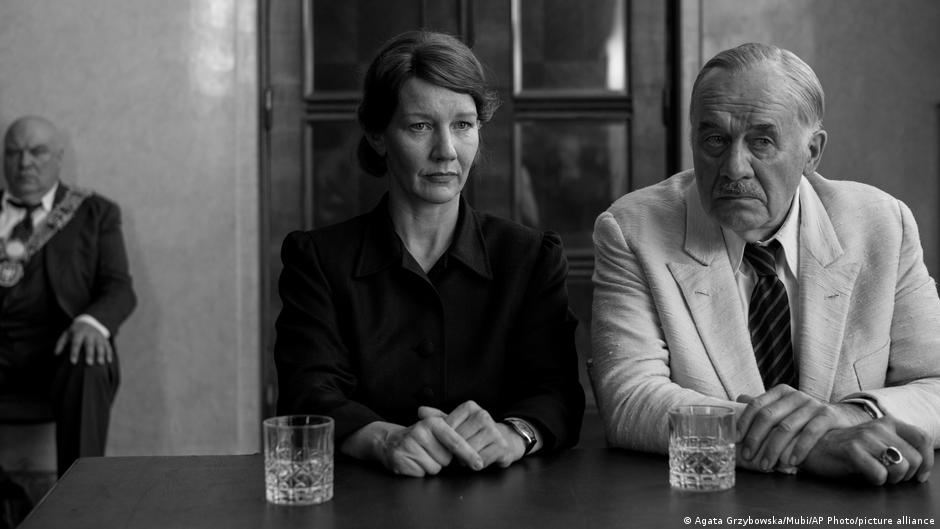
- Sandra Hüller stars as Erika Mann in Cannes 2026 film 'Fatherland'
- Film follows Thomas and Erika Mann's 1949 road trip from Frankfurt to Weimar
- Director Pawel Pawlikowski won Cannes best director in 2018 for 'Cold War'
Pawel Pawlikowski’s ‘Fatherland’ is one of the most talked-about films at Cannes 2026, and it’s not just because of its star power. Sandra Hüller, fresh off her Oscar nomination for ‘Anatomy of a Fall,’ plays Erika Mann opposite Hanns Zischler as her father Thomas Mann. The Polish filmmaker, who won Cannes’ best director prize in 2018 for ‘Cold War,’ returns with another Cold War-era drama—but this time, it’s a road movie set in 1949, a year after the Berlin Blockade and the formal division of Germany into East and West. The film’s premise alone has reignited interest in the Mann family, one of Germany’s most famous literary dynasties, known for their sharp anti-Nazi critiques and exile during World War II. Pawlikowski’s take isn’t a straight biopic, though. It twists history to frame the trip as a personal reckoning, where Thomas and Erika Mann confront not just the physical scars of war, but the moral and emotional toll of their own choices during and after the Nazi era. The film’s synopsis hints at themes of identity, guilt, family, and love, all tangled in the chaos of postwar Europe. Critics are already debating whether the twist works—does it deepen the story or overshadow the Manns’ real legacy? Either way, it’s gotten people talking, especially in Germany, where the family’s influence is still felt today. For decades, Thomas Mann’s novels like ‘The Magic Mountain’ and ‘Buddenbrooks’ have been required reading in schools, while Erika Mann’s journalism and activism made her a less celebrated but equally fierce voice against fascism. The road trip itself—a 350-kilometer drive in a Buick from Frankfurt in West Germany to Weimar in East Germany—isn’t just a backdrop. It’s a metaphor for the divided country they’re entering, a place where the past isn’t just remembered; it’s weaponized. The Manns arrive in Weimar, a city smothered by Soviet influence, where the restored Goethe and Schiller homes stand as symbols of a culture the East German regime claimed as its own. Erika, who’d spent years in exile in the U.S., would’ve known Weimar’s history as the birthplace of Goethe’s humanism—and as the place where the Nazis later burned books. That contradiction isn’t lost in the film. Neither is the tension between Thomas Mann’s exile status and his eventual return to Europe. By 1949, he’d already won the Nobel Prize in Literature, but his reputation in Germany was complicated. Some saw him as a hero who fled the Nazis; others, especially in the East, viewed him as a bourgeois intellectual out of touch with the working class. Erika, meanwhile, had spent the war years as a journalist and broadcaster, broadcasting anti-Nazi messages to Germany from London. Her relationship with her father was close but contentious—she’d once called him ‘the greatest egoist of the 20th century.’ The film leans into that friction. It’s not just about a father and daughter on a road trip; it’s about two people who survived fascism but couldn’t escape its shadows. The twist in ‘Fatherland’ isn’t just narrative sleight of hand. It’s a deliberate anachronism. The real Thomas and Erika Mann never took that 1949 road trip together. Erika was in the U.S. in 1949, and Thomas was in Switzerland. But Pawlikowski’s version works because it forces the audience to ask: What if they had? What would they have talked about in that Buick, driving through a country that was both familiar and alien to them? The film doesn’t answer those questions directly. Instead, it uses the journey to explore how memory distorts truth and how families, even brilliant ones, carry secrets. That’s where the real tension lies—not in the Cold War’s geopolitics, but in the quiet battles between a father and daughter who both thought they knew the other. For viewers, the film is less about the Manns’ historical footprints and more about the universal struggle to reconcile with the past. Sandra Hüller’s performance is already drawing comparisons to her role in ‘Anatomy of a Fall,’ where she played a woman unraveling family lies. Here, she’s unraveling history itself. The film’s cinematography, another Pawlikowski hallmark, uses stark black-and-white visuals to mirror the era’s moral grayness. The Buick’s interior feels claustrophobic, the East German countryside oppressive, and the rare moments of warmth—like a shared cigarette or a spontaneous laugh—feel like rebellions. If the film wins anything at Cannes, it’ll likely be for its boldness, not its accuracy. But that’s the point. ‘Fatherland’ isn’t a history lesson; it’s a what-if story that uses the Manns as a prism to refract the fractures of a continent. Whether that’s faithful to their legacy is up for debate. Whether it’s compelling? Absolutely. The Mann family’s real story is dramatic enough—exile, resistance, Nobel Prizes, and decades of exile-bred bitterness. Pawlikowski’s film doesn’t just borrow that drama; it weaponizes it. The question now is whether audiences will walk out of the theater thinking about the Manns—or about the stories they tell themselves to survive.
What You Need to Know
- Source: Deutsche Welle
- Published: May 09, 2026 at 12:16 UTC
- Category: World
- Topics: #europe · #world-news · #war · #conflict · #thomas
Read the Full Story
This is a curated summary. For the complete article, original data, quotes and full analysis:
All reporting rights belong to the respective author(s) at Deutsche Welle. GlobalBR News summarizes publicly available content to help readers discover the most relevant global news.
Curated by GlobalBR News · May 09, 2026
Related Articles
- 🎉 250 Articles in World!
- WHO declares Ebola emergency as Congo outbreak spreads to Uganda
- WHO declares Ebola emergency as Congo and Uganda outbreaks surge
🇧🇷 Resumo em Português
Em uma reviravolta surpreendente no cinema europeu, o diretor Paweł Pawlikowski apresenta “Fatherland”, novo filme estrelado por Sandra Hüller, que mergulha na vida dos lendários Thomas e Erika Mann durante uma viagem pela Alemanha da Guerra Fria, repleta de tensões e mistérios. Com uma abordagem ousada e uma narrativa que desafia o convencional, a obra promete reacender discussões sobre memória, exílio e as marcas deixadas pelo passado.
O contexto da história ganha ainda mais relevância para o Brasil, país que também viveu décadas de ditadura militar e exílio de intelectuais, além de enfrentar hoje novas ondas de revisionismo histórico. Ao retratar os Mann — escritores alemães que fugiram do nazismo — o filme toca em feridas universais sobre identidade, culpa e os reflexos da perseguição política em gerações futuras, temas que ecoam fortemente na sociedade brasileira. A escolha de Sandra Hüller, premiada internacionalmente, reforça o apelo do longa, que deve circular por festivais e ter distribuição limitada no país.
Enquanto “Fatherland” levanta perguntas incômodas sobre como o passado molda o presente, a expectativa é que ele se torne um marco no cinema contemporâneo, inspirando debates sobre história e arte.
🇪🇸 Resumen en Español
La película Fatherland, dirigida por Pawel Pawlikowski y protagonizada por Sandra Hüller, reinterpreta con un giro insólito el viaje durante la Guerra Fría de los escritores alemanes Thomas y Erika Mann, figuras clave de la cultura del siglo XX.
El filme, estrenado en Cannes, se adentra en un relato ficticio que mezcla memoria histórica y ficción para explorar temas como la identidad y la culpa, cuestionando la versión tradicional de estos personajes. Para el público hispanohablante, la obra invita a reflexionar sobre el peso del pasado en el presente, especialmente en un contexto donde la literatura y el exilio siguen resonando con fuerza, desde las dictaduras del Cono Sur hasta los conflictos migratorios actuales.
Deutsche Welle
Read full article at Deutsche Welle →This post is a curated summary. All rights belong to the original author(s) and Deutsche Welle.
Was this article helpful?


Discussion