Classic 7 turns Windows 10 into Windows 7 using real code from seven OS versions while remaining under Microsoft’s support.
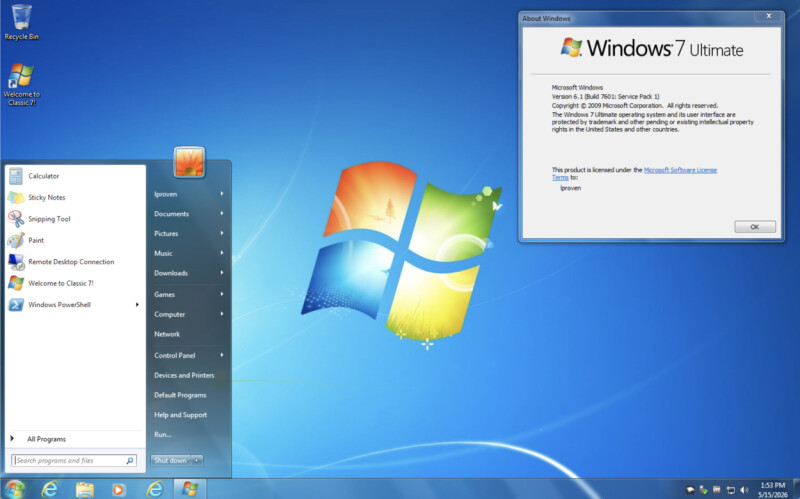
- Classic 7 mixes Windows 7 binaries into Windows 10 LTSC for an authentic look
- Project uses real components from Windows XP through Windows 8 adapted to run today
- Still receives security updates from Microsoft despite the cosmetic surgery
Classic 7 isn’t a theme pack or a wallpaper collection. It’s a surgical strike on a Windows 10 install. The project’s creator, an anonymous developer going by “911medic” on GitHub, has spent two years stitching real binaries from Windows 7, Vista, XP, and even Windows Server 2003 into Windows 10 IoT LTSC 2021. The result is a desktop that looks and behaves like the 2009 classic, but with the security blankets of a 2024 OS underneath. It’s like giving a 2024 Toyota the grille and taillights of a 2002 Camry—except the Camry still meets modern crash-test ratings.\n\nThe trick isn’t purely visual. Classic 7 swaps the Windows 10 shell (explorer.exe, taskbar, start menu) with recompiled versions of the Windows 7 binaries. The start orb, the Aero glass effects, the window animations—every pixel matches Microsoft’s 2009 design language. But instead of running on a 15-year-old kernel, Classic 7 rides on the Windows 10 LTSC 2021 build, which gets security updates until January 2032.\n\n## How they did it\nThis isn’t the first time hobbyists tried to turn back the clock. Earlier attempts like “Win7orb” or “Classic Shell” layered skins over the modern OS, but they always felt like a movie set facade. Classic 7 goes deeper. It replaces core system files with ones from older Windows versions, then patches them to run on the newer kernel. For example, the Windows 7 taskbar from explorer.exe is recompiled to accept Windows 10’s DPI scaling. The Windows 7 start menu is rebuilt to use modern file indexing. Even the window chrome—the title bars, borders, and minimize/maximize buttons—comes from Windows 7’s dwm.exe, tweaked to work with Windows 10’s desktop window manager.\n\nThe project’s GitHub page lists 47 separate tweaks, ranging from registry hacks to driver modding. Some components are borrowed directly from Windows 8’s source code, then retrofitted to look like Windows 7. The result is a system that passes Microsoft’s own compatibility tests, at least for now.\n\n## Who wants this and why it’s risky\nThe obvious audience is sysadmins, IT contractors, and power users who need modern security but can’t abandon the Windows 7 workflow. Schools still running old software, factories with legacy CNC machines, even some government offices locked into 2009-era UIs have a use for Classic 7. It’s also a hit with retro enthusiasts who want the Windows 7 feel without the security rot of an unsupported OS.\n\nBut here’s the catch: Microsoft never licensed this. The project isn’t breaking any laws per se, but it’s walking on thin ice. Classic 7 redistributes copyrighted binaries from seven different Windows versions, all covered by Microsoft’s EULAs. The GitHub repo warns users: “This is not a Microsoft product. Use at your own risk.” The project’s creator deletes any posts that suggest using it for piracy, but the line between cosplay and copyright infringement is blurry.\n\n## The future of retro Windows hacking\nClassic 7 proves there’s still demand for the 2009 desktop, even in 2024. It also shows how far hobbyists will go to preserve the past. But as Windows 11’s hardware requirements tighten, expect more projects like this. Already, a group called “Tihiy” is working on a similar rewrite for Windows 11, aiming for a Windows 8 look while keeping the modern kernel underneath.\n\nMicrosoft hasn’t commented, but the company has a history of cracking down on projects that modify its binaries. Remember “Windows XP on ARM” hacks from a decade ago? They vanished after legal threats. Classic 7 might follow the same path. For now, though, it’s the closest thing to running Windows 7 without the security nightmare.
What You Need to Know
- Source: The Register
- Published: May 17, 2026 at 11:00 UTC
- Category: Technology
- Topics: #theregister · #tech · #enterprise · #classic · #windows · #classic-7
Read the Full Story
This is a curated summary. For the complete article, original data, quotes and full analysis:
All reporting rights belong to the respective author(s) at The Register. GlobalBR News summarizes publicly available content to help readers discover the most relevant global news.
Curated by GlobalBR News · May 17, 2026
Related Articles
- Trump Brand’s First Phone Finally Ships After 9-Month Holdup
- NYT Connections Sports Edition Answers & Hints for May 17, #601
- Tesla quietly shelves Solar Roof, bet big on cheap panels
🇧🇷 Resumo em Português
O Windows 7 pode voltar à vida em pleno 2024 — e de forma surpreendentemente legal. Com o projeto Classic 7, usuários estão transformando o Windows 10 em uma réplica quase perfeita da interface clássica do sistema lançado em 2009, mantendo todas as atualizações de segurança essenciais. A engenharia reversa, que não envolve modificações no código-fonte da Microsoft, oferece uma solução para quem sente saudade do visual antigo, mas não quer abrir mão da proteção contra vulnerabilidades.
A ferramenta ganhou tração entre entusiastas de tecnologia, empresas que dependem de softwares legados e até profissionais que preferem a estabilidade visual do Windows 7 em ambientes de trabalho. No Brasil, onde milhões de máquinas ainda rodam versões antigas do sistema — muitas vezes por falta de orçamento para upgrades —, o Classic 7 surge como uma alternativa prática, embora não endossada pela Microsoft. Especialistas em cibersegurança alertam, porém, que a solução não substitui totalmente a ausência de suporte oficial, especialmente em casos de exposição a ataques direcionados.
Até onde a Microsoft vai permitir que essa gambiarra digital continue operando? A empresa ainda não se pronunciou oficialmente, mas o debate sobre o uso de sistemas legados em plena era de IA e nuvem só deve esquentar.
🇪🇸 Resumen en Español
El proyecto Classic 7 ha logrado lo que muchos usuarios nostálgicos anhelaban: transformar Windows 10 en una interfaz idéntica a la de Windows 7 sin sacrificar las actualizaciones de seguridad, un logro que desafía el ciclo de vida forzado de los sistemas operativos de Microsoft.
Esta herramienta, que modifica el registro y los archivos del sistema con código real, no es solo un capricho visual, sino una solución práctica para quienes rechazan la estética de Windows 10 pero necesitan soporte técnico. Aunque su uso podría chocar con los términos de licencia de Microsoft, su popularidad entre empresas y particulares refleja el descontento con los cambios forzados de interfaz en los sistemas operativos modernos. La pregunta ahora es si este tipo de modificaciones será tolerado o si Microsoft endurecerá sus políticas para evitarlo.
The Register
Read full article at The Register →This post is a curated summary. All rights belong to the original author(s) and The Register.
Was this article helpful?


Discussion