Gaza's food aid plunges 37% as only 10% of funding is secured, forcing families to rely on weekly community kitchens.
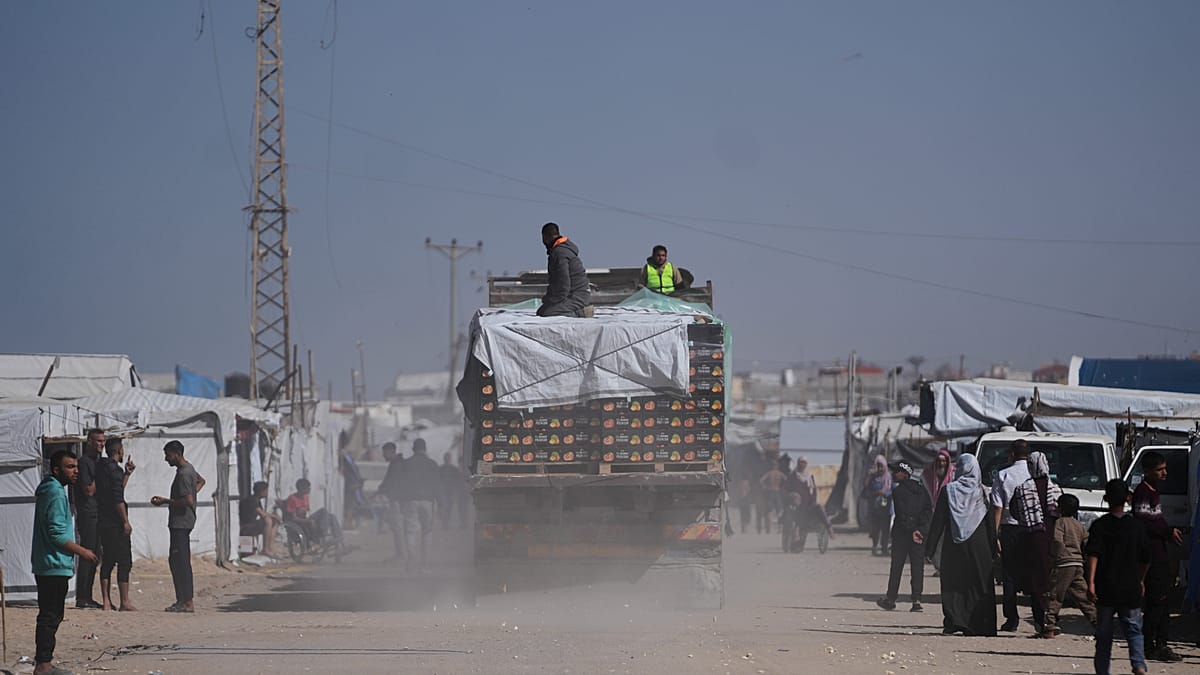
- Aid to Gaza falls 37% as funding dries up
- Only 10% of required humanitarian funds secured
- Hundreds of thousands rely on weekly community kitchens
Humanitarian aid entering Gaza has plummeted 37% in recent months while only 10% of required funding has been secured, leaving families to scramble for food as community kitchens become their sole lifeline. The United Nations UN reports that basic staples like lentils and rice are now distributed just once per week in many areas, forcing residents to stretch meager portions for days. Aid workers describe families sharing single meals while children go hungry, with malnutrition rates rising sharply across the territory. “We are seeing people eat once a day, sometimes less,” said a Gaza-based aid coordinator who requested anonymity due to security concerns. “The situation was already dire, but this funding gap has pushed it to a breaking point.” The drop in aid follows Israeli restrictions on border crossings and increased hostilities that have disrupted distribution networks. Trucks carrying food and medical supplies face delays or outright denials, compounding the crisis. The UN Office for the Coordination of Humanitarian Affairs OCHA reports that only 14% of planned food aid reached Gaza in June, down from 45% in January. ## Food aid nearly halts as donor nations withhold funds Community kitchens, often run by local NGOs with limited resources, have become Gaza’s last line of defense against starvation. These kitchens, serving lentils, flour and oil, operate on a skeleton budget as international donors slash contributions. The World Food Programme WFP warns that without immediate injections of cash, 90% of Gaza’s population will face acute food insecurity by September. “We are 90 days away from a total collapse of the food system,” said WFP spokesperson Abeer Etefa. “Families are selling belongings to buy food, but even that is running out.” Egypt and Jordan have pledged additional aid, but logistical hurdles and funding gaps persist. Gaza’s Health Ministry reports a 30% increase in child malnutrition cases over the past three months, with hospitals overwhelmed by cases of severe hunger. ## UN warns of famine risk if aid doesn’t resume Aid workers say the crisis is unfolding despite the presence of multiple international aid organizations on the ground. The UN Relief and Works Agency for Palestine Refugees UNRWA has warned that its food distribution programs may shut down entirely by August without new funding. Israel has permitted some aid trucks to enter through the Kerem Shalom crossing, but deliveries remain far below pre-conflict levels. The U.S. Agency for International Development USAID has contributed $150 million in emergency food aid this year, but officials say it’s not enough. “This is not just a Gaza problem—it’s a regional crisis,” said a senior U.S. State Department official. “The longer this drags on, the harder it will be to reverse.” The humanitarian community is calling for a ceasefire to allow unfettered aid access, but negotiations remain stalled. Meanwhile, Gaza’s residents say they are running out of options, with some resorting to eating animal feed or expired food. The crisis is expected to deepen as temperatures rise and summer heat reduces water availability, exacerbating health risks. Without a dramatic shift in donor commitments or a breakthrough in ceasefire talks, the coming weeks could see Gaza’s hunger crisis spiral into a catastrophe of historic proportions.
What You Need to Know
- Source: Euronews
- Published: May 15, 2026 at 05:00 UTC
- Category: World
- Topics: #euronews · #europe · #world-news · #war · #gaza · #middle-east
Read the Full Story
This is a curated summary. For the complete article, original data, quotes and full analysis:
All reporting rights belong to the respective author(s) at Euronews. GlobalBR News summarizes publicly available content to help readers discover the most relevant global news.
Curated by GlobalBR News · May 15, 2026
Related Articles
- Zimbabwe’s diaspora reshapes real estate and farming investment trends
- 🎉 250 Articles in World!
- Eurovision 2024 faces scrutiny over Israel’s participation amid war
🇧🇷 Resumo em Português
A crise humanitária em Gaza atinge níveis alarmantes com a redução de 37% na distribuição de alimentos, enquanto os recursos financeiros garantidos representam apenas 10% do necessário, segundo relatórios recentes. Centenas de milhares de pessoas, dependentes de cozinhas comunitárias para suas refeições básicas, enfrentam agora um cenário de escassez extrema, com consequências devastadoras para uma população já fragilizada por meses de conflito.
No Brasil, a situação ressoa não apenas por solidariedade internacional, mas também porque reflete os desafios globais de financiamento humanitário em regiões assoladas por guerras, como a ocupação israelense e os confrontos com grupos armados. A queda acentuada na ajuda alimentar, combinada à falta de recursos, coloca em risco a sobrevivência de civis, incluindo crianças e idosos, e pode agravar fluxos migratórios forçados para países vizinhos. Para os leitores brasileiros, o caso de Gaza serve como um alerta sobre a importância da cooperação internacional e da pressão diplomática para evitar colapsos humanitários.
A próxima etapa depende da mobilização de governos e organizações para reverter o déficit de financiamento e garantir o acesso irrestrito a ajuda humanitária, antes que a fome se torne irreversível.
🇪🇸 Resumen en Español
La crisis humanitaria en Gaza se agrava con un drástico descenso del 37% en la ayuda alimentaria, mientras solo se ha logrado recaudar el 10% de los fondos necesarios para paliar la emergencia. La situación alcanza niveles críticos, con cientos de miles de personas dependiendo de cocinas comunitarias para sobrevivir, en un contexto donde el acceso a alimentos básicos se convierte en un lujo cada vez más inalcanzable.
Este colapso en la distribución de ayuda responde a la combinación de un conflicto prolongado, restricciones de acceso y una financiación internacional insuficiente, agravada por la burocracia y los bloqueos logísticos. Para los hispanohablantes, la noticia resuena por su impacto en una región con lazos históricos y culturales con España, así como por el desafío ético que plantea la indiferencia global ante una catástrofe evitable. La solidaridad con Gaza no solo es una cuestión humanitaria, sino también un recordatorio de cómo las crisis lejanas pueden erosionar los valores de justicia y cooperación que definen a las sociedades modernas.
Euronews
Read full article at Euronews →This post is a curated summary. All rights belong to the original author(s) and Euronews.
Was this article helpful?



Discussion