Senate narrowly confirms Kevin Warsh as Fed chair in historic 50-46 vote.
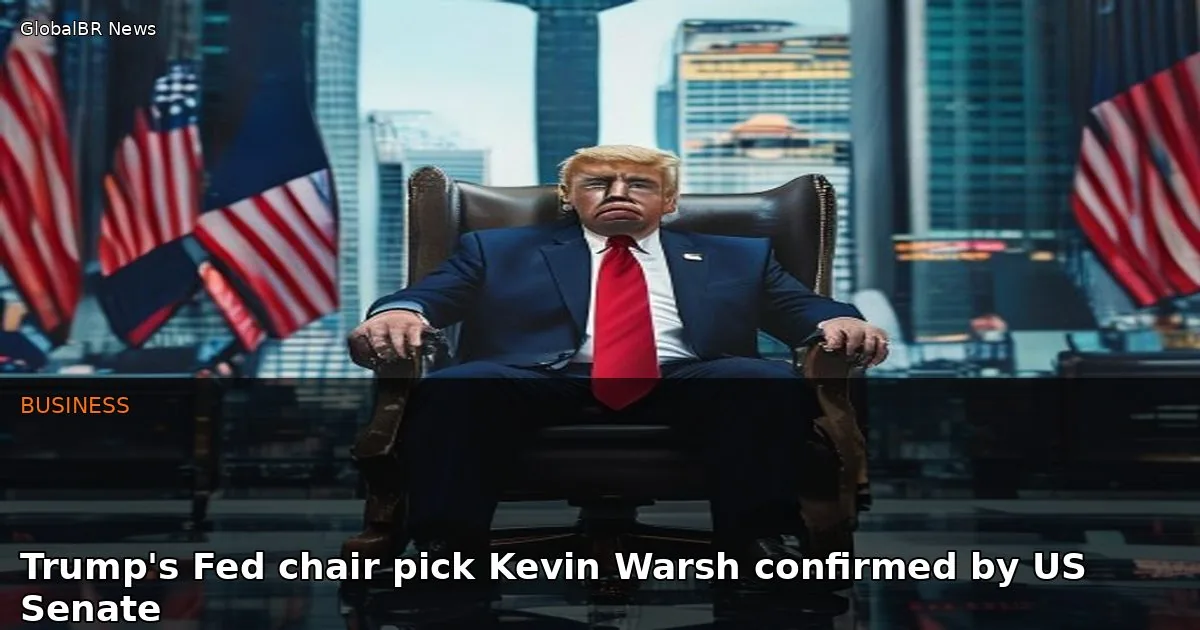
- Senate confirms Warsh as Fed chair with 50-46 vote
- Narrowest margin for Fed chair confirmation since the 1980s
- Warsh previously served on Fed board under former President George W. Bush
The U.S. Senate confirmed Kevin Warsh as chair of the Federal Reserve on Wednesday, handing former President Donald Trump a key economic policy ally. The 50-46 vote marked the closest confirmation for a Fed chair since the role required Senate approval in the 1980s, underscoring the deep divisions over his leadership style and policy priorities. Warsh, a former Fed governor and White House economic adviser, was nominated by Trump to succeed Janet Yellen, who led the central bank from 2014 to 2018. The confirmation comes after months of partisan debate over his approach to interest rates, inflation, and financial regulation.
Warsh, 48, served on the Federal Reserve Board from 2006 to 2011 under former President George W. Bush. His tenure was marked by a focus on financial stability and deregulation, aligning with Trump’s push to ease banking rules. Critics argue Warsh’s proximity to Trump and his past support for loosening financial regulations could weaken consumer protections. Supporters counter that his experience in both public and private sectors equips him to navigate economic challenges, including rising inflation and labor market pressures.
Senate vote reflects sharp partisan divide
The confirmation vote fell largely along party lines, with only one Republican, Senator Rand Paul of Kentucky, breaking ranks to vote against Warsh. Democrats overwhelmingly opposed his nomination, citing concerns over his ties to Wall Street and his past criticism of the Fed’s quantitative easing policies. Senator Elizabeth Warren, a vocal critic, argued Warsh’s appointment could undermine the central bank’s independence from political influence.
Warsh’s confirmation comes at a critical time for the U.S. economy, which faces persistent inflation, supply chain disruptions, and a labor market adjusting to post-pandemic shifts. His leadership will shape the Fed’s approach to interest rates, which have been a flashpoint in recent years as policymakers balance economic growth with price stability. The central bank has raised rates aggressively in 2022 and 2023 to combat inflation, but debates continue over the pace and magnitude of future adjustments.
Economists are divided on how Warsh’s policies might differ from his predecessors. While some expect continuity with the Fed’s recent tightening cycle, others predict a more accommodative stance toward financial markets, particularly in the banking sector. Warsh has previously expressed skepticism about the Fed’s extensive use of bond-buying programs, suggesting a preference for more traditional monetary tools.
The confirmation also highlights broader tensions over the Fed’s role in economic policy. With Warsh at the helm, the central bank may face increased scrutiny over its dual mandate to promote maximum employment and stable prices. His appointment could signal a shift toward greater emphasis on regulatory flexibility and market-driven solutions, a priority for Trump and his allies.
Looking ahead, Warsh’s first major test will likely come in the coming months as the Fed decides whether to continue raising interest rates or hold steady to assess the impact of previous hikes. His leadership could also influence global financial markets, which closely watch Fed decisions for signals about the U.S. economic outlook. The confirmation sets the stage for a period of heightened uncertainty as policymakers and investors adjust to a new era at the central bank.
What You Need to Know
- Source: BBC News
- Published: May 13, 2026 at 20:15 UTC
- Category: Business
- Topics: #bbc · #business · #economy · #war · #conflict · #trump
Read the Full Story
This is a curated summary. For the complete article, original data, quotes and full analysis:
All reporting rights belong to the respective author(s) at BBC News. GlobalBR News summarizes publicly available content to help readers discover the most relevant global news.
Curated by GlobalBR News · May 13, 2026
🇧🇷 Resumo em Português
Os Estados Unidos acabam de dar um xeque-mate na política monetária global ao confirmar Kevin Warsh como novo presidente do Federal Reserve, a primeira vez desde 1987 que um ex-membro do conselho da instituição assume o cargo. Com a aprovação apertada do Senado, que refletiu as profundas divisões políticas no país, Warsh chega ao comando do banco central norte-americano prometendo uma gestão mais flexível e menos ortodoxa, longe do legado de Janet Yellen e Ben Bernanke.
A escolha de Warsh não é apenas mais um capítulo na turbulência política dos EUA, mas um sinal de alerta para o Brasil e toda a América Latina. Como ex-membro do Fed e conselheiro econômico de George W. Bush, Warsh é visto como um defensor de taxas de juros mais baixas e menor regulamentação financeira, o que pode pressionar ainda mais o dólar global e, consequentemente, as moedas emergentes. Para o Brasil, já em meio a uma recuperação econômica frágil, a política de Warsh pode significar um ambiente externo ainda mais hostil, com possível fuga de capitais e alta nos custos de financiamento externo. Além disso, a postura agressiva de Trump na política comercial — com tarifas e ameaças de sanções — tende a se intensificar sob a liderança de Warsh, colocando em risco as exportações brasileiras, especialmente do agronegócio e da indústria.
Se confirmada a tendência de Warsh, o Brasil precisará acelerar reformas estruturais e buscar alternativas para reduzir sua dependência do mercado norte-americano.
🇪🇸 Resumen en Español
El Senado de Estados Unidos ha confirmado a Kevin Warsh como nuevo presidente de la Reserva Federal, una decisión que marca un giro en la política monetaria con posibles repercusiones globales.
Warsh, estrecho colaborador de Donald Trump y exmiembro del consejo de la Fed, llega al cargo con un perfil más flexible que su predecesor, Jerome Powell, lo que podría traducirse en una política de tipos de interés más acomodaticia. Para los hispanohablantes, especialmente en economías dependientes de flujos de capital como las latinoamericanas, esto implica un escenario de mayor liquidez en dólares, aunque con el riesgo de una inflación menos controlada en EE.UU. Su nombramiento refleja también la influencia de Trump en las instituciones económicas clave, algo que podría redefinir el orden financiero internacional.
BBC News
Read full article at BBC News →This post is a curated summary. All rights belong to the original author(s) and BBC News.
Was this article helpful?


Discussion