Libyan football fans rioted over referee decision, torching government building in Tripoli and sparking nationwide unrest.
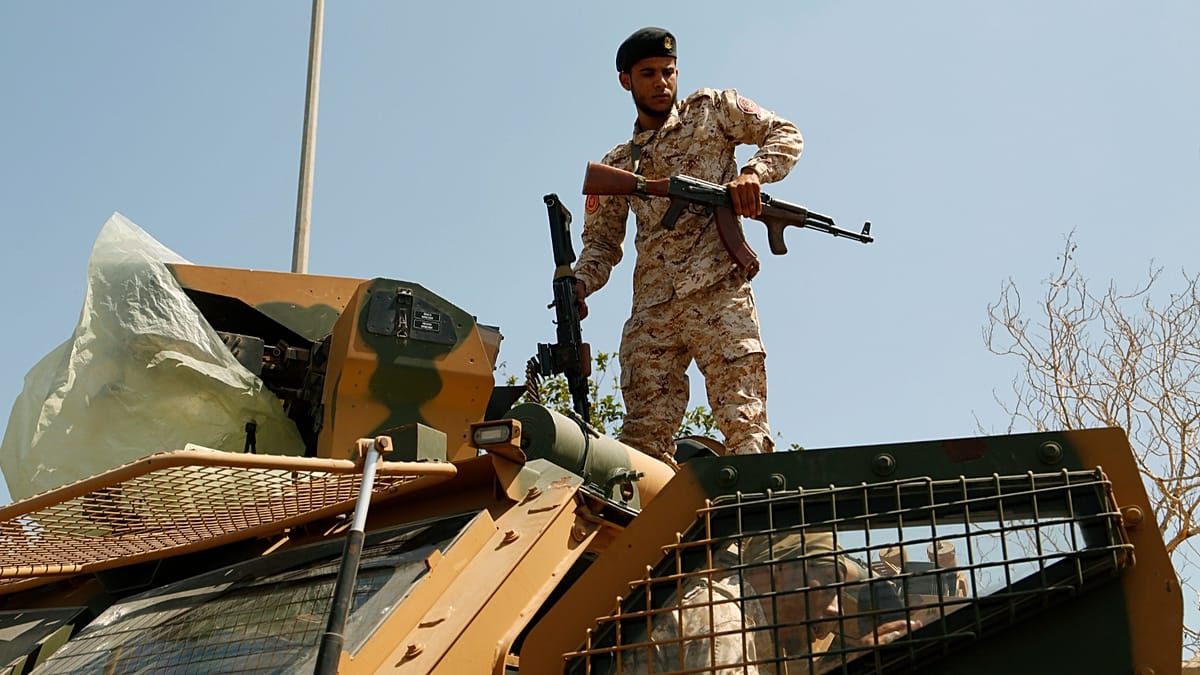
- Football fans rioted in Tarhunah after disputed referee call
- Violence spread to Tripoli where government HQ was set on fire
- Protests triggered by Libyan league match outcome
Violent clashes broke out in Libya after a contentious referee decision ended a local football league match in Tarhunah, a town 65 kilometers southeast of the capital. The unrest quickly escalated, with hundreds of football fans storming the Government of National Unity’s headquarters in Tripoli, setting part of the building ablaze late Tuesday. Security forces responded with tear gas and live rounds, though no immediate reports of casualties were confirmed.
Libyan authorities declared a state of emergency in the affected areas as protests continued into Wednesday morning. The Libyan Football Federation announced an investigation into the referee’s controversial call, which fans claimed cost their local team a decisive victory. Social media footage showed crowds chanting anti-government slogans while throwing Molotov cocktails at the GNUS headquarters, a symbol of Libya’s fragile unity government formed in 2021 to end years of division.
Tripoli joins Tarhunah in nationwide unrest
The violence in Tripoli mirrored earlier scenes in Tarhunah, where fans stormed the local courthouse after the match, accusing officials of match-fixing. Eyewitnesses reported at least 15 police officers injured in clashes across the country, with several government buildings vandalized. The Interior Ministry confirmed the deployment of military units to restore order, though curfews were imposed in multiple cities to prevent further escalation.
Libya’s Prime Minister Abdul Hamid Dbeibah condemned the attacks, calling them an “assault on state institutions.” The premier urged calm while vowing to hold those responsible accountable. The crisis comes as Libya remains deeply divided between rival governments in the east and west, despite the 2021 ceasefire agreement brokered by the United Nations.
Football as a lightning rod for political frustration
Analysts noted that football often serves as a proxy for broader frustrations in Libya, where youth unemployment exceeds 30% and basic services remain unreliable. The sport has repeatedly been used to express dissent, with previous riots erupting over match outcomes in 2018 and 2020. The current unrest highlights the persistent instability in a country still struggling to recover from a decade of conflict following the 2011 NATO-backed uprising that toppled Muammar Gaddafi.
The Libyan Football Federation has suspended all domestic matches indefinitely. Regional football bodies, including the Confederation of African Football, are monitoring the situation amid concerns it could disrupt upcoming regional tournaments. Meanwhile, residents in Tripoli described a tense calm Wednesday, with shops closed and streets patrolled by armed guards.
The unrest follows a week of protests over economic hardship and power cuts in several Libyan cities. The government has blamed foreign actors for stoking the violence, though no evidence has been presented. International observers, including the United Nations Support Mission in Libya, called for restraint while warning that further escalation could derail fragile peace efforts in the oil-rich nation.
What You Need to Know
- Source: Euronews
- Published: May 15, 2026 at 13:28 UTC
- Category: World
- Topics: #euronews · #europe · #world-news · #startups · #ipo · #libya
Read the Full Story
This is a curated summary. For the complete article, original data, quotes and full analysis:
All reporting rights belong to the respective author(s) at Euronews. GlobalBR News summarizes publicly available content to help readers discover the most relevant global news.
Curated by GlobalBR News · May 15, 2026
Related Articles
- Eurovision 2024 faces scrutiny over Israel’s participation amid war
- War in the Middle East: Israel targets top Hamas leader in Gaza
- US Justice Department preparing indictment against Raúl Castro
🇧🇷 Resumo em Português
Torcida de time líbio invade as ruas após erro de arbitragem virar tragédia. O caos se espalhou do estádio para a capital, Tripoli, onde torcedores enfurecidos atearam fogo ao prédio do governo local. O que começou como uma simples partida de futebol transformou-se em um protesto violento contra a má gestão esportiva e política do país, refletindo a instabilidade que assola a Líbia há anos.
O Brasil, com uma das maiores torcidas do mundo e uma paixão inigualável pelo futebol, entende como um erro de arbitragem pode desencadear revoltas. Contudo, no contexto líbio, a situação é ainda mais grave: a Líbia vive há mais de uma década em um cenário de fragmentação política e conflitos internos, onde o esporte muitas vezes se torna um reflexo das tensões sociais. A queima do prédio governamental em Tripoli não é apenas um ato de vandalismo, mas um grito de insatisfação contra a incapacidade das autoridades de garantir justiça, seja nos campos ou nas ruas.
O próximo passo é incerto: se as autoridades líbias não agirem para apaziguar os ânimos e investigar os responsáveis pela decisão contestada, o futebol pode se tornar um novo campo de batalha em um país já devastado pela guerra.
🇪🇸 Resumen en Español
El fallo polémico de un árbitro ha desatado una ola de violencia en Libia que ya alcanza la capital, Trípoli, donde los aficionados al fútbol prendieron fuego a la sede del Gobierno. Lo que comenzó como un altercado tras un partido local se ha convertido en un estallido de protesta contra las autoridades, con consecuencias imprevisibles.
La revuelta, que refleja el descontento social acumulado en el país, subraya la fragilidad institucional de Libia tras años de conflicto y división política. Para los hispanohablantes, este episodio recuerda la importancia de unas instituciones sólidas y transparentes, así como los riesgos de dejar que el descontento popular se desborde sin canales de diálogo. La violencia en el deporte, además, plantea preguntas sobre cómo los gobiernos abordan las frustraciones ciudadanas cuando el fútbol —un deporte universal— se convierte en altavoz de protestas.
Euronews
Read full article at Euronews →This post is a curated summary. All rights belong to the original author(s) and Euronews.
Was this article helpful?

Discussion