Merz says he would not recommend young Germans move to the US now because of the current social climate.
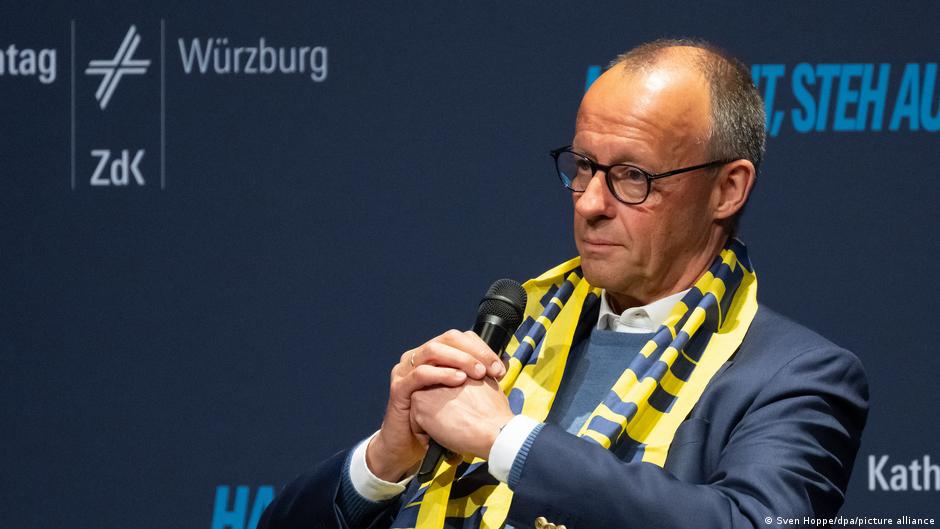
- Merz warns kids against moving to the US over social climate concerns
- Chancellor cites 'suddenly developed' social climate in America
- Merz spoke at a Catholic convention in Germany
German Chancellor Friedrich Merz said Friday he would not recommend that young Germans, including his own children, consider moving to the United States for education or employment at this time. Speaking at a Catholic convention in Germany, Merz cited what he described as a rapidly deteriorating social climate in the U.S. as the primary reason for his stance. ‘My great admiration for America is not increasing at the moment,’ Merz said, adding that the current environment raises concerns about personal safety and societal stability.
The chancellor’s remarks follow a period of heightened diplomatic tension between Germany and the United States, particularly during the contentious tenure of former U.S. President Donald Trump. While Merz acknowledged that he had a ‘good phone call’ with Trump earlier this year, he emphasized that the broader social and political atmosphere in America has become less welcoming for foreigners, especially young professionals and students.
Germany’s economic slowdown deepens in second quarter
Germany’s federal government has revised downward its economic outlook for the second quarter of 2026, citing a sharp slowdown driven by rising energy costs and declining industrial output. Energy-intensive industries across the country, including chemicals and steel, have reported job cuts and reduced production schedules as a result of higher input prices. Economists warn that if the trend continues, it could further strain Germany’s already fragile growth prospects and increase unemployment in key manufacturing regions.
The slowdown comes as Europe’s largest economy grapples with structural challenges, including an aging workforce, high regulatory burdens, and growing competition from Asian manufacturers. Industry leaders have called for urgent policy measures to ease energy costs and accelerate digital transformation to restore competitiveness.
Whale death sparks questions over stranded humpback’s fate
Separately, Denmark is conducting tissue sampling of a dead humpback whale found off the coast of the island of Anholt in the Baltic Sea. The carcass discovery has reignited concerns about the welfare of a humpback whale that was previously stranded off Germany’s Baltic coast for weeks. Environmental groups are calling for a full investigation into the whale’s death and the possible role of shipping traffic or pollution in the region.
Marine biologists are analyzing the samples to determine the cause of death and whether the animal had been weakened by its earlier entanglement or exposure. The incident has highlighted ongoing concerns about marine biodiversity and the impact of human activity on protected species in European waters.
As Germany navigates rising geopolitical tensions, economic headwinds, and environmental challenges, Chancellor Merz’s comments on the U.S. underscore a broader shift in public sentiment about international mobility and opportunity. While the chancellor did not rule out future engagement with America, his remarks reflect growing caution among German policymakers toward cross-Atlantic migration and educational exchange during a period of global uncertainty. The government is expected to release further economic data next month, which may clarify the depth of the slowdown and inform policy responses.
What You Need to Know
- Source: Deutsche Welle
- Published: May 15, 2026 at 17:03 UTC
- Category: World
- Topics: #europe · #world-news · #germany · #chancellor-merz · #chancellor-friedrich-merz
Read the Full Story
This is a curated summary. For the complete article, original data, quotes and full analysis:
All reporting rights belong to the respective author(s) at Deutsche Welle. GlobalBR News summarizes publicly available content to help readers discover the most relevant global news.
Curated by GlobalBR News · May 15, 2026
Related Articles
- US proposes 40% cut in Colorado River water for 3 states amid drought
- Trump urges Taiwan to avoid independence amid rising China tensions
- Xi gives Trump private tour of secret garden in Beijing
🇧🇷 Resumo em Português
O chanceler alemão, Friedrich Merz, chocou o mundo ao declarar que não recomendaria aos seus filhos que se mudassem para os Estados Unidos hoje, citando o clima social conturbado do país como principal motivo. Em um discurso durante um encontro católico, Merz destacou a polarização política, a violência armada e a crescente desigualdade como fatores que tornam o ambiente americano pouco atrativo para as novas gerações, levantando questionamentos sobre o futuro da estabilidade social nos EUA.
A fala de Merz ressoa especialmente no Brasil, onde debates sobre migração e qualidade de vida também ganham força, principalmente entre jovens profissionais e famílias em busca de oportunidades. Embora o país não enfrente os mesmos níveis de violência, a crise social nos EUA serve como um alerta sobre os riscos de uma sociedade cada vez mais dividida, algo que pode inspirar reflexões sobre políticas públicas e coesão social também aqui. Além disso, a declaração do líder alemão reforça a importância do papel da Europa como polo de estabilidade em meio a incertezas globais.
A polêmica provocada pelas palavras de Merz deve intensificar os debates sobre migração global e as condições necessárias para um desenvolvimento saudável das sociedades, com possíveis desdobramentos em políticas internacionais de acolhimento e cooperação.
🇪🇸 Resumen en Español
El canciller alemán, Friedrich Merz, ha lanzado una advertencia contundente sobre el futuro de los jóvenes en Estados Unidos, al afirmar que no recomendaría a sus hijos mudarse allí por el clima social imperante. En un acto en un convento católico, Merz cuestionó la estabilidad y los valores que, según él, están en riesgo en la sociedad estadounidense, lo que ha generado un intenso debate sobre las diferencias culturales entre Europa y Norteamérica.
La declaración de Merz no es un simple comentario aislado, sino que refleja las tensiones crecientes entre el modelo social europeo y el estadounidense, especialmente en temas como la polarización política, la violencia armada o la desigualdad. Para los hispanohablantes, esta crítica adquiere relevancia porque evidencia cómo el auge del populismo y la erosión de la cohesión social en EE.UU. están siendo observados con preocupación más allá de sus fronteras, planteando interrogantes sobre el tipo de sociedad que se está construyendo para las nuevas generaciones.
Deutsche Welle
Read full article at Deutsche Welle →This post is a curated summary. All rights belong to the original author(s) and Deutsche Welle.
Was this article helpful?


Discussion