Star Catcher raises $65M to launch first space power grid using lasers for satellite energy delivery in 2025.
- Raises $65M to build first orbital power grid
- Uses lasers to beam energy to satellites
- Promises 10 times more power without retrofits
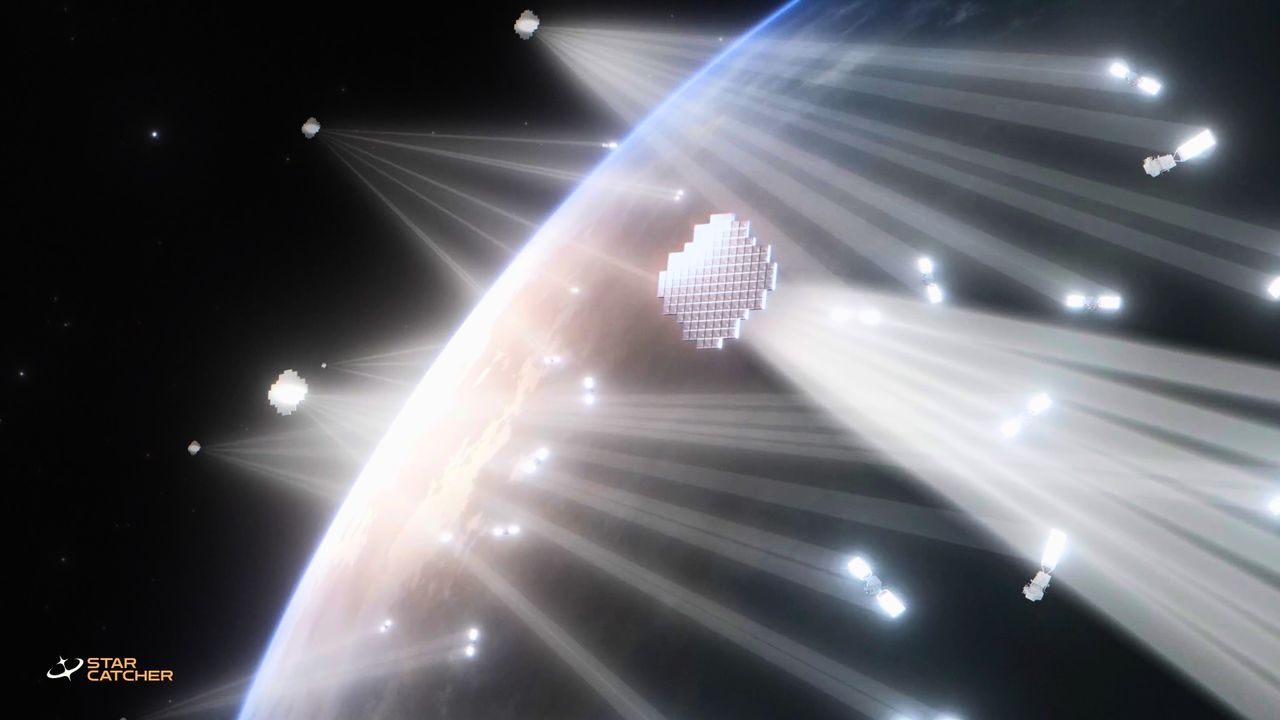
Startup Star Catcher Star Catcher has secured $65 million in funding to develop the world’s first orbital power grid, a system that will use lasers to transmit energy to satellites. The company says its technology can deliver up to 10 times more power on demand to existing satellites without requiring any modifications to their hardware. A test flight is planned for March 2025 at EverBank Stadium in Jacksonville, Florida, where engineers will demonstrate the wireless energy transfer system in real-world conditions.
How the orbital power grid works
Star Catcher’s approach relies on power-beaming spacecraft equipped with concentrated solar energy transmitters. These satellites will capture solar power in orbit and beam it as laser light to client satellites, which convert the energy back into electricity for onboard systems. The system bypasses the limitations of solar panels, which provide intermittent power depending on sunlight exposure and satellite orientation. By supplying power on demand, the grid aims to extend satellite lifespans and reduce reliance on battery-dependent operations.
The company has already tested its wireless energy technology at EverBank Stadium, simulating ground-based power-beaming scenarios. Engineers conducted controlled experiments to refine the precision of laser targeting and energy transfer efficiency before moving to orbital tests. The March 2025 demonstration will mark the first in-space validation of the technology, with a focus on stability and safety during transmission.
Market impact and satellite industry response
The orbital power grid could disrupt the $350 billion satellite industry by addressing a critical gap: energy scarcity in orbit. Many satellites operate with limited power reserves, restricting their capabilities and shortening mission lifespans. Star Catcher’s system eliminates this constraint by providing a reliable, continuous energy source. Industry analysts note that the technology could particularly benefit communication, Earth observation, and military satellites, which often face power shortages during peak operational demands.
Star Catcher has not disclosed all investors, but the $65 million round includes participation from venture capital firms and aerospace companies. The funding will support the development of multiple power-beaming satellites, with the first operational unit slated for launch in 2026. Competitors in the space energy sector, including Northrop Grumman and Airbus Defence and Space, are also exploring power-beaming technologies, but none have progressed to in-orbit demonstrations.
Regulatory and safety hurdles remain
Before the orbital power grid can become operational, Star Catcher must navigate regulatory approvals from agencies like the Federal Aviation Administration and the International Telecommunication Union. Safety concerns, particularly around laser targeting accuracy and potential interference with other satellites, are top priorities for regulators. The company has been working with government agencies to establish protocols for energy transmission and collision avoidance.
The March 2025 test flight will serve as a critical proving ground for these safety measures. Engineers will monitor the laser beam’s trajectory, power output, and thermal effects on target satellites. Any deviations or anomalies will trigger automatic shutdown protocols to prevent damage to nearby spacecraft. Success in this test could accelerate regulatory approvals and pave the way for commercial deployment.
Broader implications for space infrastructure
If successful, Star Catcher’s orbital power grid could redefine how satellites operate in low Earth orbit. By decoupling power generation from satellite design, the technology enables missions to prioritize payloads over energy storage, potentially lowering launch costs and increasing mission flexibility. The system could also support future deep-space missions by providing a reliable energy source independent of solar proximity.
The company’s next steps include scaling up the number of power-beaming satellites and expanding partnerships with satellite operators. Star Catcher has already signed preliminary agreements with several companies to supply energy to their fleets, though details remain undisclosed. Long-term, the grid could integrate with lunar or Martian surface power systems, creating a unified energy network for space exploration.
What You Need to Know
- Source: Space.com
- Published: May 12, 2026 at 13:00 UTC
- Category: Science
- Topics: #space · #astronomy · #nasa · #science · #star-catcher · #star-catcher-orbital-power-grid
Read the Full Story
This is a curated summary. For the complete article, original data, quotes and full analysis:
All reporting rights belong to the respective author(s) at Space.com. GlobalBR News summarizes publicly available content to help readers discover the most relevant global news.
Curated by GlobalBR News · May 12, 2026
Related Articles
- 5 Ways to Vet Social Media Health Advice Before Trying It
- Your Body Clock May Enhance The Benefits of Exercise, Study Finds
- Study finds yawns contagious before birth, even more than thought
🇧🇷 Resumo em Português
A humanidade acaba de dar um salto rumo ao futuro ao transformar a ficção científica em realidade: a startup Star Catcher anunciou a captação de US$ 65 milhões para construir a primeira rede orbital de energia, capaz de abastecer satélites com feixes de laser dez vezes mais potentes do que as fontes atuais. Com a promessa de revolucionar a indústria espacial, a tecnologia não apenas reduziria os custos de operação dos equipamentos em órbita, mas também abriria caminho para missões mais longas e ambiciosas, como viagens interplanetárias.
No Brasil, onde a Agência Espacial Brasileira (AEB) e instituições como o INPE têm investido em inovações para o setor aeroespacial, essa iniciativa ganha destaque por sua capacidade de impulsionar a competitividade do país no cenário global. A dependência de painéis solares limitados e baterias pesadas nos satélites poderia ser superada, permitindo que satélites brasileiros — desde os de comunicação até os de monitoramento ambiental da Amazônia — operem com maior eficiência. Além disso, a tecnologia poderia ser aplicada em estações espaciais ou até mesmo em futuras colônias lunares, alinhando-se aos esforços nacionais de exploração espacial.
O próximo passo da Star Catcher é realizar um voo de teste para validar a transmissão de energia via laser, um marco que pode definir o futuro das missões espaciais nos próximos anos.
🇪🇸 Resumen en Español
Star Catcher, una startup aeroespacial, ha cerrado una ronda de financiación de 65 millones de dólares para poner en marcha la primera red orbital de energía, un sistema revolucionario que empleará haces láser para suministrar hasta diez veces más energía a los satélites bajo demanda.
El proyecto, que ya planea su primer vuelo de prueba, promete cambiar el paradigma energético en el espacio, donde la disponibilidad de energía limpia y constante es clave para misiones de larga duración y operaciones en órbita terrestre. Para el público hispanohablante, especialmente en sectores tecnológicos y científicos de España y Latinoamérica, esta innovación podría abrir nuevas oportunidades en la exploración espacial, la observación terrestre o incluso en el desarrollo de satélites más eficientes. Además, refuerza la posición de empresas y gobiernos de habla hispana en la carrera espacial, al tiempo que plantea desafíos en regulación y sostenibilidad orbital.
Space.com
Read full article at Space.com →This post is a curated summary. All rights belong to the original author(s) and Space.com.
Was this article helpful?

Discussion