Danish officials confirm Timmy the humpback whale died after a disputed rescue attempt moved him to the North Sea.
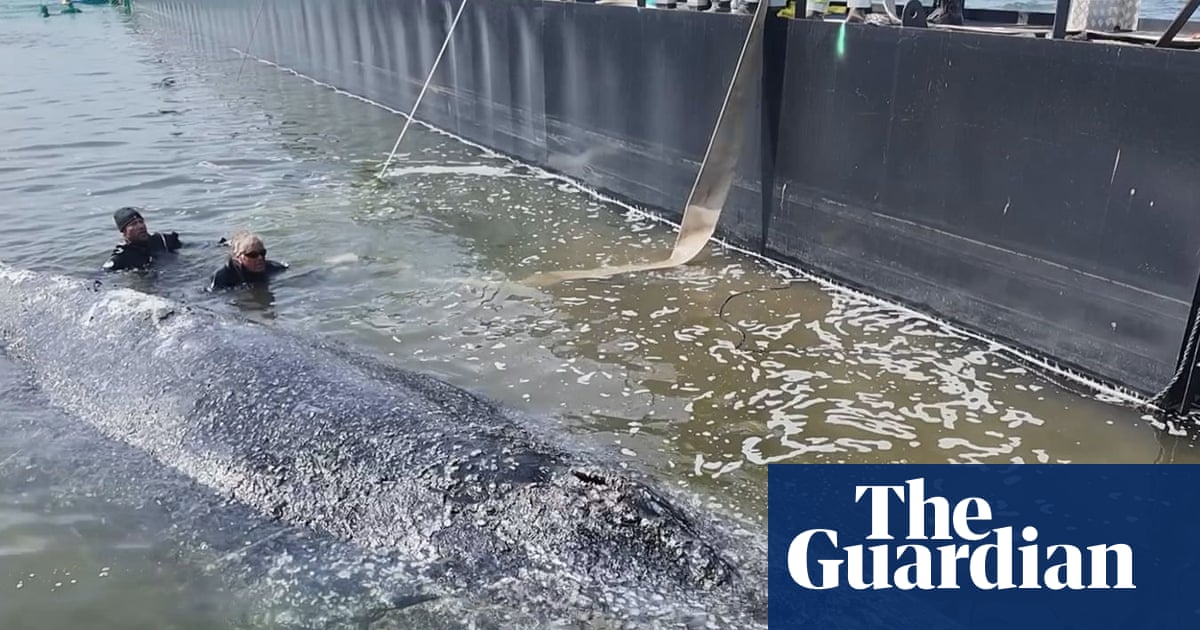
- Danish authorities confirm humpback whale Timmy dead near Anholt Island.
- Rescue attempt moved whale to North Sea two weeks prior.
- Critics called the operation pure animal cruelty at the time.
Danish authorities confirmed Saturday that Timmy the humpback whale, whose controversial rescue attempt sparked outrage, has died. Environmental Protection Agency officials said the whale’s carcass was found Friday near Anholt, a small island in the Kattegat strait between Denmark and Sweden. Genetic testing confirmed the identity of the 27-foot humpback on Saturday.
Controversial rescue attempt drew immediate backlash
Critics slammed the July 19 rescue operation as inhumane after rescuers attempted to tow Timmy from the shallow waters of the North Sea back to deeper waters near Denmark’s west coast. Video of the attempt showed the whale struggling as ropes were attached to his tail, drawing accusations of unnecessary suffering. Animal rights groups called the method outdated and cruel, while marine experts questioned its scientific basis.
The rescue team, led by Denmark’s Environmental Protection Agency, argued the whale’s health was deteriorating and relocation was a last resort. They cited previous cases where stranded whales recovered after being moved to open waters. But the public reaction was swift and overwhelmingly negative, with social media flooded with criticism and calls for accountability.
Necropsy planned to determine cause of death
Danish officials have not yet released details about Timmy’s condition when he was found or the likely cause of death. A necropsy is scheduled to determine whether his injuries were directly related to the rescue attempt or pre-existing conditions. The Danish Veterinary and Food Administration will lead the examination, with results expected within weeks.
The Horns Rev wind farm area, where Timmy was first spotted, remains under scrutiny. Environmentalists argue offshore construction may have disrupted marine habitats, contributing to the stranding. The Danish Energy Agency has not commented on potential links to human activity.
Whale strandings rise amid climate and human activity concerns
Timmy’s death follows a 30% increase in humpback whale strandings along Denmark’s coast this year, according to marine biologists. Experts cite rising sea temperatures, shipping noise, and offshore wind farm expansion as possible factors. The Danish Nature Agency has called for stricter monitoring of marine mammal health in the region.
The case has reignited debates over wildlife rescue protocols and the ethics of intervention. While some conservationists support relocation efforts, others advocate for letting nature take its course in cases of extreme distress. The Danish government has not indicated plans to change current guidelines, but the public outcry may force a review.
No further updates are expected until necropsy results are released. Timmy’s death marks the latest high-profile casualty in a string of marine strandings across Northern Europe this summer.
What You Need to Know
- Source: The Guardian
- Published: May 16, 2026 at 17:22 UTC
- Category: World
- Topics: #guardian · #world-news · #international · #timmy · #danish · #humpback
Read the Full Story
This is a curated summary. For the complete article, original data, quotes and full analysis:
All reporting rights belong to the respective author(s) at The Guardian. GlobalBR News summarizes publicly available content to help readers discover the most relevant global news.
Curated by GlobalBR News · May 16, 2026
Related Articles
- Zimbabwe’s diaspora reshapes real estate and farming investment trends
- 🎉 250 Articles in World!
- Eurovision 2024 faces scrutiny over Israel’s participation amid war
🇧🇷 Resumo em Português
O mundo se chocou ao saber que Timmy, a baleia-jubarte que virou símbolo de uma polêmica operação de resgate na Dinamarca, morreu duas semanas depois do procedimento que dividiu opiniões entre especialistas e ativistas. A confirmação do óbito, dada pelas autoridades dinamarquesas, reacendeu debates sobre ética em resgates de animais marinhos, especialmente quando as condições do bicho já eram críticas.
O caso de Timmy, que ficou preso em águas rasas na região de Lolland, expôs as dificuldades de se lidar com emergências envolvendo grandes cetáceos, animais que, mesmo debilitados, representam um desafio logístico e emocional para equipes de resgate. Para o Brasil, país que abriga uma das maiores populações de baleias-jubarte do Hemisfério Sul e onde o turismo de observação desses animais movimenta milhões, a discussão ganha ainda mais peso. A morte de Timmy levanta questões sobre protocolos internacionais de resgate e a necessidade de treinamento especializado para evitar sofrimento desnecessário em operações de salvamento.
Agora, a autópsia deve esclarecer as causas exatas da morte, mas o episódio já serve de alerta para governos e organizações ambientais revisarem suas abordagens em casos semelhantes.
🇪🇸 Resumen en Español
El rescate fallido de Timmy, la ballena jorobada que se convirtió en símbolo de la polémica entre activismo y ética animal, ha cerrado su trágico desenlace con la confirmación oficial de su muerte. Tras dos semanas de agonía tras un intento de liberación cuestionado por su crudeza, las autoridades danesas han certificado el deceso, desatando un debate sobre los límites de la intervención humana en la naturaleza.
El caso ha reavivido las críticas a las prácticas de rescate de cetáceos, donde la improvisación y la espectacularización mediática chocan con el bienestar animal. Expertos advierten que episodios como este reflejan la urgencia de protocolos más rigurosos, especialmente en un continente europeo donde el turismo de avistamiento y la presión urbanística amenazan cada vez más a especies marinas. Para los hispanohablantes, la historia resuena como un espejo de los conflictos globales entre conservación y espectáculo, recordando que, a veces, el afán por salvar puede ser tan dañino como la indiferencia.
The Guardian
Read full article at The Guardian →This post is a curated summary. All rights belong to the original author(s) and The Guardian.
Was this article helpful?



Discussion