Astronomers found interstellar comet 3I/ATLAS in old telescope images nine days before its official discovery in 2025.
- Telescope detected interstellar comet 9 days before official discovery
- Rubin Observatory captured images without immediate recognition
- Comet spotted in archival data from June-July 2025
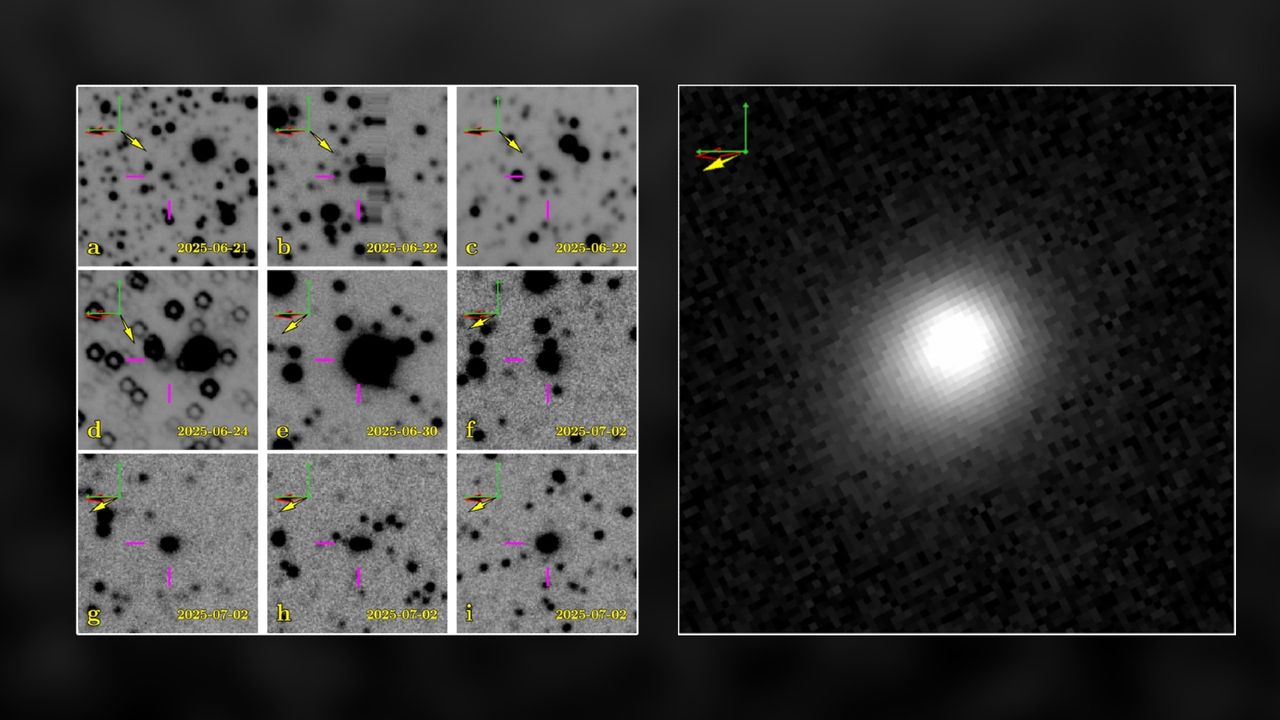
Astronomers almost missed interstellar comet 3I/ATLAS, finding it only after its official discovery in archival images taken weeks earlier. The Rubin Observatory captured the comet nine times between June 21 and July 2, 2025, but researchers did not realize it at the time.
The comet was officially discovered on July 11, 2025, by the Asteroid Terrestrial-impact Last Alert System (ATLAS), earning its name 3I/ATLAS. However, the Rubin Observatory’s data revealed earlier sightings, proving the comet had entered our solar system at least nine days before its formal detection. This discovery highlights potential gaps in early detection methods for interstellar objects.
The comet was later observed by the Ultraviolet Spectrograph (UVS) instrument aboard the JUICE spacecraft, led by the Southwest Research Institute. The UVS captured images of 3I/ATLAS in late 2025, providing additional data on its composition and trajectory.
Researchers initially considered naming the comet 3I/Rubin after the observatory that unknowingly tracked it. However, the ATLAS discovery took precedence, leaving the comet with its current designation. This case underscores the importance of cross-referencing archival data in astronomical research.
The discovery also raises questions about how often interstellar objects pass through our solar system unnoticed. With improved detection technologies, astronomers hope to identify more of these visitors sooner, allowing for better study of their origins and properties. This finding could accelerate efforts to develop early warning systems for interstellar interlopers.
Moving forward, astronomers plan to refine their search strategies to catch interstellar objects earlier. The Rubin Observatory’s data suggests that archival searches may reveal more pre-discovery sightings, improving our understanding of these rare celestial events. This work could reshape how we monitor the outer solar system for incoming interstellar visitors.
What You Need to Know
- Source: Space.com
- Published: May 16, 2026 at 10:00 UTC
- Category: Science
- Topics: #space · #astronomy · #nasa · #astronomers · #interstellar · #rubin
Read the Full Story
This is a curated summary. For the complete article, original data, quotes and full analysis:
All reporting rights belong to the respective author(s) at Space.com. GlobalBR News summarizes publicly available content to help readers discover the most relevant global news.
Curated by GlobalBR News · May 16, 2026
🇧🇷 Resumo em Português
Astrônomos brasileiros e internacionais celebram uma descoberta que promete reescrever os livros de astronomia: imagens de arquivo revelaram a presença do cometa interestelar 3I/ATLAS semanas antes de sua detecção oficial em 2025. O fenômeno, raro e fascinante, oferece uma janela inédita para entender a composição e trajetória de objetos vindos de fora do Sistema Solar, algo que até então só havia sido observado com o famoso 2I/Borisov.
A relevância para o Brasil é dupla: além de contribuir com a ciência global, a descoberta reforça a importância da participação brasileira em projetos internacionais de monitoramento astronômico, como o S-PLUS (Southern Photometric Local Universe Survey), sediado no Observatório Interamericano de Cerro Tololo, no Chile. A análise do 3I/ATLAS pode ajudar a desvendar mistérios sobre a formação de sistemas planetários distantes e até mesmo sobre a origem da água na Terra, já que cometas são considerados “cápsulas do tempo” cósmicas.
O próximo passo é rastrear sua trajetória em tempo real para prever se o cometa fará uma nova passagem pelo Sistema Solar ou se será ejetado para sempre ao espaço profundo.
🇪🇸 Resumen en Español
Astrónomos han identificado el cometa interestelar 3I/ATLAS en imágenes de archivo tomadas semanas antes de su descubrimiento oficial en 2025, revelando un hallazgo sin precedentes.
La detección en datos previos no solo refuerza la capacidad de seguimiento de objetos interestelares, sino que también abre nuevas líneas de investigación sobre la composición y trayectoria de estos visitantes cósmicos. Para la comunidad científica hispanohablante, este avance subraya la importancia de colaboraciones internacionales y el acceso a archivos astronómicos, mientras que para el público en general resalta cómo la tecnología permite desentrañar misterios del espacio profundo con mayor precisión.
Space.com
Read full article at Space.com →This post is a curated summary. All rights belong to the original author(s) and Space.com.
Was this article helpful?


Discussion