Mamata Banerjee vows to fight on after BJP sweeps West Bengal election, ending her party’s 15-year rule.
- BJP wins West Bengal election in massive landslide
- Banerjee’s 15-year rule ends after TMC loses power
- Banerjee calls election results ‘forcefully captured’ by BJP
West Bengal’s political world was turned upside down on Monday night when Narendra Modi’s Bharatiya Janata Party (BJP) [https://en.wikipedia.org/wiki/Bharatiya_Janata_Party] swept state elections, unseating Mamata Banerjee’s [https://en.wikipedia.org/wiki/Mamata_Banerjee] Trinamool Congress (TMC) after 15 years in power. The BJP’s victory in India’s fourth-most populous state marks a dramatic shift in the country’s political map, where Banerjee has been a dominant figure since 2011. Final results show the BJP won over 48% of the vote, while the TMC, led by Banerjee, received just 26%, its worst performance in a decade.
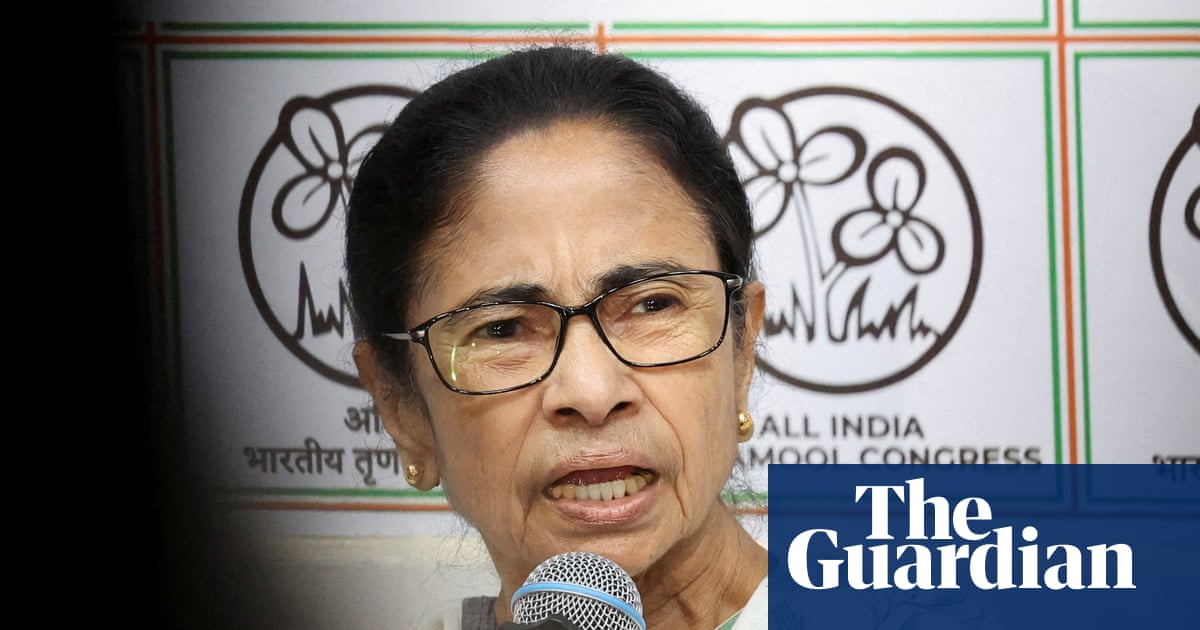
Banerjee, 68, addressed supporters on Tuesday morning from the steps of the state assembly in Kolkata, her voice steady but defiant. ‘The election was not fair. It was forcefully captured by the BJP,’ she told reporters, alleging widespread irregularities and intimidation. Her refusal to resign immediately sets up a showdown with the BJP, which now controls the state legislature and will likely push to replace her government within weeks. The BJP’s state president, Sukanta Majumdar, called the results a ‘clear mandate for change’ and said the party would move fast to implement its agenda.
What the results mean for West Bengal
The election results reflect deep frustration with Banerjee’s government, which faced criticism over rising unemployment, corruption scandals, and a crackdown on opposition voices. The BJP campaigned aggressively on promises of economic growth, better infrastructure, and a crackdown on illegal migrants—issues that resonated in parts of West Bengal where the TMC’s grip had weakened. The party also exploited divisions within the TMC, poaching several high-profile leaders ahead of the vote.
Banerjee’s loss is historic. She rose to prominence as a firebrand opposition leader before becoming chief minister in 2011, defeating the Left Front coalition that had ruled the state for 34 years. Her tenure was marked by bold policies, including cash transfers to women and small farmers, but also by accusations of authoritarianism and political violence. The BJP’s victory suggests voters in West Bengal are ready for a change, even if Banerjee refuses to accept it.
Modi’s party gains momentum ahead of 2024
The BJP’s win in West Bengal is a major boost for Narendra Modi, who is seeking a third term as prime minister in next year’s national election. The party has struggled in the state in past elections but made inroads in 2019, when it won 18 of 42 parliamentary seats. This victory solidifies its position as a major force in eastern India, where it has also made gains in neighboring states like Bihar and Assam.
Banerjee, however, is not going quietly. She has vowed to challenge the election results in court, alleging voter suppression and misuse of state resources by the BJP. Legal experts say her case will be an uphill battle, as Indian courts have historically been reluctant to overturn election results unless there’s clear evidence of fraud. Meanwhile, the BJP is preparing to take over the state government, with plans to appoint a new chief minister and push through key policies.
What happens next in West Bengal
The next few weeks will be tense. The BJP is expected to move quickly to form a new government, but Banerjee’s TMC still controls the majority of local bodies and could resist the transition. Protests are likely to erupt in Kolkata and other cities, where Banerjee remains popular among her base. The state’s police force, long accused of bias under her rule, will now be under BJP scrutiny—a potential flashpoint.
For India’s opposition parties, the loss is a wake-up call. The Congress party, once the dominant force in Indian politics, is now a distant third in West Bengal, while the Communist Party of India (Marxist) [https://en.wikipedia.org/wiki/Communist_Party_of_India_(Marxist)], which ruled for decades, has been reduced to a minor player. The BJP’s victory shows how Modi’s party has reshaped India’s political map, turning former strongholds into battlegrounds.
The broader implications are clear: West Bengal is no longer a TMC fortress. If the BJP can hold onto power here, it could signal a permanent shift in Indian politics, where regional parties once held sway. For Banerjee, the fight isn’t over yet—but the clock is ticking.
What You Need to Know
- Source: The Guardian
- Published: May 06, 2026 at 13:46 UTC
- Category: World
- Topics: #guardian · #world-news · #international · #politics · #election · #defeated
Read the Full Story
This is a curated summary. For the complete article, original data, quotes and full analysis:
All reporting rights belong to the respective author(s) at The Guardian. GlobalBR News summarizes publicly available content to help readers discover the most relevant global news.
Curated by GlobalBR News · May 06, 2026
Related Articles
- 🎉 250 Articles in World!
- Bulgaria wins Eurovision 2025 with Dara’s historic victory
- ‘She was phenomenal, she was iconic’: Delta Goodrem wins praise as Australia places fourth at Eurovision
🇧🇷 Resumo em Português
A vitória do Bharatiya Janata Party (BJP) em Bengala Ocidental pôs fim a 15 anos de domínio da líder Mamata Banerjee, mas a resistência da chefe de governo local acende um debate sobre democracia e transição de poder na Índia.
Mamata Banerjee, figura central na política indiana e conhecida por sua postura combativa, recusou-se a renunciar mesmo após a derrota de seu partido, a Aliança Trinamool Congress (TMC), para o BJP nas eleições estaduais. O resultado não apenas reconfigurou o cenário político regional, como também expôs tensões crescentes entre o governo central de Narendra Modi e os estados governados por oposição. Para o Brasil, país com um sistema federativo marcado por disputas partidárias e polarização, a situação em Bengala Ocidental serve como um espelho de como a democracia pode ser testada em momentos de transição — especialmente quando a legitimidade da derrota é questionada por figuras políticas influentes.
O impasse deve se estender até que a Justiça indiana ou pressões institucionais definam os próximos passos, enquanto analistas preveem que a resistência de Banerjee pode agravar ainda mais as tensões com o governo federal.
🇪🇸 Resumen en Español
La derrota de Mamata Banerjee en West Bengal marca un giro político en India, donde la resistencia de la líder histórica desafía el avance del partido de Modi. Tras 15 años en el poder, Banerjee se niega a ceder ante la victoria del BJP, un gesto que subraya las tensiones entre el centralismo de Narendra Modi y los bastiones regionales.
El pulso entre Banerjee y el BJP refleja la pugna por el alma de la India moderna, donde el nacionalismo hindú choca con las identidades estatales. Para los hispanohablantes, este enfrentamiento evoca debates globales sobre federalismo y populismo, mostrando cómo la política local puede redefinir el rumbo de un país. La resistencia de Banerjee, además, subraya el papel de las mujeres en la arena política, un tema de creciente relevancia en todo el mundo.
The Guardian
Read full article at The Guardian →This post is a curated summary. All rights belong to the original author(s) and The Guardian.
Was this article helpful?


Discussion