Ireland refuses to compete in Eurovision 2024 over Israel’s Gaza war.
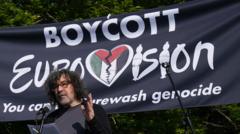
- Ireland confirms non-participation in Eurovision 2024
- Country cites diplomatic tensions with Israel over Gaza
- This marks Ireland’s second Eurovision boycott in recent years
Ireland will not take part in the 2024 Eurovision Song Contest, the country’s national broadcaster RTÉ confirmed on Tuesday. The decision comes amid escalating diplomatic tensions between Ireland and Israel over the ongoing war in Gaza. While Eurovision organizers have not imposed any restrictions on participation, Ireland’s refusal reflects its opposition to Israel’s military actions in the Palestinian territory.
This is not the first time Ireland has boycotted the contest. In 2023, the country also opted out, citing similar concerns over the conflict. RTÉ stated that its decision was based on Ireland’s stance as a neutral state and its criticism of Israel’s conduct in Gaza. The broadcaster did not specify whether the boycott would continue in future years.
The move underscores growing divisions within the European Union over the Israel-Hamas war. Several EU member states, including Ireland, have condemned Israel’s military campaign, which was launched in response to the October 7, 2023, Hamas attacks. Ireland has been vocal in calling for a ceasefire and increased humanitarian aid to Gaza, aligning with nations like Spain and Belgium in pushing for a more critical stance toward Israel.
Eurovision, organized by the European Broadcasting Union (EBU), has historically avoided political interference in the competition. However, the contest has increasingly become a platform for broader geopolitical debates. In 2022, Ukraine won the contest amid Russia’s invasion, and the EBU later barred Russia from participating in 2023.
RTÉ’s decision to skip Eurovision 2024 follows a pattern of Ireland distancing itself from events seen as legitimizing Israeli actions. The government has also supported international investigations into alleged war crimes in Gaza, further straining relations with Israel. While the boycott does not violate Eurovision rules, it signals Ireland’s willingness to use cultural platforms to express political disapproval.
The 2024 Eurovision Song Contest will take place in Malmö, Sweden, from May 7 to 11. Ireland’s absence will be noted, as the country has a long history in the competition, winning it seven times. RTÉ has not indicated whether it plans to return in future years, leaving the door open for a potential reconsideration.
The broader implications of Ireland’s boycott extend beyond Eurovision. It highlights the challenges of separating culture from politics in international events, especially amid a devastating humanitarian crisis. As the war in Gaza continues, more countries may reassess their participation in events that indirectly engage with Israel.
What You Need to Know
- Source: BBC News
- Published: May 15, 2026 at 11:41 UTC
- Category: World
- Topics: #bbc · #world-news · #international · #war · #conflict · #ireland
Read the Full Story
This is a curated summary. For the complete article, original data, quotes and full analysis:
All reporting rights belong to the respective author(s) at BBC News. GlobalBR News summarizes publicly available content to help readers discover the most relevant global news.
Curated by GlobalBR News · May 15, 2026
Related Articles
- Eurovision 2024 faces scrutiny over Israel’s participation amid war
- US proposes 40% cut in Colorado River water for 3 states amid drought
- US charges man with plotting Iran-directed attacks on Jews in London and New York
🇧🇷 Resumo em Português
A Irlanda anunciou sua desistência da edição 2024 do Festival Eurovisão da Canção, mergulhando o evento em uma polêmica que transcende a música e atinge a política internacional. A decisão, inédita em mais de seis décadas de participação, reflete o crescente mal-estar europeu diante do conflito entre Israel e o Hamas em Gaza, que já ultrapassou seis meses de intensos combates e milhares de vítimas civis.
O governo irlandês justificou a ausência pelo receio de que a presença do país pudesse ser interpretada como um endosso à política israelense, em meio a críticas internacionais à ofensiva militar em Gaza. A Irlanda, tradicionalmente neutra em conflitos geopolíticos, enfrenta pressão interna de grupos pró-palestinos e uma população cada vez mais mobilizada contra a guerra. Para o Brasil, onde a discussão sobre direitos humanos e paz internacional ganha força, o caso irlandês serve como um alerta sobre os limites da neutralidade em tempos de polarização global — especialmente quando eventos culturais são usados como palco para manifestações políticas.
A Eurovisão, que sempre se vangloriou de unir nações através da música, agora se vê obrigada a repensar seu papel em um mundo cada vez mais dividido.
🇪🇸 Resumen en Español
Irlanda ha decidido no participar en el Festival de Eurovisión 2024, una decisión histórica que refleja el creciente peso de los conflictos geopolíticos en eventos culturales globales.
La retirada de Irlanda se enmarca en la polémica generada por la decisión de la Unión Europea de Radiodifusión (UER) de permitir la participación de Israel en el certamen, pese a la guerra en Gaza. Aunque el país ya había participado en todas las ediciones desde 1965, el debate sobre el boicot a Israel por su ofensiva militar ha llevado a una redefinición de prioridades. Para muchos irlandeses, la neutralidad y los valores humanitarios pesaron más que la tradición eurovisiva, mientras que otros critican la politización de un evento que siempre aspiró a ser festivo. La polémica resalta cómo las tensiones internacionales trascienden fronteras, incluso en un festival que suele ser un oasis de unidad.
BBC News
Read full article at BBC News →This post is a curated summary. All rights belong to the original author(s) and BBC News.
Was this article helpful?


Discussion