Israel and Lebanon extend ceasefire by 45 days after US talks, with new negotiations planned for early June.
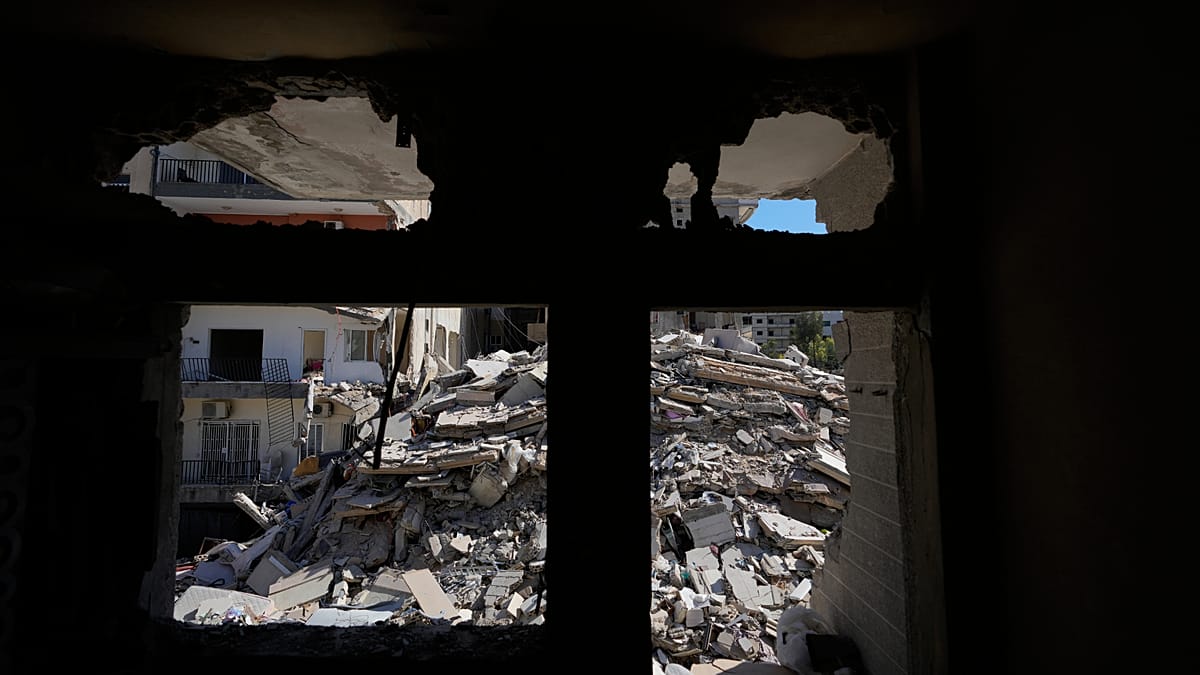
- Israel and Lebanon extend ceasefire by 45 days after US negotiations
- US State Department to hold permanent agreement talks on June 2-3
- Pentagon to convene military delegations from both countries on May 29
Israel and Lebanon have agreed to extend their ceasefire by 45 days following high-level talks in the United States, the State Department confirmed on Monday. The temporary truce, which has limited cross-border violence since October, was set to expire at midnight. Diplomats say the extension provides more time for negotiations to secure a lasting solution.
The US State Department announced it will host further negotiations aimed at reaching a permanent political agreement on June 2 and 3. Before those talks, the Pentagon is scheduled to bring together military delegations from Israel and Lebanon on May 29 to discuss de-escalation measures. A senior US official said the meetings aim to reduce tensions and prevent renewed conflict along the shared border.
Israel and Lebanon have fought intermittent clashes since October, primarily involving Hezbollah [https://en.wikipedia.org/wiki/Hezbollah], the Iran-backed militant group based in Lebanon. Israel has conducted airstrikes targeting Hezbollah positions in response to rocket attacks and cross-border infiltrations. Lebanon’s caretaker government, led by Prime Minister Najib Mikati [https://en.wikipedia.org/wiki/Najib_Mikati], has sought to mediate while facing internal political divisions and economic instability.
The ceasefire extension comes as regional tensions remain high amid ongoing Israel-Hamas [https://en.wikipedia.org/wiki/Israel%E2%80%93Hamas_war] hostilities in Gaza. The Biden administration has pushed for a broader diplomatic framework to stabilize Lebanon and prevent wider conflict. Analysts warn that without a permanent agreement, sporadic violence could escalate into a larger confrontation.
US pushes for long-term de-escalation
The Pentagon’s upcoming military talks signal a coordinated effort to stabilize the border through direct dialogue. US officials have emphasized that both sides must adhere to the ceasefire to avoid miscalculations that could trigger a broader crisis. The State Department described the June negotiations as a critical step toward a durable solution, though no enforceable timeline has been set.
Lebanese officials have repeatedly called for international guarantees to prevent further Israeli military actions in southern Lebanon. Meanwhile, Israeli leaders have insisted any agreement must ensure Hezbollah’s full withdrawal from the border area, in line with UN Security Council Resolution 1701 [https://en.wikipedia.org/wiki/United_Nations_Security_Council_Resolution_1701].
Broader regional implications
The ceasefire extension offers temporary relief to civilians on both sides of the border, where thousands have been displaced by ongoing violence. Humanitarian groups report rising needs for shelter, food, and medical care in southern Lebanon and northern Israel. The UN Interim Force in Lebanon (UNIFIL) [https://en.wikipedia.org/wiki/United_Nations_Interim_Force_in_Lebanon] has maintained a monitoring presence but lacks the mandate to enforce a permanent solution.
Diplomatic observers caution that Lebanon’s fragile state—marked by political paralysis, economic collapse, and rising public unrest—complicates efforts for a sustainable agreement. The country has not held a fully functioning government since October 2022, and its military remains under-resourced amid multiple crises.
Israel’s government, led by Prime Minister Benjamin Netanyahu [https://en.wikipedia.org/wiki/Benjamin_Netanyahu], faces domestic pressure to prevent further rocket attacks from Lebanon. At the same time, it must balance military action with efforts to avoid a multi-front war involving Hezbollah and Hamas. The US has reiterated its commitment to brokering a deal that prevents further destabilization in the region.
Analysts say the next 45 days will be critical in determining whether the ceasefire holds or collapses under renewed pressure. Both sides have previously accused each other of violating the truce, raising concerns about trust in the negotiation process. International mediators are expected to push for confidence-building measures, including prisoner exchanges and humanitarian access.
The outcome of the June talks could influence broader regional dynamics, including Iran’s role in supporting proxy groups and the possibility of a wider Israel-Hezbollah conflict. The US has urged restraint while continuing to engage with key stakeholders to prevent miscalculation. A failure to reach an agreement could lead to increased military posturing and a higher risk of escalation in the coming months.
What You Need to Know
- Source: Euronews
- Published: May 15, 2026 at 19:06 UTC
- Category: World
- Topics: #euronews · #europe · #world-news · #war · #military · #defense
Read the Full Story
This is a curated summary. For the complete article, original data, quotes and full analysis:
All reporting rights belong to the respective author(s) at Euronews. GlobalBR News summarizes publicly available content to help readers discover the most relevant global news.
Curated by GlobalBR News · May 15, 2026
Related Articles
- Eurovision 2024 faces scrutiny over Israel’s participation amid war
- US Justice Department preparing indictment against Raúl Castro
- US planning to criminally indict ex-Cuban leader Raúl Castro
🇧🇷 Resumo em Português
Um novo capítulo na tensão entre Israel e Líbano começou a se desenhar nesta semana, quando os dois países concordaram em estender por mais 45 dias o cessar-fogo que evitou uma escalada ainda maior do conflito na fronteira. A decisão, alcançada após intensas negociações mediadas pelos Estados Unidos, acende um sinal de alerta e esperança ao mesmo tempo: enquanto o alívio temporário evita um banho de sangue imediato, a fragilidade do acordo deixa claro que a paz definitiva ainda está longe de ser selada.
O entendimento entre Israel e Líbano não é apenas uma questão regional, mas tem repercussões diretas para o Brasil e para os países lusófonos, especialmente em um momento em que a comunidade internacional busca evitar novos focos de instabilidade no Oriente Médio. A influência dos EUA na mediação reforça a posição do Brasil como ator secundário, mas interessado em promover diálogos multilaterais que possam trazer estabilidade. Além disso, a situação afeta os fluxos migratórios e a segurança energética global, temas que também impactam a economia brasileira, dependente de petróleo e com diásporas libanesa e síria significativas no território nacional.
O próximo passo será uma rodada de negociações marcada para os dias 2 e 3 de junho, quando as partes tentarão transformar o cessar-fogo temporário em uma solução permanente — um desafio que, até agora, tem resistido a todas as tentativas de reconciliação.
🇪🇸 Resumen en Español
Tras meses de tensión en la frontera entre Israel y Líbano, ambas naciones han logrado un respiro al prorrogar el alto el fuego por 45 días, un respiro negociado bajo el paraguas de Estados Unidos que abre una ventana de esperanza en una región históricamente convulsa. El acuerdo, alcanzado tras intensos encuentros diplomáticos, llega en un momento crítico, cuando la comunidad internacional observa con preocupación los brotes de violencia en Oriente Medio y su posible escalada.
El cese temporal de hostilidades no solo alivia la presión sobre las poblaciones civiles en ambos lados de la frontera, sino que también sienta las bases para nuevas rondas de negociaciones previstas para principios de junio. La relevancia de este gesto trasciende lo inmediato: marca un paso adelante en la estabilización de una zona donde cualquier chispa puede desencadenar un conflicto de mayores dimensiones, especialmente en un contexto de crisis humanitaria y geopolítica en la región. Para los hispanohablantes, este desarrollo recuerda la importancia de la diplomacia en conflictos enquistados y subraya cómo las decisiones tomadas a miles de kilómetros pueden tener repercusiones globales, desde el precio de la energía hasta la seguridad de las comunidades migrantes en Europa.
Euronews
Read full article at Euronews →This post is a curated summary. All rights belong to the original author(s) and Euronews.
Was this article helpful?

Discussion