Documentary filmmaker Brian Lindstrom, 65, died Friday after battling a rare brain disease for years, his wife Cheryl Strayed revealed.
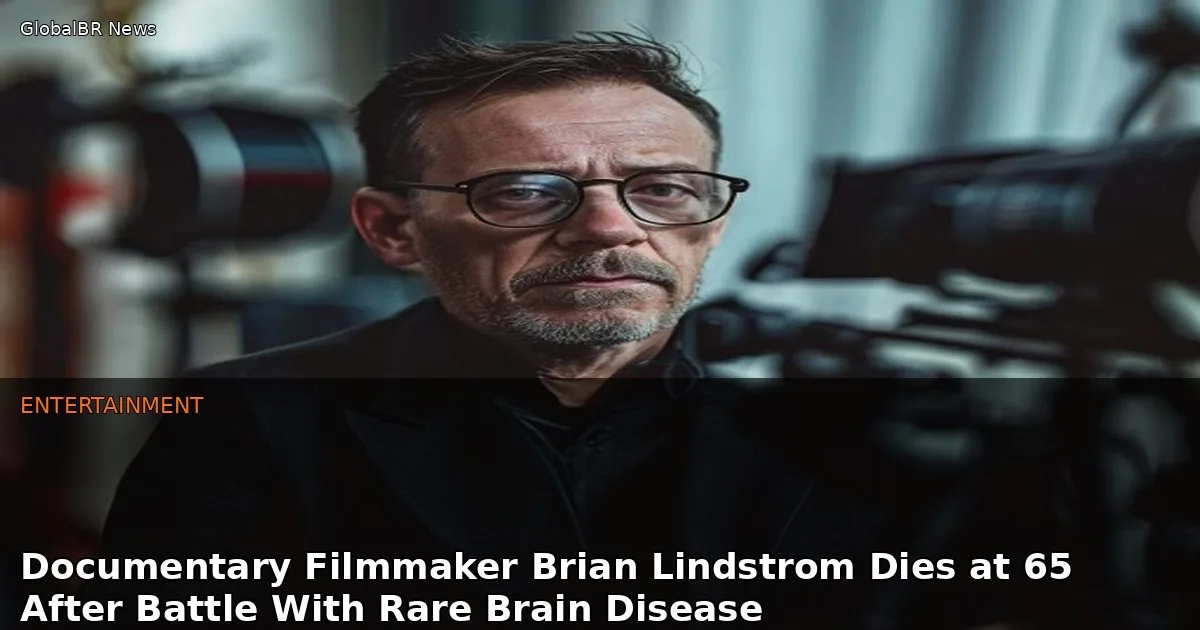
- Diagnosed filmmaker Brian Lindstrom died at 65 after years with rare brain disease
- Director focused on people 'society puts an X through,' wife revealed
- Lindstrom’s wife is bestselling author Cheryl Strayed
Oregon documentary filmmaker Brian Lindstrom died Friday at 65 after a years-long battle with progressive supranuclear palsy, his wife, bestselling author Cheryl Strayed, announced. Lindstrom’s death was confirmed by Strayed in a social media post Friday evening, though the date of his passing was not immediately disclosed. Progressive supranuclear palsy, a rare neurodegenerative disorder, progressively affects movement, balance, speech and cognition, often leading to severe disability within a decade of diagnosis.
Lindstrom, a Portland-based filmmaker, spent three decades documenting overlooked communities and issues, earning acclaim for his unflinching portrayals of those ‘society puts an X through.’ His work spanned subjects including addiction, incarceration and mental illness, often giving voice to marginalized populations. Strayed, known for her memoir Wild and the subsequent film adaptation starring Reese Witherspoon, described Lindstrom as a relentless advocate for the voiceless in her announcement.
Films explored addiction, incarceration and mental health
Lindstrom’s 2003 documentary Alien Boy: The Life and Death of James Chasse examined the death of a Portland man with schizophrenia after a violent encounter with police, sparking reforms in Oregon’s mental health system. The film became a touchstone in discussions about police treatment of people with mental illness and was screened by law enforcement agencies nationwide. His 2011 film Finding Normal followed four individuals recovering from addiction, offering intimate portraits of recovery without glorifying substance use.
His 2018 documentary Treasure Island: You, Me, and the Big C followed a group of low-income families displaced by a redevelopment project in San Francisco’s Treasure Island, highlighting the human cost of gentrification. The film premiered at the San Francisco International Film Festival and won best documentary at the Portland International Film Festival. Critics praised Lindstrom’s ability to blend personal stories with systemic critiques, a hallmark of his work.
Progressive supranuclear palsy forced early retirement
Lindstrom’s diagnosis came in 2020, forcing an abrupt halt to his filmmaking after decades of steady output. Progressive supranuclear palsy, which has no cure, typically progresses rapidly, leaving patients unable to walk, speak clearly or care for themselves within five to ten years. Strayed described his final years as a ‘heartbreaking’ decline, noting he required full-time care in his Portland home. Friends and colleagues recalled Lindstrom’s determination to document his own experience, though he ultimately decided against publicizing his condition further.
The couple, who married in 2015 after meeting at a writers’ conference, had been together for over a decade. Strayed’s memoir Wild, published in 2012, detailed her solo hike of the Pacific Crest Trail and became a cultural phenomenon, later adapted into a 2014 film starring Witherspoon. Lindstrom’s films were often compared to Strayed’s storytelling for their emotional depth and social consciousness, though he maintained a distinct voice focused on structural inequities rather than personal narratives.
Colleagues mourn filmmaker’s impact
Tributes poured in Friday from filmmakers, activists and organizations Lindstrom had worked with over the years. Brett Story, director of the 2021 documentary The Hottest August, called Lindstrom ‘a filmmaker who saw the invisible and made it impossible to ignore.’ Portland filmmaker Gus Van Sant praised Lindstrom’s ‘fearless’ approach to difficult subjects, noting his work had influenced a generation of documentary makers in the Pacific Northwest.
Lindstrom is survived by Strayed; their two children from previous marriages; his mother, Diane Lindstrom; and three siblings. A private memorial is planned in Portland, with details to be announced. His films remain available through Oregon Public Broadcasting and streaming platforms, where they continue to spark discussions about social justice and systemic change.
What You Need to Know
- Source: Hollywood Reporter
- Published: May 16, 2026 at 20:12 UTC
- Category: Entertainment
- Topics: #hollywood · #movies · #war · #nuclear · #weapons
Read the Full Story
This is a curated summary. For the complete article, original data, quotes and full analysis:
All reporting rights belong to the respective author(s) at Hollywood Reporter. GlobalBR News summarizes publicly available content to help readers discover the most relevant global news.
Curated by GlobalBR News · May 16, 2026
Related Articles
- Rap shooter gets 20 years for Young Dolph murder case closure
- Oscar nominee Sara Ishaq debuts Cannes women-only gas station film
- Spain buys horror comedy ‘Red Snow’ with first vampire Santa Claus
🇧🇷 Resumo em Português
O cinema perdeu um de seus olhares mais humanos e necessários nesta semana: o documentarista Brian Lindstrom, diretor de obras poderosas que davam voz aos esquecidos da sociedade, faleceu aos 65 anos após uma longa batalha contra a paralisia supranuclear progressiva, uma doença cerebral rara. Lindstrom deixou um legado de filmes que não apenas registraram realidades dolorosas e ignoradas, mas também provocaram reflexões profundas sobre a condição humana, conquistando admiradores em todo o mundo, inclusive no Brasil, onde seu trabalho ressoou especialmente entre cineastas e ativistas sociais.
No Brasil, país marcado por profundas desigualdades e onde a luta por representatividade e justiça social é constante, a obra de Lindstrom ganha ainda mais relevância. Seus documentários, como “Alien Boy: The Life and Death of James Chasse”, que aborda a morte de um homem com doenças mentais em decorrência de violência policial nos Estados Unidos, ecoam diretamente com as discussões brasileiras sobre direitos humanos, saúde mental e a violência contra minorias. Além disso, o estilo de Lindstrom — que combinava sensibilidade, rigor jornalístico e uma postura humanista — influencia diretamente cineastas brasileiros engajados em retratar as periferias, a população negra e os grupos marginalizados, mostrando que a arte pode ser tanto um espelho quanto uma ferramenta de transformação social.
Sua morte deixa um vazio no cenário do documentário contemporâneo, mas também serve como um chamado para que novos realizadores continuem explorando as fronteiras entre cinema e ativismo, mantendo viva a tradição de Lindstrom de dar luz aos invisíveis.
Hollywood Reporter
Read full article at Hollywood Reporter →This post is a curated summary. All rights belong to the original author(s) and Hollywood Reporter.
Was this article helpful?


Discussion