Giant radio telescope tracks Artemis 2 Orion 213,000 miles away with four astronauts inside.
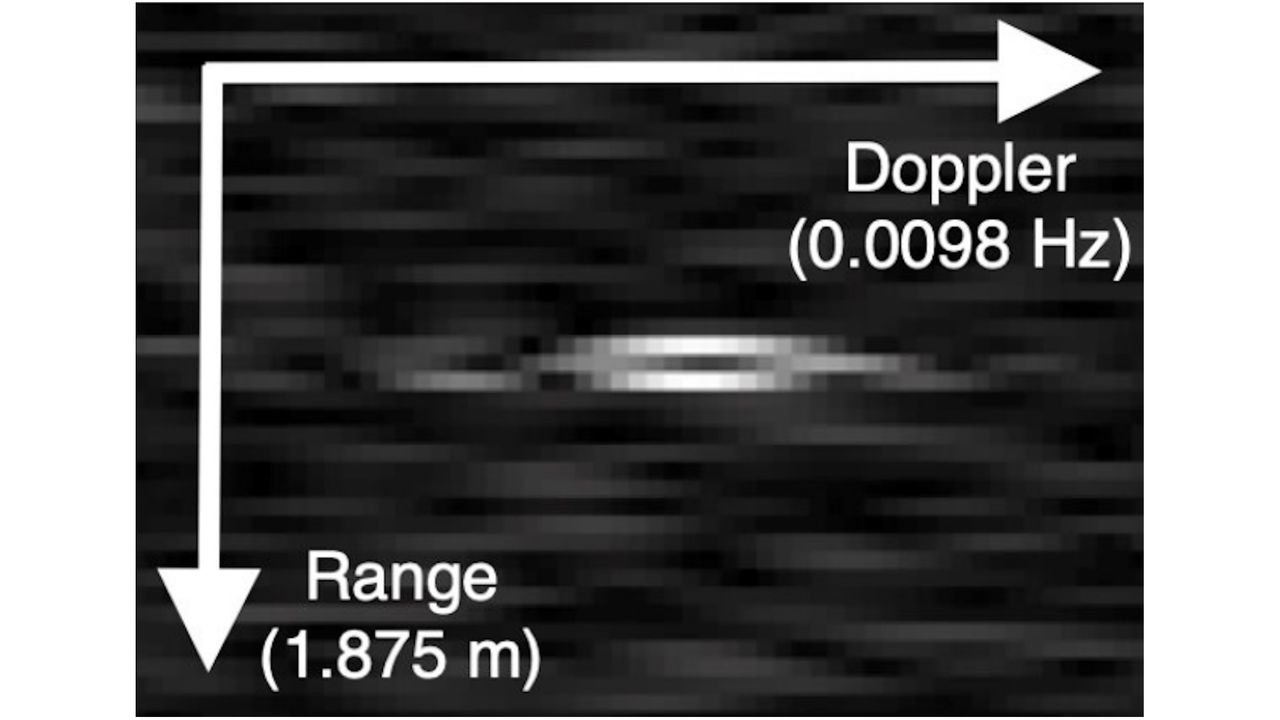
- Giant Green Bank Telescope detected Orion’s radar echo 213,000 miles from Earth
- Artemis 2 has four astronauts including first woman and Black astronaut on moon mission
- Signal shows Orion’s exact position and speed during deep-space flight
📰 Continuing coverage: Prada designs NASA’s new moon spacesuit for Artemis astronauts
Astronomers just caught a tiny blip in the void—one that happens to carry four human beings. The Green Bank Telescope in West Virginia locked onto the Orion spacecraft 213,000 miles from Earth during Artemis 2’s shakedown cruise. The dish didn’t see the capsule itself, but its faint radar echo, a single spike in a sea of radio noise. Mission controllers knew the spike meant Orion was right where it should be, with Reid Wiseman, Victor Glover, Christina Koch, and Jeremy Hansen safely inside the crew module 40,000 miles past the moon’s far side. In the data display, those four lives showed up as one bright pixel on a graph labeled “Range” and “Doppler.” Range meant distance; Doppler meant speed and direction. Together they proved Orion was exactly on course, hurtling through deep space at 2,600 mph relative to Earth. The telescope’s 100-meter dish—big enough to fit three football fields—picked up the echo in a 10-minute window while Orion was farther from Earth than any human-rated craft has ever traveled and still returning. Engineers call it a “skin-track” ping: a radar pulse bounces off the capsule’s metallic surfaces, returning a signal strong enough to measure but too weak to carry voices or telemetry. The spike wasn’t a live video feed or a voice call; it was the mechanical heartbeat of a spacecraft with people inside, 343,000 kilometers away. ## How a radio dish tracks a moon-bound capsule. The trick isn’t new. Planetary radars have bounced signals off asteroids and planets for decades, and NASA used a similar trick on Apollo 11 in 1969. What’s different this time is the distance and the precision. Artemis 2’s trajectory takes Orion 6,400 miles past the moon’s far side, then slings it back toward Earth. At that range, the Green Bank Telescope’s echo is so faint it barely rises above cosmic background noise. Astronomers had to subtract interference from the Sun, Jupiter, and even Wi-Fi routers in nearby Snowshoe Mountain to isolate Orion’s signal. The team used a 12.5-kilowatt radar transmitter—strong enough to light up a small town—aimed at a point in space where they knew Orion would be. The echo returned 2.3 seconds later, giving them the exact distance and velocity in real time. ## Why this matters for future moon missions. NASA didn’t do this just to prove it could. Tracking Orion with radar while it’s far from Earth is a critical backup if the capsule’s own communications systems fail. The deep-space network’s dishes can lose lock when Orion’s antenna points away from Earth, and a high-power radar pulse can reacquire the signal in minutes. It also helps mission planners refine the capsule’s heat-shield performance; Orion’s re-entry corridor is narrower than Apollo’s, so every mile of position data counts. For the Artemis program, this kind of tracking could shorten the time between launch and final approach burns, saving fuel and extending mission options. The Green Bank Telescope’s operators call it “radar navigation.” In plain terms, it turns a radio dish into a giant tape measure in space. ## What’s next for Artemis 2 and the telescope. Orion is still on its 10-day flight, looping around the moon and back. The Green Bank team will run at least two more radar passes—one on the outbound leg and one before re-entry—just to double-check the numbers. After Artemis 2 splashes down in the Pacific, NASA will review all the data, including the radar echoes, to tweak the next mission’s flight profile. Meanwhile, the telescope is already booked for tracking asteroids and comets that might one day threaten Earth, proving that the same dish that spots moon-bound astronauts can also keep an eye on our planet’s neighborhood. For now, the four Artemis 2 astronauts remain invisible specks in the void, but their faint radar echo just proved they’re exactly where they need to be—on the right path, at the right speed, with the right people inside.
What You Need to Know
- Source: Space.com
- Published: May 17, 2026 at 12:00 UTC
- Category: Science
- Topics: #space · #astronomy · #nasa · #war · #conflict · #giant
Read the Full Story
This is a curated summary. For the complete article, original data, quotes and full analysis:
All reporting rights belong to the respective author(s) at Space.com. GlobalBR News summarizes publicly available content to help readers discover the most relevant global news.
Curated by GlobalBR News · May 17, 2026
Related Articles
🇧🇷 Resumo em Português
O mundo assistiu, pela primeira vez desde a era Apollo, à órbita lunar protagonizada por humanos — e até os pixels de um telescópio gigante conseguiram captar os quatro astronautas da missão Artemis 2 dentro da espaçonave Orion, como se fossem pontos de luz em meio ao vazio do espaço. A façanha, registrada pelo monumental Green Bank Telescope, nos EUA, não é apenas um feito tecnológico, mas um marco simbólico: pela primeira vez em mais de 50 anos, a humanidade voltou a mirar diretamente para a Lua com a promessa de colonização e exploração científica.
No Brasil, país que há décadas contribui com pesquisas espaciais — seja por meio de parcerias com a NASA ou desenvolvendo satélites como o Amazônia-1 — a notícia reacende o debate sobre o papel do país na nova corrida lunar. Enquanto a Artemis 2 prepara o terreno para missões tripuladas mais ambiciosas, incluindo a possível presença humana permanente na Lua, o Brasil poderia ampliar sua participação não apenas como observador, mas como protagonista, aproveitando seu crescente setor aeroespacial e a expertise em sensoriamento remoto.
A detecção dos sinais da Orion pelo maior radiotelescópio orientável do mundo, capaz de captar transmissões a centenas de milhares de quilômetros, abre caminho para futuros sistemas de monitoramento em tempo real de missões no espaço profundo — uma tecnologia que, em breve, pode ser crucial para garantir a segurança de astronautas brasileiros em futuras colaborações internacionais.
🇪🇸 Resumen en Español
El telescopio Green Bank, el radiotelescopio orientable más grande del mundo, ha logrado captar señales de la nave Orion durante la misión Artemis 2, donde cuatro astronautas surcaron el espacio profundo en preparación para el regreso humano a la Luna. Con solo cuatro píxeles de resolución, estos datos no solo confirman la precisión de la tecnología terrestre, sino que también acercan al público la emoción de la exploración espacial en tiempo real.
La hazaña, lograda a pesar de la distancia de cientos de miles de kilómetros, demuestra el potencial de los radiotelescopios para seguir misiones críticas, incluso cuando estas trascienden la órbita terrestre. Para el público hispanohablante, este avance refuerza el papel de la ciencia en la cooperación global y subraya cómo herramientas como el Green Bank —ubicado en EE.UU.— pueden inspirar a futuras generaciones en nuestra región, donde la astronomía ya es un campo en crecimiento. Además, al mostrar imágenes pixeladas pero históricas de astronautas en el espacio profundo, la NASA humaniza la tecnología y hace tangible el sueño de colonizar otros mundos.
Space.com
Read full article at Space.com →This post is a curated summary. All rights belong to the original author(s) and Space.com.
Was this article helpful?


Discussion