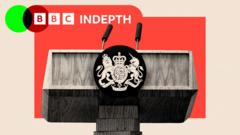
UK prime ministers are quitting faster than ever as public anger and institutional gridlock make the job nearly impossible.
- Liz Truss's 49-day premiership broke the UK's record for shortest tenure
- Discontent with politicians has hit levels not seen in modern British history
- Institutional gridlock and media scrutiny make governing more brutal than ever
Liz Truss didn’t just lose her job. She lost it in record time. Her 49-day stint as prime minister wasn’t just short — it was catastrophic. The markets panicked, her own party rebelled, and the public reaction was one of sheer disbelief. But Truss isn’t an outlier. She’s the latest in a line of prime ministers who’ve found the job nearly impossible to hold down. Rishi Sunak lasted two years, Boris Johnson three, Theresa May three and a half. The trend is clear: the UK’s top job is getting harder to keep than a hot cup of coffee in a bouncy house.\n\nWhat’s driving this? The simplest answer is that the job itself has changed. Being prime minister UK used to mean you could set the agenda, control the narrative, and count on your party’s loyalty. Now, every move is scrutinised by a 24-hour news cycle, a relentless opposition, and a public that’s quicker to judge than ever. The rise of social media means a single misstep can go viral in minutes, turning into a scandal that dominates headlines for weeks.\n\n## The media’s role in the prime minister’s downfall\n\nThe press isn’t just reporting the news anymore — it’s shaping it. Outlets now have to compete for clicks, and that means sensationalising every mistake, every gaffe, every policy U-turn. A prime minister who stumbles on a single word at a conference can expect to see that clip looped on every news channel and shared across every platform within hours. It’s not just the tabloids. Even broadsheet newspapers now chase viral moments, turning policy debates into personality battles.\n\nThis constant pressure has made the job exhausting. Prime ministers today don’t just face political opposition — they face a public that’s primed to see them fail. Trust in politicians has plummeted. A 2023 Ipsos poll found just 16% of Brits trust politicians to tell the truth — down from 29% a decade ago. That kind of scepticism isn’t just annoying. It makes governing nearly impossible.\n\n## The party’s betrayal problem\n\nThe Conservative Party Conservative Party (UK) has a reputation for eating its own. But the problem’s gotten worse. MPs no longer wait for election defeats to oust leaders. They’ll topple a prime minister at the first sign of trouble, knowing that loyalty is a one-way street. Boris Johnson survived scandals that would’ve sunk most leaders. But when his party turned on him, it was over.\n\nThis isn’t just about Johnson. Theresa May’s Brexit deal split her party so badly she lost her majority. Liz Truss’s mini-budget sent her party into meltdown. Rishi Sunak’s premiership was defined by constant rebellions. The message is clear: if you’re prime minister, your own party will turn on you the moment things get tough.\n\n## The economy’s unforgiving grip\n\nThe UK’s economic challenges aren’t new, but they’ve never been this persistent. Inflation’s still high. Growth is stagnant. Public services are crumbling. Voters don’t just want solutions — they want miracles. And when those solutions aren’t delivered fast enough, the backlash is brutal.\n\nThis creates a catch-22. Prime ministers are expected to fix problems that took decades to create, but they’re given months to prove they’re making progress. The public’s patience has worn thin, and the media’s not helping by amplifying every setback.\n\n## Is the UK really ungovernable?\n\nThe short answer is no. The UK’s still standing, its institutions still function, and its economy’s still one of the world’s largest. But the job of prime minister has become a high-wire act with no net. Every decision is second-guessed. Every policy is dissected. Every personal flaw is magnified.\n\nThe real question isn’t whether the UK’s ungovernable. It’s whether the system’s set up for anyone to succeed in the role anymore. The pressures on prime ministers today aren’t just political — they’re psychological, financial, and personal. It’s little wonder so many are walking away.\n\nThe next prime minister will face the same pressures. The media will still be hungry for scandal. The opposition will still be relentless. The public will still be sceptical. And the economy will still be fragile. The only difference is that the bar’s been raised even higher. To survive, the next leader will need more than just political skill. They’ll need a thick skin, a bit of luck, and a whole lot of resilience.
What You Need to Know
- Source: BBC News
- Published: May 16, 2026 at 23:26 UTC
- Category: Politics
- Topics: #bbc · #politics · #government · #discontent · #uk-prime-minister-resignations
Read the Full Story
This is a curated summary. For the complete article, original data, quotes and full analysis:
All reporting rights belong to the respective author(s) at BBC News. GlobalBR News summarizes publicly available content to help readers discover the most relevant global news.
Curated by GlobalBR News · May 16, 2026
Related Articles
- Starmer’s leadership under pressure as Labour MPs question authority
- UK Labour’s Wes Streeting confirms leadership bid if race starts
🇧🇷 Resumo em Português
O Brasil observa com atenção o caos político britânico, onde a instabilidade no cargo de primeiro-ministro atingiu níveis históricos. Em menos de dois anos, o Reino Unido viu cinco líderes assumirem e renunciarem, revelando uma crise de governabilidade sem precedentes na democracia ocidental.
A raiz do problema está na fragmentação do Parlamento, onde nenhuma força política consegue maioria clara, e nas divisões internas dentro do Partido Conservador — que, mesmo no poder, não consegue manter a coesão. Para o Brasil, essa cena serve como alerta sobre os riscos de polarização extrema e da falta de consenso em um sistema multipartidário. Além disso, a crise britânica expõe como a instabilidade governamental afeta não só a política doméstica, mas também a economia global e as relações internacionais, tema que interessa diretamente a uma nação como a nossa, cada vez mais integrada ao comércio exterior.
A pergunta que fica é: até quando o Reino Unido conseguirá resistir a essa espiral de incertezas — e quais serão as consequências para o Brasil e o mundo se a instabilidade se prolongar?
🇪🇸 Resumen en Español
El Reino Unido se hunde en una espiral de inestabilidad política sin precedentes, donde el cargo de primer ministro se ha convertido en un puesto más frágil que nunca. La salida acelerada de los líderes del Gobierno británico, marcada por dimisiones en cadena y crisis de liderazgo, dibuja un escenario de gobernanza fracturada que inquieta a propios y extraños.
La situación refleja el desgaste de un sistema político azotado por la polarización, la desconfianza ciudadana y los errores de gestión en momentos clave, como el Brexit o la crisis económica. Para los hispanohablantes, este caos evoca el riesgo de la ingobernabilidad, un aviso sobre cómo la fragmentación social y la falta de consensos pueden erosionar las instituciones. Además, subraya la importancia de la estabilidad en un contexto global convulso, donde la incertidumbre en una potencia como el Reino Unido afecta a aliados y socios comerciales por igual.
BBC News
Read full article at BBC News →This post is a curated summary. All rights belong to the original author(s) and BBC News.
Was this article helpful?
Discussion