Wildfire smoke raises U.S. ozone pollution, contributing to thousands of deaths each year.
- Wildfire smoke increases U.S. ozone pollution deaths by thousands yearly
- Satellite data from 2014-2018 shows direct smoke-ozone death link
- Ozone spikes from wildfires worsen air quality beyond visible smoke
Satellite observations have exposed a hidden health threat from wildfires: ozone pollution linked to thousands of premature deaths in the U.S. every year. A joint study by NASA and university researchers found that wildfire smoke significantly raises ground-level ozone concentrations, a key component of smog that harms respiratory and cardiovascular health. The findings, published in Nature Communications, quantify how smoke from distant fires can degrade air quality even in regions untouched by flames or visible haze.
The research team analyzed data from NASA’s Aura satellite and ground monitors from 2014 to 2018, focusing on wildfire events in the western U.S. and Canada. Their analysis showed that on days with heavy wildfire smoke, ozone levels spiked by up to 30% in some areas, compared to smoke-free days. Ozone forms when smoke chemicals react with sunlight and other pollutants, creating a pollutant that can travel hundreds of miles from its source. The study estimated that wildfire-related ozone pollution contributes to several thousand excess deaths annually across the country.
How wildfire smoke fuels ozone pollution
Wildfire smoke contains fine particulate matter (PM2.5) and volatile organic compounds (VOCs), both of which act as ozone precursors. When these chemicals interact with nitrogen oxides (NOx) in the presence of sunlight, they accelerate ozone formation. Unlike PM2.5, which can be seen and filtered by masks, ozone is a colorless, odorless gas that penetrates deep into lung tissue. Exposure to high ozone levels can trigger asthma attacks, worsen bronchitis, and increase hospitalizations for respiratory and heart conditions.
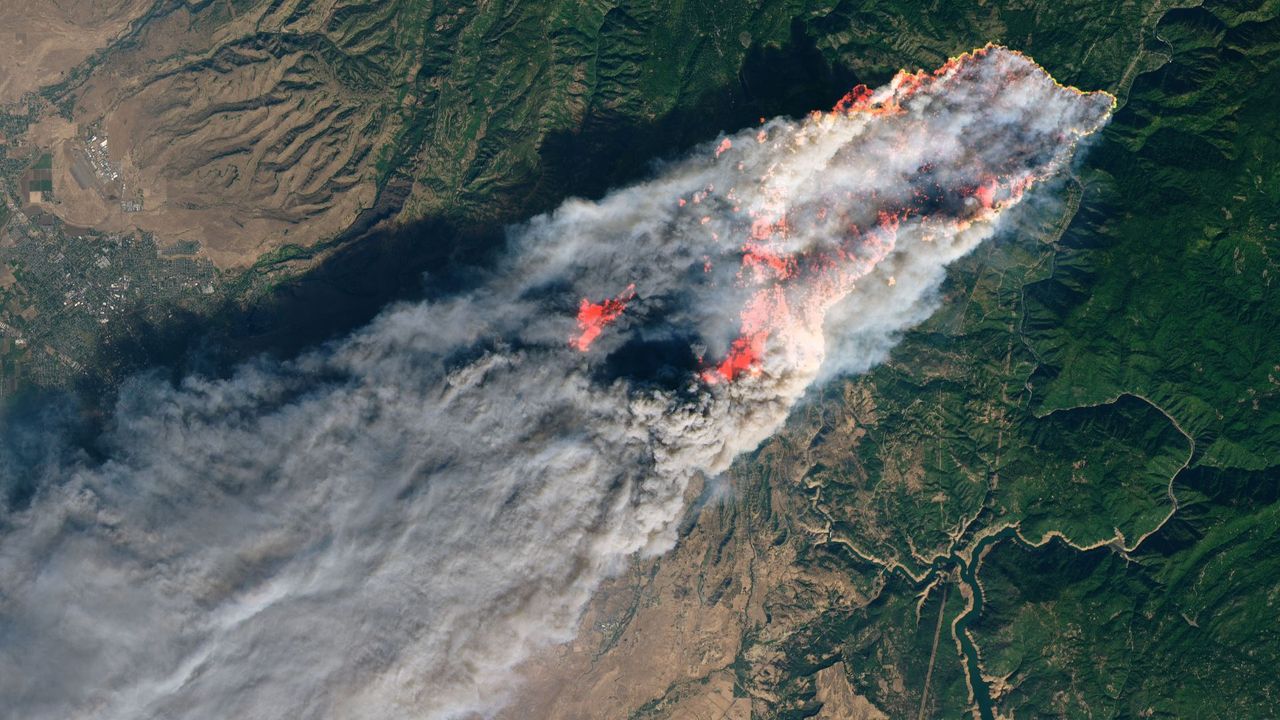
The Camp Fire of 2018, one of California’s deadliest wildfires, became a case study for the phenomenon. Satellite images captured the fire’s smoke plume stretching across hundreds of miles, carrying pollutants that later contributed to elevated ozone levels in cities like Sacramento and Reno. Researchers noted that while the Camp Fire was extreme, smaller fires across the western U.S. produce similar but less visible effects. The study found that even regions with low wildfire activity experienced ozone increases when smoke drifted in from distant sources.
Health and policy implications
The study’s authors emphasize that current air quality alerts focus heavily on visible smoke and PM2.5, often overlooking ozone risks from wildfires. They recommend that public health agencies expand monitoring and warning systems to include ozone pollution linked to wildfire smoke. Communities in smoke-prone areas, especially the Pacific Northwest, Northern California, and the Mountain West, are most vulnerable. The researchers also call for stronger emissions controls on vehicles and industrial sources to reduce NOx levels, which worsen ozone formation when combined with wildfire smoke.
Wildfire seasons are growing longer and more intense due to climate change, increasing the frequency of smoke events. The Environmental Protection Agency (EPA) estimates that ground-level ozone pollution already causes 10,000 to 25,000 premature deaths annually in the U.S. The new findings suggest wildfire smoke may push those numbers higher, particularly in rural and suburban areas where ozone monitors are sparse. Public health experts warn that without coordinated action, the problem will intensify as wildfires become more frequent and severe.
What You Need to Know
- Source: Space.com
- Published: May 12, 2026 at 12:00 UTC
- Category: Science
- Topics: #space · #astronomy · #nasa · #environment · #wildfire · #climate
Read the Full Story
This is a curated summary. For the complete article, original data, quotes and full analysis:
All reporting rights belong to the respective author(s) at Space.com. GlobalBR News summarizes publicly available content to help readers discover the most relevant global news.
Curated by GlobalBR News · May 12, 2026
🇧🇷 Resumo em Português
Um estudo recentemente publicado revelou um perigo oculto que assola os Estados Unidos: a fumaça invisível dos incêndios florestais, responsável por milhares de mortes anuais por problemas relacionados ao ozônio. Segundo dados de satélites, partículas microscópicas lançadas na atmosfera durante queimadas não só obscurecem o céu como também se transformam em um inimigo silencioso da saúde pública, agravando doenças respiratórias e cardiovasculares sem que a população sequer perceba.
No Brasil, onde os incêndios florestais — especialmente na Amazônia e no Cerrado — já são uma questão crítica durante a estação seca, a descoberta americana serve como um alerta urgente. O país, que enfrenta pressões internacionais para combater o desmatamento e as queimadas, agora precisa considerar não apenas o impacto imediato do fogo, mas também os efeitos invisíveis da poluição gerada. A má qualidade do ar, agravada por emissões de queimadas, pode atingir regiões distantes dos focos de incêndio, afetando milhões de pessoas, especialmente aquelas com condições pré-existentes.
Diante desse cenário, especialistas brasileiros já discutem a necessidade de integrar dados de satélite ao monitoramento da qualidade do ar no país, assim como a adoção de políticas públicas mais robustas para prevenir incêndios e mitigar seus danos à saúde. A próxima estação de queimadas se aproxima, e a ciência deixa claro: ignorar a fumaça invisível pode custar muito mais do que se imagina.
🇪🇸 Resumen en Español
La contaminación invisible generada por los incendios forestales cobra miles de vidas cada año en Estados Unidos, según revelan datos satelitales que vinculan el humo de estos siniestros con un aumento significativo de muertes relacionadas con el ozono.
Estudios recientes han demostrado que el humo de los incendios no solo oscurece el cielo con su característico velo grisáceo, sino que también libera partículas y compuestos químicos que, al dispersarse, elevan los niveles de ozono troposférico —un contaminante que agrava enfermedades respiratorias y cardiovasculares—. Aunque las alertas suelen centrarse en el impacto inmediato de las llamas, esta investigación subraya que los efectos a largo plazo del humo, incluso a cientos de kilómetros de distancia, constituyen una amenaza silenciosa para la salud pública. Para los hispanohablantes en zonas afectadas, tanto en EE.UU. como en regiones vecinas como México o Centroamérica, donde los incendios son cada vez más frecuentes, el estudio sirve como recordatorio de la urgencia de reforzar las políticas de prevención y monitoreo ambiental, así como de adoptar medidas de protección individual ante un enemigo que, pese a ser invisible, deja una huella mortal.
Space.com
Read full article at Space.com →This post is a curated summary. All rights belong to the original author(s) and Space.com.
Was this article helpful?
Discussion