Scientists found a possible dark matter signal in cosmic radiation data accidentally.
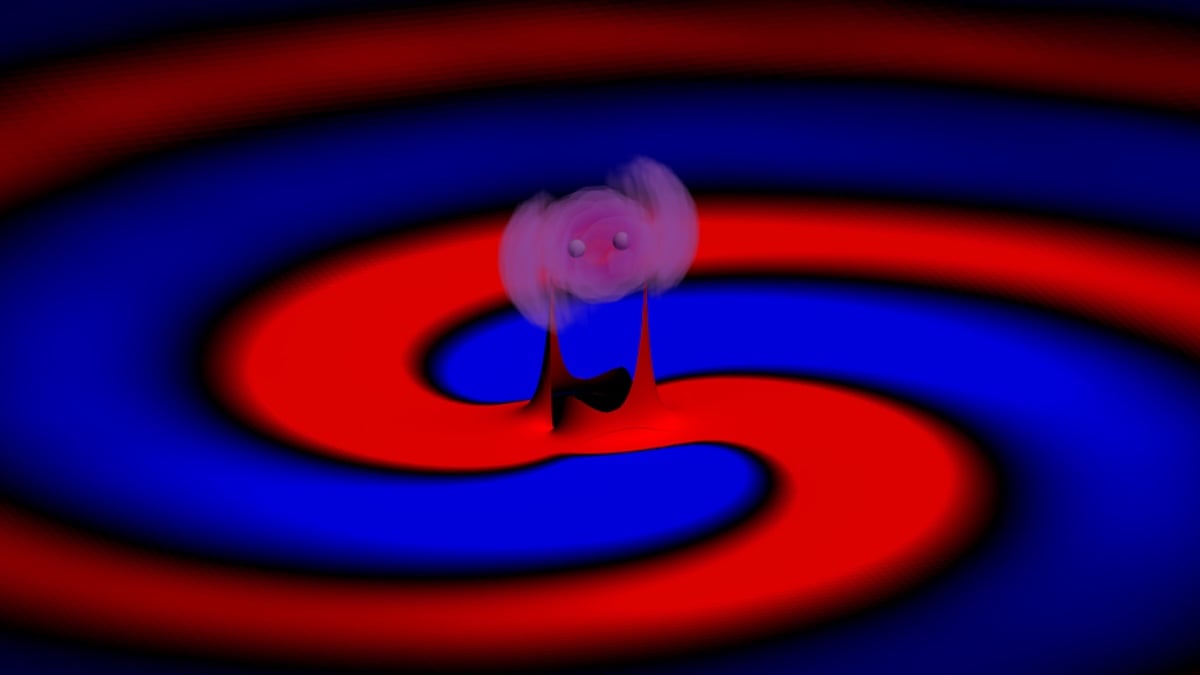
- Researchers detected unexpected signal in cosmic radiation data
- Signal may indicate presence of dark matter
- Discovery came from routine data analysis, not targeted search
A research team analyzing cosmic microwave background radiation stumbled upon an unexplained signal that could hint at dark matter’s presence. The discovery, published in the journal Physical Review Letters, emerged during routine data processing and was not part of an intentional hunt for dark matter. The signal appears as a slight distortion in the radiation map, which scientists say aligns with theoretical predictions of dark matter interactions. The findings have reignited debate over dark matter’s elusive nature and its role in the universe’s structure. NASA’s Fermi Gamma-ray Space Telescope and the Planck satellite provided the data used in the analysis. ## Dark matter remains one of astronomy’s biggest mysteries. Despite making up an estimated 27% of the universe, dark matter has never been directly observed. Scientists infer its existence through gravitational effects on visible matter, such as stars and galaxies. The new signal, detected in the cosmic microwave background—a relic of the early universe—could offer a rare glimpse into dark matter’s behavior. Researchers caution that the signal’s origin is still uncertain and requires further validation. Alternative explanations, such as instrumental noise or cosmic phenomena like pulsars, have not been ruled out. The team plans to cross-check the data with observations from the James Webb Space Telescope, which may provide clearer insights. If confirmed, the signal could reshape our understanding of dark matter and its interactions with normal matter. ## The accidental discovery highlights the unpredictability of science. The researchers, led by astrophysicists at MIT, were analyzing data from the Planck mission when they noticed an anomaly near the edge of their dataset. The signal’s characteristics—its frequency and location—did not match known astrophysical sources. This prompted a deeper investigation, revealing a pattern consistent with dark matter decay or annihilation. The finding has drawn attention from peers, with some calling it the most promising lead in decades. However, skepticism remains high in the scientific community, where extraordinary claims require extraordinary evidence. The next step involves replicating the signal in independent datasets and ruling out contamination from Earth-based sources. If validated, the discovery could lead to new experiments designed to capture dark matter in action. For now, the signal remains a tantalizing clue in one of physics’ greatest unsolved puzzles. Scientists emphasize that while the findings are intriguing, they are far from conclusive. The search for dark matter continues, but this accidental signal has given researchers a fresh lead to pursue.
What You Need to Know
- Source: ScienceAlert
- Published: May 16, 2026 at 21:00 UTC
- Category: Science
- Topics: #science · #biology · #chemistry · #genetics · #dark-matter-may · #have-been-detected
Read the Full Story
This is a curated summary. For the complete article, original data, quotes and full analysis:
All reporting rights belong to the respective author(s) at ScienceAlert. GlobalBR News summarizes publicly available content to help readers discover the most relevant global news.
Curated by GlobalBR News · May 16, 2026
Related Articles
- 5 Ways to Vet Social Media Health Advice Before Trying It
- Your Body Clock May Enhance The Benefits of Exercise, Study Finds
- Study finds yawns contagious before birth, even more than thought
🇧🇷 Resumo em Português
Cientistas podem ter finalmente encontrado a primeira evidência direta da elusiva matéria escura, aquela substância invisível que compõe cerca de 27% do universo e cuja existência só era inferida até agora por seus efeitos gravitacionais. Em um estudo que promete redefinir a astrofísica moderna, uma equipe internacional de pesquisadores detectou um sinal anômalo em dados de raios X capturados pelo telescópio XMM-Newton da ESA, levantando a hipótese de que poderia ser um vestígio da tão procurada matéria escura.
O achado, publicado em um artigo ainda em revisão por pares, ganhou atenção especial porque o sinal — uma emissão de fótons em uma energia específica (3,5 keV) — não corresponde a nenhuma partícula ou átomo conhecido. No Brasil, onde a física de partículas e a cosmologia têm ganhado cada vez mais relevância em universidades e projetos como o Sirius, em Campinas, a descoberta pode inspirar novas pesquisas e até mesmo influenciar políticas científicas. Além disso, o sinal foi observado na galáxia de Andrômeda e em aglomerados de galáxias, sugerindo que a matéria escura pode estar mais próxima do que se imaginava — e que, em breve, poderemos desvendar um dos maiores mistérios da ciência.
Se confirmado, esse resultado não apenas revolucionaria nossa compreensão do cosmos, como também abriria caminho para experimentos mais precisos e, quem sabe, para a detecção direta da matéria escura em laboratórios terrestres.
🇪🇸 Resumen en Español
Un equipo internacional de científicos ha hallado una señal anómala en datos de observación que podría ser la primera evidencia indirecta de materia oscura, el misterioso componente que compone el 27% del universo.
El descubrimiento, aún preliminar, proviene del análisis de emisiones de rayos X captadas por el telescopio XMM-Newton de la Agencia Espacial Europea. Los investigadores, liderados por físicos del Laboratorio Nacional de Oak Ridge (EE.UU.), detectaron un pico de energía en el espectro de rayos X que no encaja con ninguna partícula conocida. Si se confirma, este hallazgo revolucionaría la astrofísica, ya que la materia oscura —aunque invisible— es clave para entender la formación de galaxias y la expansión del cosmos. Para el público hispanohablante, este avance subraya el papel activo de científicos de habla hispana en proyectos internacionales y la importancia de invertir en investigación básica, un terreno donde España y Latinoamérica tienen cada vez más peso.
ScienceAlert
Read full article at ScienceAlert →This post is a curated summary. All rights belong to the original author(s) and ScienceAlert.
Was this article helpful?



Discussion