Jury starts deliberating in Elon Musk’s lawsuit against OpenAI over alleged breach of nonprofit mission.
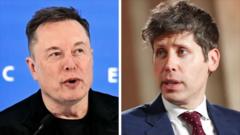
- Jury begins deliberations in Elon Musk’s OpenAI breach of mission lawsuit
- Musk accuses OpenAI of shifting from nonprofit to profit-driven model
- OpenAI denies claims, says nonprofit status ended in 2019
The jury in the closely watched trial between tech billionaire Elon Musk and AI lab OpenAI has begun deliberations after two weeks of testimony and closing arguments. At the heart of the case is whether OpenAI violated its founding mission by abandoning its nonprofit structure to become a for-profit entity, now valued at over $80 billion. Musk filed the lawsuit in 2023, alleging that OpenAI’s shift toward commercialization betrayed its original commitment to open, safe AI development for humanity’s benefit.
Musk’s central argument: OpenAI broke its founding promises
Musk’s legal team argued that OpenAI’s 2019 restructuring into a “capped-profit” model violated the nonprofit’s core principles. According to court filings, documents show Musk’s concerns arose when OpenAI partnered with Microsoft in 2019. He claimed the deal allowed Microsoft to gain disproportionate control over OpenAI’s technology, sidelining Musk’s vision of a nonprofit-led AI research lab. Musk’s lawyers pointed to internal emails and meetings where he warned that OpenAI’s leadership, including current CEO Sam Altman, was prioritizing commercial interests over its original safety-focused mission.
The billionaire, who co-founded OpenAI in 2015 as a nonprofit, testified that he believed the organization’s work would remain accessible and nonprofit-driven. His lawsuit seeks damages and a return to OpenAI’s original nonprofit structure. Musk’s team also argued that Altman and others misled donors and the public about the lab’s true intentions, particularly regarding AI safety commitments.
OpenAI’s defense: Mission evolved, nonprofit status ended in 2019
OpenAI countered that its transition to a capped-profit model was necessary to attract talent and funding to compete with tech giants like Google. The lab’s lawyers argued that its 2015 incorporation documents allowed for future restructuring and that the nonprofit no longer existed as originally conceived. They emphasized that OpenAI’s primary focus has always been advancing AI for the benefit of humanity, even if the path to that goal required commercial partnerships.
OpenAI’s defense highlighted its 2019 restructuring, which created a new entity called OpenAI Global, LLC, to manage commercial operations. The lab’s legal team argued that Musk was aware of and agreed to this shift during his time on OpenAI’s board. They also pointed out that Musk’s own companies, including Tesla and SpaceX, have benefited from OpenAI’s AI breakthroughs, including large language models that power some of Tesla’s autonomous driving features.
Key moments in the trial: Emails, meetings, and high-stakes testimony
The trial featured testimony from former OpenAI employees and board members, including early backer Reid Hoffman. Emails presented in court showed Musk’s growing frustration with OpenAI’s direction, including messages where he called the lab’s shift toward commercialization a “breach of trust.” Altman, who co-founded OpenAI alongside Musk, took the stand to defend the lab’s decisions, calling the nonprofit model unsustainable for AI research at scale.
One pivotal exchange involved discussions about OpenAI’s 2019 partnership with Microsoft. Musk’s team argued this deal marked the beginning of the end for OpenAI’s nonprofit mission, as Microsoft gained significant influence over the lab’s research priorities. OpenAI’s lawyers countered that the partnership was essential for accessing the computational resources needed to train advanced AI models, which would have been impossible under a nonprofit model.
What’s at stake: Billions in AI’s future, legal precedents, and industry impact
The outcome of the trial could set a legal precedent for how AI labs structure their organizations and balance nonprofit ideals with commercial pressures. A ruling in Musk’s favor could force OpenAI to revert to a nonprofit model or face significant financial penalties. OpenAI, valued at over $80 billion, has warned that such a decision could disrupt its operations and partnerships, including its exclusive deal with Microsoft.
Beyond the financial stakes, the case raises broader questions about the governance of AI research. The trial has drawn attention from regulators, tech ethicists, and rival AI labs, all closely watching how the jury interprets OpenAI’s founding documents and Musk’s allegations. Legal experts suggest the decision could influence future disputes over AI lab governance, particularly as companies navigate the tension between open research and commercial viability.
Regardless of the verdict, the trial has already sparked debates about transparency, accountability, and the original promises of AI development. As the jury deliberates, industry watchers are speculating about the long-term impact on OpenAI’s partnerships, its leadership, and the future of AI ethics.
What You Need to Know
- Source: BBC News
- Published: May 15, 2026 at 14:43 UTC
- Category: Business
- Topics: #bbc · #business · #economy · #openai · #watch
Read the Full Story
This is a curated summary. For the complete article, original data, quotes and full analysis:
All reporting rights belong to the respective author(s) at BBC News. GlobalBR News summarizes publicly available content to help readers discover the most relevant global news.
Curated by GlobalBR News · May 15, 2026
Related Articles
- Trump and Xi conclude ‘very successful’ talks but few deals confirmed
- Trump’s pressure on Fed independence may reshape US economic policy
- Startups shrink data centers to home size to ease grid strain
🇧🇷 Resumo em Português
O bilionário Elon Musk move ação judicial contra a OpenAI, acusando a empresa de trair sua missão original de desenvolver inteligência artificial de forma aberta e acessível. O julgamento, que chega ao fim com os argumentos finais das partes, expõe uma batalha jurídica e ideológica sobre o futuro da tecnologia e seu controle no Brasil e no mundo.
A disputa gira em torno de alegações de que a OpenAI, fundada em 2015 com Musk entre seus principais investidores, teria se afastado de seus princípios ao fechar parcerias com gigantes como a Microsoft e ao lançar modelos de IA cada vez mais proprietários. Para especialistas, o caso levanta questões críticas sobre transparência, ética e monopólio no setor, temas que reverberam fortemente em um país como o Brasil, onde a regulação de IA ainda engatinha. A decisão da Justiça americana poderá influenciar não só o mercado global de tecnologia, mas também as discussões sobre como o Brasil deve abordar a regulamentação de ferramentas de inteligência artificial em setores estratégicos como saúde e educação.
Agora, cabe aos jurados definir se a OpenAI violou seus acordos originais — uma decisão que pode redefinir os rumos da inovação tecnológica e seu impacto na sociedade.
🇪🇸 Resumen en Español
El futuro de la inteligencia artificial podría redefinirse tras el cierre de los alegatos en el juicio entre Elon Musk y OpenAI, donde se dirimen los cimientos éticos y legales de una de las empresas más influyentes en el sector tecnológico. En el corazón del conflicto está la supuesta traición a los principios fundacionales de OpenAI, fundada en 2015 con el objetivo de desarrollar IA de forma abierta y accesible para beneficio de la humanidad.
El juicio, que ha desgranado durante semanas las tensiones entre Musk —cofundador y exmiembro de la junta— y la organización actual, centra su debate en si OpenAI ha priorizado intereses comerciales sobre su misión original. Para los hispanohablantes, este caso no es solo un litigio entre magnates: refleja debates globales sobre la gobernanza de la IA, la transparencia en el desarrollo tecnológico y el papel de las big tech en la sociedad. La decisión del jurado podría sentar precedentes sobre cómo se regulan —o no— las empresas que manejan herramientas con potencial para transformar economías, empleos y hasta la privacidad, temas que resuenan con fuerza en un mundo cada vez más digitalizado.
BBC News
Read full article at BBC News →This post is a curated summary. All rights belong to the original author(s) and BBC News.
Was this article helpful?


Discussion