NASA’s Psyche probe performs a Mars flyby today to gain speed for its asteroid mission.
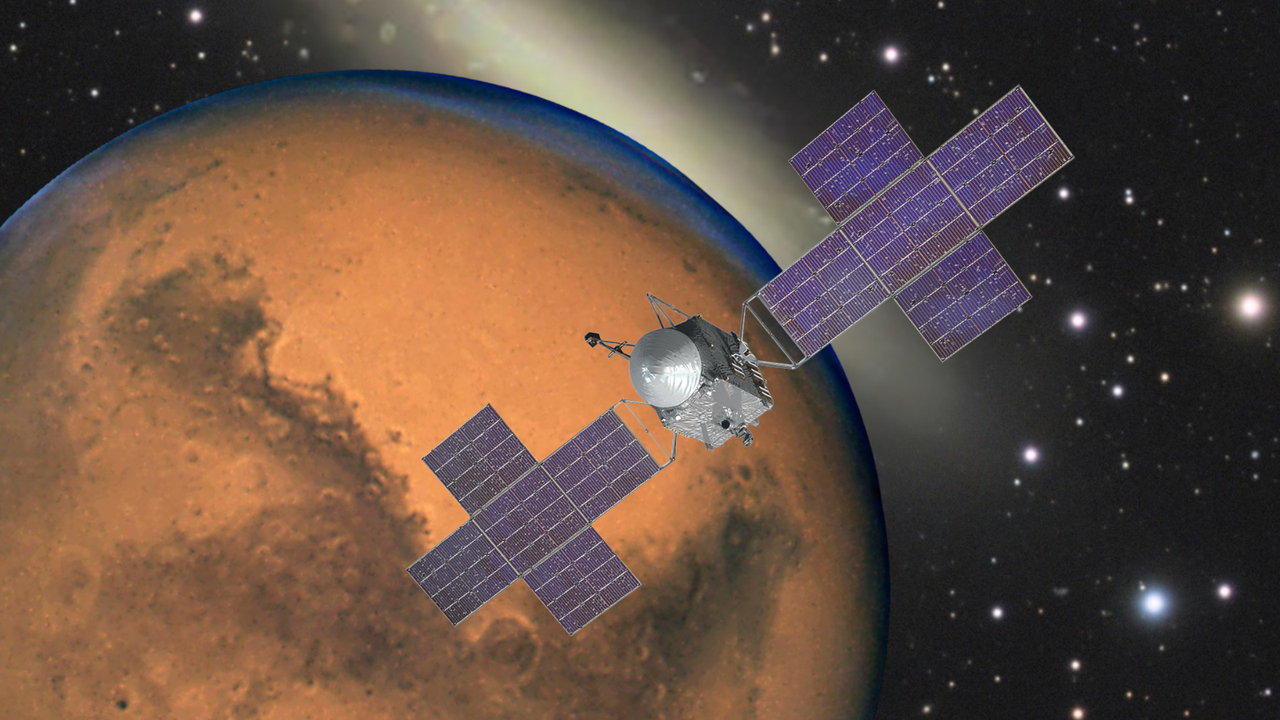
- NASA’s Psyche probe to fly 3,000 miles from Mars today
- Flyby uses Mars gravity to speed spacecraft toward asteroid Psyche
- Psyche mission aims to reach metal-rich asteroid in 2029
NASA’s Psyche spacecraft is set for a close encounter with Mars on Friday, executing a precisely timed gravity assist to slingshot toward its final destination: the metal-rich asteroid Psyche. The flyby, scheduled for May 15, 2026, will bring the probe within 3,000 miles of the Red Planet’s surface, allowing Mars’ gravity to accelerate the spacecraft and adjust its trajectory for the 2029 arrival at the asteroid belt target. Mission controllers at NASA’s Jet Propulsion Laboratory confirmed the flyby is on track and will not require any course corrections before the maneuver.
This gravity assist is a critical phase of the Psyche mission, which launched in October 2023 aboard a SpaceX Falcon Heavy rocket. The technique leverages planetary gravity to conserve fuel and increase velocity without the need for additional thrust. Psyche will pass Mars at a distance closer than many communication satellites orbit Earth, providing a rare opportunity for high-resolution observations of the planet’s surface and atmosphere. Instruments on board will collect data on Mars’ dust storms, cloud formations and thermal emissions, adding to the mission’s scientific payload.
The Psyche spacecraft is designed to study the metallic asteroid 16 Psyche, believed to be the exposed nickel-iron core of an early planet. Scientists hope the mission will reveal insights into planetary formation and the violent collisions that shaped the solar system. The asteroid’s composition—rich in metals like iron, nickel and gold—could also offer clues about the origins of Earth’s own core. After the Mars flyby, Psyche will continue its 3.5-year journey, traveling over 2 billion miles to reach its target.
NASA’s Deep Space Network will maintain continuous contact with Psyche during the flyby, monitoring telemetry and science data in real time. The agency has scheduled a post-flyby briefing for May 16 to discuss initial results from the encounter. Engineers will analyze the spacecraft’s performance to ensure the gravity assist achieved the intended velocity change, which is estimated at several thousand miles per hour. Any deviations could require minor mid-course corrections later in the mission.
The Psyche mission represents NASA’s first visit to a metal-rich asteroid and the first use of a gravity assist maneuver for this type of deep-space probe. Unlike typical asteroid missions focused on rocky or icy bodies, Psyche targets a unique object that may resemble the cores of terrestrial planets. The spacecraft carries a suite of instruments including multispectral imagers, a gamma-ray and neutron spectrometer, and a magnetometer to study the asteroid’s magnetic field. Data from the Mars flyby will also help calibrate these instruments before the primary science phase begins.
Psyche’s arrival at the asteroid in 2029 will mark the start of a 26-month observation campaign, during which the spacecraft will orbit the asteroid at progressively lower altitudes. The mission’s findings could influence future exploration of metallic asteroids and even inform plans for asteroid mining. NASA has already identified Psyche as a high-priority target due to its potential to unlock secrets about the solar system’s violent early history.
Looking ahead, the successful completion of the Mars flyby will set the stage for Psyche’s long cruise phase toward the asteroid belt. Mission managers will use the next three years to refine navigation plans and prepare for the complex orbital operations around Psyche. If the flyby goes as planned, the spacecraft will enter orbit in August 2029, beginning a new chapter in solar system exploration.
What You Need to Know
- Source: Space.com
- Published: May 12, 2026 at 14:19 UTC
- Category: Science
- Topics: #space · #astronomy · #nasa · #science · #psyche · #mars
Read the Full Story
This is a curated summary. For the complete article, original data, quotes and full analysis:
All reporting rights belong to the respective author(s) at Space.com. GlobalBR News summarizes publicly available content to help readers discover the most relevant global news.
Curated by GlobalBR News · May 12, 2026
Related Articles
- 5 Ways to Vet Social Media Health Advice Before Trying It
- Your Body Clock May Enhance The Benefits of Exercise, Study Finds
🇧🇷 Resumo em Português
A sonda Psyche, da NASA, realiza hoje um sobrevoo rasante em Marte a apenas 4.800 quilômetros de distância, uma manobra ousada que promete acelerar sua jornada rumo ao asteroide metálico Psyche 16, previsto para 2029. A aproximação, programada para as 19h28 (horário de Brasília), é crítica para ajustar a trajetória da espaçonave, que já viajou mais de 3,5 bilhões de quilômetros desde seu lançamento em outubro de 2023. Esse tipo de manobra, conhecida como gravity assist, é um recurso clássico da exploração espacial para ganhar velocidade sem gastar combustível, aproveitando o campo gravitacional de um planeta como uma “estilingada cósmica”.
No Brasil, onde a ciência espacial ainda busca maior visibilidade, a missão da Psyche chama atenção não só pela tecnologia inovadora — é a primeira vez que a NASA explora um asteroide composto majoritariamente por metal — mas também por seu potencial para desvendar segredos do núcleo terrestre. Afinal, o Psyche 16, com cerca de 226 quilômetros de diâmetro, é considerado um remanescente do início do Sistema Solar, possivelmente um núcleo planetário exposto após uma colisão violenta. Para a comunidade científica brasileira, que tem crescido em estudos de astrobiologia e ciências planetárias, a missão reforça a importância do investimento em pesquisa espacial e na formação de novos talentos. Além disso, o sobrevoo de Marte serve como um lembrete de que, mesmo em tempos de cortes orçamentários, a exploração do espaço profundo continua a unificar esforços internacionais.
A expectativa agora é que a Psyche chegue ao seu destino em 2029, quando começará a orbitar o asteroide metálico — uma oportunidade única para entender como núcleos planetários se formam e, quem sabe, reescrever parte dos livros de geologia.
🇪🇸 Resumen en Español
La sonda Psyche de la NASA realizará hoy un sobrevuelo histórico a solo 3.000 millas de Marte, un impulso gravitacional clave para su travesía hacia el asteroide metálico del mismo nombre, con llegada prevista en 2029.
Este acercamiento, aunque breve, aprovechará la gravedad marciana para acelerar la nave sin gastar combustible, optimizando su ruta hacia un objeto celeste nunca antes explorado de cerca. Para los hispanohablantes, el hito destaca el liderazgo de la NASA en misiones interplanetarias y la creciente importancia de la exploración espacial en la ciencia global, además de subrayar cómo la colaboración internacional —con aportes tecnológicos de Europa— refuerza el carácter colectivo de estos avances.
Space.com
Read full article at Space.com →This post is a curated summary. All rights belong to the original author(s) and Space.com.
Was this article helpful?

Discussion