See the Northern Lights this weekend as a geomagnetic storm lights up the sky across North America.
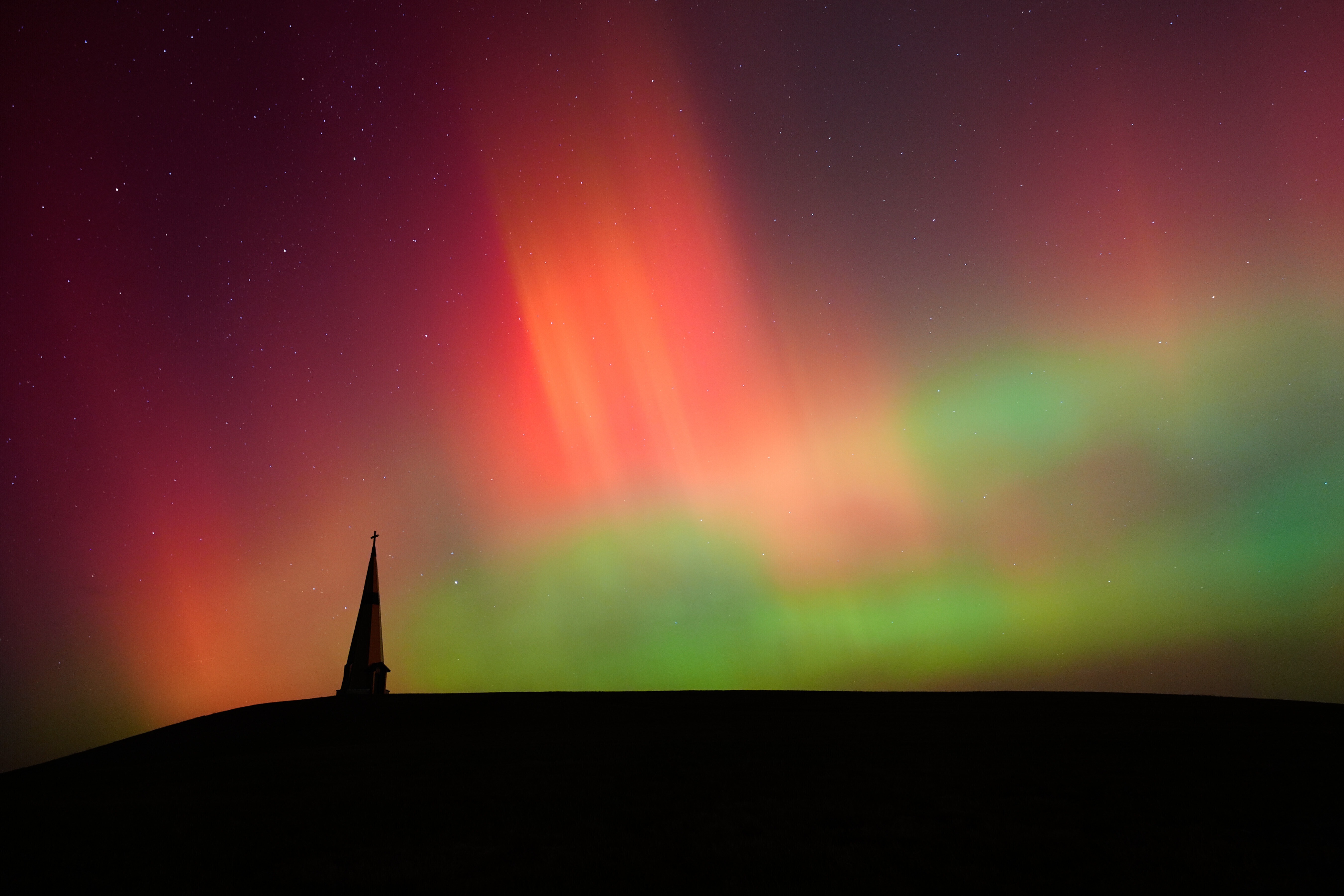
- Auroras visible Saturday and Sunday nights across North America
- Northern U.S. and Canada offer best viewing conditions
- Peak visibility expected just after sunset or before sunrise
A powerful geomagnetic storm will illuminate the night skies over North America this weekend, offering millions their best chance to see the Northern Lights in years. The aurora borealis, known for its vibrant green, purple and pink streaks, will peak Saturday and Sunday nights, according to the National Oceanic and Atmospheric Administration (NOAA). The light show results from charged particles from the sun colliding with Earth’s atmosphere near the magnetic poles.
The storm’s intensity is expected to reach its strongest point Saturday night, creating ideal conditions for aurora viewing. Stargazers in the northern United States, including states like Minnesota, Wisconsin and Michigan, along with most of Canada, will have the clearest views. However, the aurora may be visible from as far as 1,000 kilometers away from where it is directly overhead, according to NOAA.
Best times and places to watch
The Northern Lights will be most visible just after sunset or just before sunrise, when the sky is darkest. Urban light pollution can diminish visibility, so experts recommend heading to rural areas or designated dark-sky parks. The northernmost latitudes, including Alaska, Greenland, and countries like Norway and Sweden, typically offer the best opportunities, but this weekend’s storm extends visibility farther south.
Auroras are most common in March and November, though scientists have not fully explained why these months produce more frequent displays. The phenomenon occurs when high-energy particles from space interact with gas atoms in Earth’s atmosphere, releasing energy as colored light. The colors depend on the type of gas involved; oxygen produces green and red, while nitrogen creates blue and purple hues.
How to photograph the aurora
For those hoping to capture the spectacle, NOAA advises using a tripod and a camera with manual settings. A wide-angle lens and a high ISO setting can help capture the faint light. Smartphone users may also get decent results with night mode, though dedicated cameras will yield sharper images. The aurora’s movement is often slow, allowing photographers to take long exposures without blurring.
This weekend’s event follows a series of strong geomagnetic storms that have brought auroras to lower latitudes than usual. Such storms are part of space weather, which can also disrupt satellites and power grids. NOAA monitors solar activity and issues alerts when storms are likely to produce visible auroras, giving skywatchers advance notice.
Experts note that while auroras are a rare treat for those outside the Arctic, they remain a reminder of the dynamic interactions between Earth and the sun. For many, witnessing the display firsthand is a bucket-list experience, requiring travel to remote regions where light pollution is minimal.
What You Need to Know
- Source: NPR
- Published: May 16, 2026 at 18:07 UTC
- Category: World
- Topics: #npr · #usa · #world-news · #north-america · #saturday · #sunday
Read the Full Story
This is a curated summary. For the complete article, original data, quotes and full analysis:
All reporting rights belong to the respective author(s) at NPR. GlobalBR News summarizes publicly available content to help readers discover the most relevant global news.
Curated by GlobalBR News · May 16, 2026
Related Articles
- Zimbabwe’s diaspora reshapes real estate and farming investment trends
- 🎉 250 Articles in World!
- Eurovision 2024 faces scrutiny over Israel’s participation amid war
🇧🇷 Resumo em Português
As luzes dançantes do céu prometem um espetáculo inesquecível para milhões de pessoas na América do Norte neste fim de semana, quando a tempestade geomagnética atinge seu pico e transforma a aurora boreal em um show de cores visível até em regiões pouco habituadas ao fenômeno. Moradores dos estados do norte dos Estados Unidos e do Canadá poderão observar o fenômeno na noite de sábado, com chances de avistamento se estendendo até domingo, oferecendo um presente raro para amantes da astronomia e curiosos.
No Brasil, a notícia ganha relevância não apenas pelo fascínio que eventos astronômicos despertam, mas por evidenciar a influência das atividades solares sobre a Terra, um tema cada vez mais discutido em tempos de mudanças climáticas e dependência tecnológica. Embora o espetáculo seja restrito ao Hemisfério Norte, a tempestade geomagnética — classificada como severa — serve como lembrete da conexão global entre o Sol e nosso planeta, podendo afetar satélites, comunicações e redes elétricas, o que reforça a importância de monitoramento constante. Para os brasileiros, é uma oportunidade de refletir sobre como fenômenos distantes podem ter impactos indiretos, mesmo em um país localizado tão longe dos polos.
A expectativa é que a tempestade continue a causar distúrbios nos próximos dias, com possíveis extensões do espetáculo visual, enquanto cientistas analisam seus efeitos em tempo real.
🇪🇸 Resumen en Español
Las luces del norte iluminarán el cielo de Norteamérica este fin de semana en un espectáculo celestial que promete dejar sin aliento a millones de espectadores. Una tormenta geomagnética de intensidad notable alcanzará su punto álgido durante las noches del sábado y el domingo, regalando a los habitantes del norte de Estados Unidos y Canadá un fenómeno natural de rara belleza.
Este evento, que suele asociarse a latitudes más remotas como Alaska o Groenlandia, se extiende ahora hacia regiones más pobladas gracias a la fuerza de la actividad solar. Aunque no es habitual ver auroras boreales con tanta claridad en zonas como Michigan o Quebec, los expertos advierten de que la intensidad de la tormenta podría convertirlo en un fenómeno inolvidable. Para los hispanohablantes residentes en esas áreas, esta es una oportunidad única para conectar con un espectáculo que, más allá de su belleza, recuerda la fragilidad del equilibrio entre la naturaleza y la tecnología, ya que las tormentas geomagnéticas pueden afectar a redes eléctricas y comunicaciones.
NPR
Read full article at NPR →This post is a curated summary. All rights belong to the original author(s) and NPR.
Was this article helpful?


Discussion