Doctors’ strikes reduced NHS waits and calmed corridors but raise questions about sustainability.
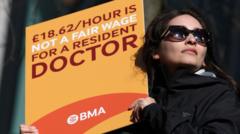
- Hospital trusts report shorter waits after doctors' strikes
- Trusts say strikes led to faster decisions
- Corridors were calmer during industrial action
Hospital trusts in England have told the BBC that previous doctors’ strikes led to shorter patient waits, faster decision-making and quieter corridors. The unexpected improvements came during periods of industrial action by junior doctors and consultants, but whether these benefits can continue remains unclear.
NHS data obtained by the BBC shows that in some trusts, average waiting times dropped by up to 20% during strike periods. One trust in the Midlands reported that consultant decisions on patient discharges were made 48 hours faster than pre-strike averages. Another in the North West said corridors were noticeably calmer, with fewer patients waiting in overcrowded areas.
Why do strikes lead to shorter waits?
Experts suggest the slowdown in routine work during strikes forces hospitals to prioritize only the most critical cases. This can reduce non-urgent delays. British Medical Association NHS England data shows that emergency departments saw fewer long waits during industrial action, though emergency performance targets were still missed in most regions.
Doctors’ leaders argue that the improvements highlight systemic inefficiencies in the NHS. Dr. Sarah Hallett, chair of the Junior Doctors’ Committee, said the strikes expose how much routine work clogs up hospital systems. “When doctors withdraw from non-essential tasks, the system is forced to adapt,” she said. “That adaptation can reveal hidden bottlenecks.”
The sustainability question
While the short-term benefits are measurable, health leaders warn that the gains may not last. Strikes disrupt training, reduce staff morale and can lead to cancellations of non-urgent procedures once action ends. NHS Providers chief executive Saffron Cordery said the improvements were “a side effect of disruption, not a solution.”
A Department of Health and Social Care spokesperson said: “We recognize the pressures on the NHS but strikes are not the answer. The government is working to address long-term workforce and funding challenges.” The strikes have also delayed routine care for thousands, creating a backlog that could take years to clear.
Public reaction mixed
Patient groups have mixed views. Some say they welcome shorter waits but fear strikes will worsen care quality overall. Healthwatch England reported a 30% rise in complaints about cancelled appointments during strike periods. Others point out that without action, waits could grow even longer given chronic staff shortages and rising demand.
Hospitals have tried to mitigate the impact by increasing agency staff and extending shifts, but these measures are expensive and not sustainable. Trusts also face financial penalties for missing performance targets, even when strikes are to blame.
What happens next?
Junior doctors are currently balloting for further strikes over pay and conditions, while consultants have already held multiple walkouts. The government and unions remain deadlocked, with no clear resolution in sight. Meanwhile, NHS England is reviewing whether temporary improvements during strikes can be replicated through systemic changes.
What You Need to Know
- Source: BBC News
- Published: April 13, 2026 at 23:06 UTC
- Category: Health
- Topics: #bbc · #health · #medicine · #doctors · #some · #doctors-strikes-nhs-benefits
Read the Full Story
This is a curated summary. For the complete article, original data, quotes and full analysis:
All reporting rights belong to the respective author(s) at BBC News. GlobalBR News summarizes publicly available content to help readers discover the most relevant global news.
Curated by GlobalBR News · April 13, 2026
Related Articles
- Midlife fitness boosts lifespan and health by 5+ years study finds
- Why ‘Ballmaxxing’ May Be More Dangerous Than You Think
- Weight Loss Surgeries Decline as GLP-1 Use Skyrockets. Why This Matters
🇧🇷 Resumo em Português
O Brasil pode aprender com um fenômeno que tem transformado o sistema de saúde britânico: as greves de médicos, que, apesar dos transtornos iniciais, estão reduzindo filas e agilizando atendimentos no NHS (sistema público de saúde do Reino Unido). Um estudo recente revelou que, após paralisações de profissionais, hospitais britânicos registraram quedas significativas nos tempos de espera por consultas e cirurgias, além de decisões médicas mais rápidas — um paradoxo que desafia o senso comum de que greves sempre pioram os serviços.
No Brasil, onde filas intermináveis e demoras no SUS são um problema crônico, a discussão ganha relevância. A paralisação de médicos em 2023, por exemplo, expôs fragilidades do sistema, mas também forçou gestores a repensar processos, como a otimização de agendas e a redistribuição de pacientes. Especialistas ouvidos pelo jornal britânico The Guardian destacam que, embora as greves possam ser um sintoma de insatisfação, elas também funcionam como um alerta para ineficiências que, se corrigidas, podem melhorar a qualidade do atendimento a longo prazo.
Se o modelo britânico se sustentar, o Brasil poderia estudar formas de usar esses momentos de crise como oportunidades para modernizar sua gestão hospitalar — mas, para isso, seria preciso vontade política e investimentos duradouros.
🇪🇸 Resumen en Español
El aumento de las huelgas de médicos en el sistema sanitario británico ha logrado reducir las listas de espera en los hospitales, pero su impacto a largo plazo sigue siendo una incógnita.
Tras meses de paros parciales y totales, los centros hospitalarios del NHS han registrado avances notables: menos demoras en cirugías, consultas más ágiles y decisiones terapéuticas más rápidas, según datos internos. Los especialistas atribuyen estos resultados a una redistribución de recursos y a una mayor presión para optimizar la gestión, aunque advierten que la sostenibilidad de estos cambios depende de soluciones estructurales. Para los pacientes hispanohablantes en Reino Unido, la noticia abre una esperanza de mejora en el acceso a la sanidad pública, pero también plantea dudas sobre si estas mejoras se consolidarán o quedarán en un espejismo temporal.
BBC News
Read full article at BBC News →This post is a curated summary. All rights belong to the original author(s) and BBC News.
Was this article helpful?



Discussion