arXiv bans AI slop with one-year submission ban and mandatory peer review for offenders.
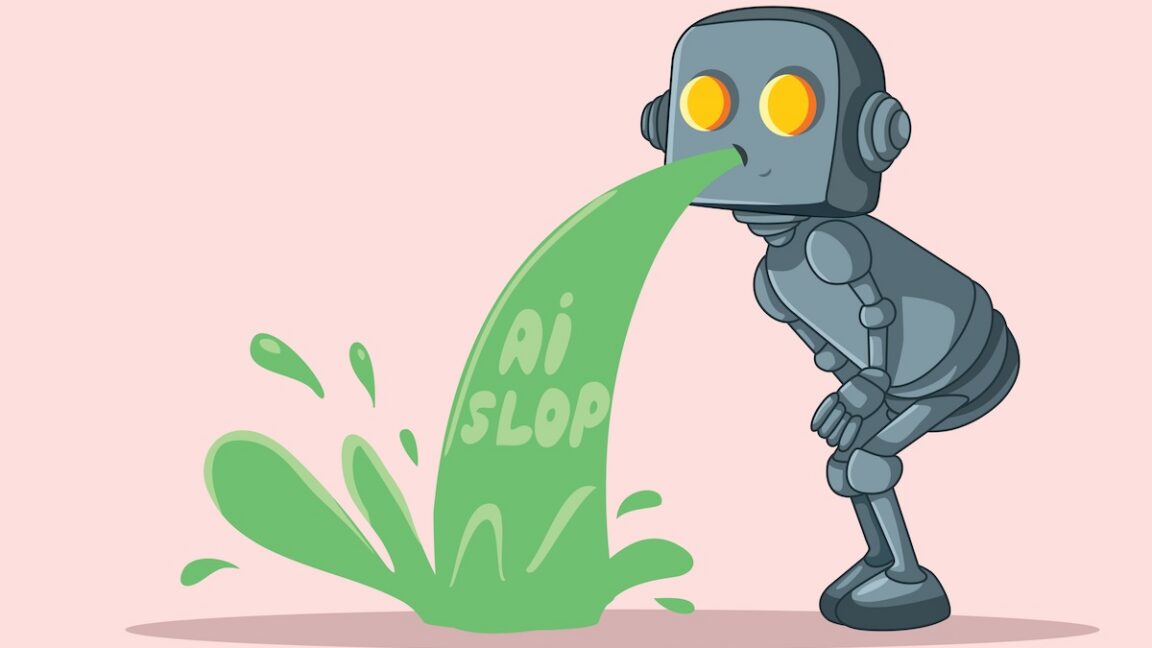
- arXiv imposes one-year ban for AI-generated content submissions
- Offenders must undergo peer review before future publications are hosted
- Rules target fake citations, unedited AI responses, and nonsensical diagrams
The physics and astronomy preprint server arXiv announced Thursday that submissions containing inappropriate AI-generated content will face a one-year ban and a permanent requirement for future publications to undergo peer review before being hosted. The move underscores growing concerns about the proliferation of AI slop—low-quality, unchecked AI output—contaminating academic literature before editors or reviewers even see it.
Thomas Dietterich, a prominent figure in the decision, outlined the policy on social media, emphasizing the server’s role in maintaining scientific integrity. The new rules apply to any submission where AI tools generate fake citations, unedited responses, or nonsensical diagrams without human oversight. ArXiv’s moderators will enforce the ban retroactively, meaning existing accounts linked to such submissions could face penalties.
Why arXiv is cracking down on AI slop now
AI-generated content has increasingly infiltrated peer-reviewed journals, often slipping past editors and reviewers due to the sheer volume of submissions. Unlike peer-reviewed outlets, arXiv operates as a preprint server, meaning it hosts papers before they undergo formal review. This makes it particularly vulnerable to AI slop, which can flood the platform with misleading or low-quality material. The new policy is an attempt to stem the tide before peer review or journals even get involved.
The server’s administrators argue that unchecked AI output risks eroding trust in scientific communication. Fake citations and nonsensical diagrams not only waste reviewers’ time but also mislead other researchers building on flawed foundations. By imposing stricter rules, arXiv aims to protect the credibility of its repository and the fields it serves.
Peer review requirement targets repeat offenders
Under the new policy, offenders will face a one-year ban from submitting to arXiv and will be required to have all future publications peer-reviewed before being hosted. This dual penalty reflects the severity of the issue and the server’s commitment to upholding standards. The peer review requirement is a significant shift, as arXiv traditionally hosts papers without prior review, relying instead on moderators to filter out obvious issues.
The policy also signals a broader trend in academia, where institutions and journals are grappling with the rise of AI-generated content. Some journals have already begun retracting papers found to contain AI slop, while others are tightening their submission guidelines. ArXiv’s move could set a precedent for other preprint servers to follow.
Broader implications for scientific publishing
The crackdown on AI slop at arXiv reflects a growing recognition that AI tools, while powerful, require human oversight to ensure accuracy and reliability. The server’s decision highlights the challenges of moderating AI-generated content in a landscape where tools like large language models can produce convincing but incorrect outputs. It also raises questions about how other preprint servers and journals will adapt to this new reality.
For researchers, the policy serves as a reminder to scrutinize their work before submission, even when using AI assistance. The move could also accelerate the development of tools to detect AI-generated content, further complicating the process of publishing in scientific fields. Ultimately, arXiv’s policy is a step toward preserving the integrity of scientific communication in an era of AI proliferation.
What happens next remains unclear, but the server’s decision sends a strong message to the scientific community about the risks of unchecked AI use.
What You Need to Know
- Source: Ars Technica
- Published: May 15, 2026 at 18:25 UTC
- Category: Technology
- Topics: #arstechnica · #tech · #science · #biology · #genetics · #send
Read the Full Story
This is a curated summary. For the complete article, original data, quotes and full analysis:
All reporting rights belong to the respective author(s) at Ars Technica. GlobalBR News summarizes publicly available content to help readers discover the most relevant global news.
Curated by GlobalBR News · May 15, 2026
🇧🇷 Resumo em Português
O arXiv, uma das plataformas mais respeitadas para compartilhamento de artigos científicos, anunciou uma medida radical contra o chamado “AI slop” — conteúdo gerado por inteligência artificial sem supervisão humana adequada. A partir de agora, autores flagrados com trabalhos predominantemente automatizados serão suspensos por um ano, além de terem seus artigos submetidos a uma revisão adicional por pares, um processo que já é padrão na comunidade científica.
A decisão surge em um momento crítico para a ciência brasileira e global, onde o uso de ferramentas como IA generativa se popularizou rapidamente, mas também abriu espaço para a disseminação de informações duvidosas ou até fraudulentas. No Brasil, universidades e pesquisadores estão cada vez mais dependentes de plataformas como o arXiv para divulgar estudos, o que torna essencial garantir a integridade do conteúdo publicado. A nova política reforça a necessidade de transparência e responsabilidade na produção científica, especialmente em um cenário onde a automação pode distorcer a avaliação por pares.
Com isso, o arXiv assume um papel de liderança no combate à má conduta acadêmica, pressionando outras plataformas a seguirem o exemplo. Resta saber como a comunidade científica brasileira e internacional irá se adaptar a essas mudanças e quais serão os próximos passos para manter a credibilidade da produção científica em tempos de IA.
🇪🇸 Resumen en Español
La plataforma de preprints más influyente del mundo, arXiv, ha tomado medidas drásticas contra el contenido generado por inteligencia artificial, imponiendo una prohibición de un año para los autores reincidentes y reforzando los controles de revisión por pares.
Esta decisión llega en un momento en que el auge de herramientas como los modelos de lenguaje avanzado está inundando el ámbito académico con trabajos de dudosa calidad, conocidos coloquialmente como “slop”. Para los hispanohablantes, especialmente investigadores y estudiantes que publican en arXiv, la medida puede ser un alivio, ya que garantiza mayor rigor en las investigaciones compartidas. Sin embargo, también plantea desafíos, como la necesidad de verificar manualmente los contenidos antes de enviarlos, lo que podría ralentizar el proceso de publicación. La medida refleja una creciente preocupación por la integridad científica en la era digital.
Ars Technica
Read full article at Ars Technica →This post is a curated summary. All rights belong to the original author(s) and Ars Technica.
Was this article helpful?

Discussion