Unattended cremations save money but can leave families with painful memories and no closure, according to a grieving son.
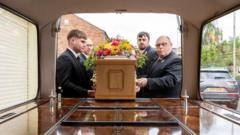
- Cost-cutting funerals left one man with lifelong regret and no chance to mourn properly
- Attended funerals cost thousands while unattended options start below £300
- Experts warn cheaper funerals may worsen grief for some families
Ed Cullen, 42, still struggles with the lack of a proper send-off for his mother, who died in April 2020 during the first COVID-19 lockdown. She opted for an unattended cremation arranged by a direct cremation provider, a service that skips visitation, hearse and ceremony. The cost was £295, a fraction of the £3,000 to £5,000 average for a traditional funeral in the UK. ‘It felt like she was just gone,’ Cullen said. ‘No one was there to mark the moment. No one even knew she was being cremated that day.’
How unattended funerals work
Unattended or direct cremations require no mourners present. The deceased is collected from a hospital or home, cremated and the ashes returned weeks later in a simple container. The trend surged during the pandemic when families were barred from funerals, but industry data shows demand remains high. The UK’s Cremation Society reports direct cremations now account for 1 in 5 funerals, up from 1 in 10 in 2019. Funeral directors say the appeal is clear: affordability.
Cullen’s mother chose the cheaper option after watching funeral prices climb. ‘She didn’t want to burden us,’ he said. ‘But I’d have paid anything to stand by her coffin, to hear people talk about her life. Now I just have a box of ashes with no story attached.’ Grief experts warn that skipping rituals can delay healing. ‘Rituals help us process loss,’ said Dr. Lucy Selman, a palliative care researcher at the University of Bristol. ‘When they’re removed, some people feel the loss was never fully acknowledged.’
The hidden cost of cheaper funerals
The funeral industry defends unattended cremations as a practical solution for tight budgets. ‘We’re seeing families who can’t afford a funeral at all,’ said Martin Smith, a director at Pure Cremation, one of the UK’s largest direct cremation providers. ‘This gives them dignity without debt.’ Smith noted that clients often cite financial stress as the primary reason, with some choosing unattended services over skipping meals or falling behind on rent. Funeral poverty charities confirm the trend. ‘We’re helping more people every year who can’t cover basic funeral costs,’ said Sue Ryder, chief executive of Quaker Social Action.
Yet the emotional toll can be steep. Cullen’s mother died of complications from Alzheimer’s, a disease that had slowly erased her memory. ‘I never got to hear her voice one last time, to tell her I loved her while she still knew me,’ he said. ‘The ashes are just a reminder of what I lost without a chance to say goodbye.’ Therapists say unresolved grief like Cullen’s can lead to long-term mental health issues, including depression and anxiety. ‘Grief needs a container,’ said Dr. Sally Higginbotham, a clinical psychologist specializing in bereavement. ‘A funeral provides that. Without it, the grief can feel endless.’
Alternatives gaining ground amid rising costs
Some families are turning to ‘life-centered funerals’—simple, attended ceremonies held at home, parks or beaches instead of crematoriums. These cost a few hundred pounds but include mourners and rituals. Others opt for ‘eco funerals’ with biodegradable coffins or woodland burials. The Natural Death Centre reports a 30% increase in woodland burial requests since 2020. ‘People want meaning, not just affordability,’ said Jenny Hockey, a sociologist studying death rituals.
Cullen now plans a memorial service for his mother next spring, more than three years after her death. ‘It’s too late for her, but maybe not for me,’ he said. ‘I need to do this for myself.’ Funeral directors say demand for delayed memorials is rising, as families seek closure years after a loss. ‘Grief doesn’t follow a timeline,’ said Smith. ‘People are realizing that.’
Experts urge families to weigh costs against emotional needs. ‘A funeral isn’t just a bill—it’s part of healing,’ said Selman. ‘If you can’t afford a traditional one, find a way to make it personal.’ Cullen agrees. ‘Money shouldn’t dictate how much we’re allowed to mourn.’
What You Need to Know
- Source: BBC News
- Published: May 15, 2026 at 05:24 UTC
- Category: Business
- Topics: #bbc · #business · #economy · #cullen · #unattended-cremation-costs-uk · #direct-cremation-vs-traditional-funeral
Read the Full Story
This is a curated summary. For the complete article, original data, quotes and full analysis:
All reporting rights belong to the respective author(s) at BBC News. GlobalBR News summarizes publicly available content to help readers discover the most relevant global news.
Curated by GlobalBR News · May 15, 2026
Related Articles
- Kevin O’Leary: Gen Z founders working 18-hour days make ‘no sense’
- Lawyers sanctioned $110K for fake AI citations in landmark Oregon case
- Taiwan arms sales top Trump-Xi talks agenda as Xi meet ends
🇧🇷 Resumo em Português
O Brasil enfrenta um aumento preocupante nos funerais não assistidos, uma prática que, embora reduza custos, deixa famílias mergulhadas em sofrimento prolongado e sem o devido encerramento emocional. Em meio à inflação dos serviços funerários e à dificuldade financeira de muitas famílias, a opção por cremações sem a presença de entes queridos tem se tornado uma realidade dolorosa para milhares de brasileiros, que arcam com o peso psicológico de não se despedirem adequadamente de seus familiares.
A recessão econômica e a alta dos preços dos serviços funerários — que subiram acima da inflação nos últimos anos — forçam muitas famílias a optar por alternativas mais baratas, como funerais sem velório ou assistência. Em um país onde a cultura de despedida ainda é fortemente marcada por rituais presenciais, a ausência desses momentos pode agravar quadros de luto e até mesmo gerar problemas de saúde mental, segundo especialistas. Além disso, a falta de regulamentação clara sobre esses serviços em algumas regiões do Brasil amplia o risco de exploração por parte de empresas pouco éticas, que oferecem pacotes duvidosos em nome da economia.
O desafio agora é encontrar um equilíbrio entre a necessidade de reduzir custos e a preservação do direito das famílias a um luto digno — uma discussão que deve envolver não apenas o poder público, mas também a sociedade civil.
🇪🇸 Resumen en Español
La creciente popularidad de los funerales sin asistencia, impulsados por el ahorro económico, está dejando a muchas familias con heridas emocionales difíciles de sanar. Casos como el de un hombre que optó por la cremación sin despedida de su madre para reducir costes revelan el lado oculto de una tendencia que prioriza el bolsillo sobre el duelo.
Esta práctica, extendida en países con tradiciones funerarias más modestas, refleja cómo la inflación y la crisis económica han redefinido los ritos de despedida. Para los hispanohablantes, acostumbrados a ceremonias con velatorios y velas que refuerzan los lazos familiares, la ausencia de estos rituales puede agravar el dolor y la sensación de abandono. Aunque el alivio financiero es comprensible, la falta de cierre emocional amenaza con convertir el ahorro en una carga adicional para los seres queridos.
BBC News
Read full article at BBC News →This post is a curated summary. All rights belong to the original author(s) and BBC News.
Was this article helpful?

Discussion