Russia and China expand lawfare in the Arctic to challenge Western claims and navigation rights.
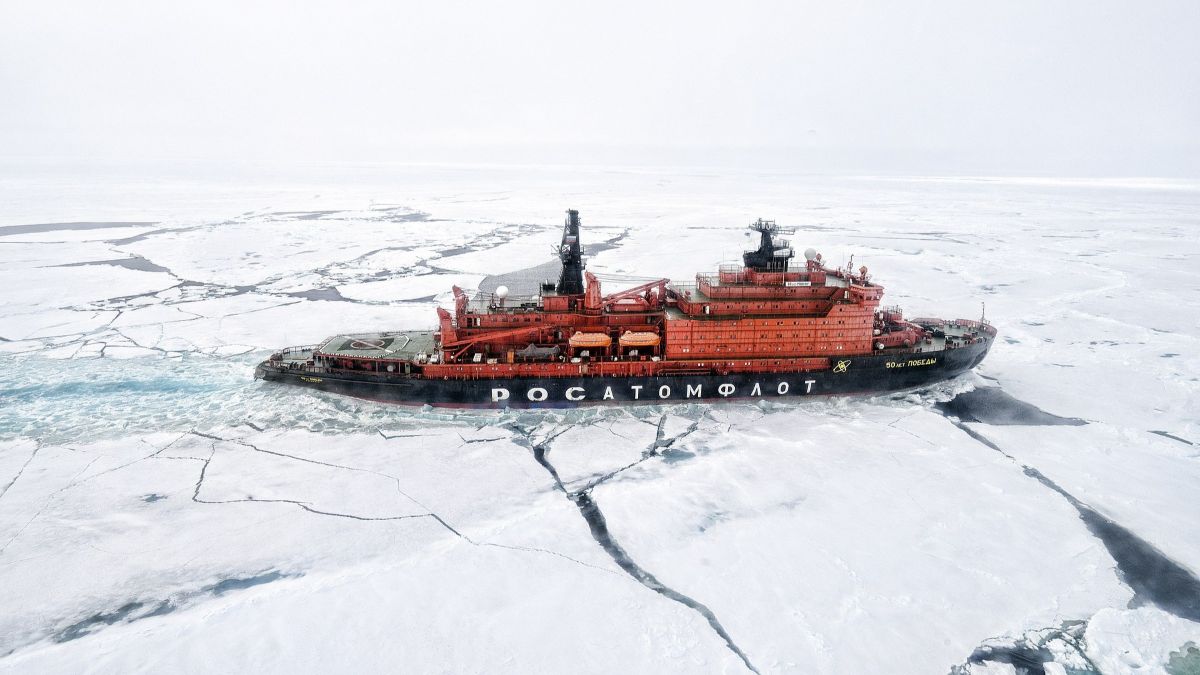
- Russia and China challenge Western Arctic claims through legal tactics
- Excessive maritime regulations restrict navigation freedom
- Shadow fleets help Russia avoid accountability for Arctic activities
Russia and China are increasingly using lawfare to assert dominance over Arctic waters, transforming a region once defined by cooperation into a contested geopolitical battleground. Their tactics—ranging from restrictive maritime regulations to coordinated legal challenges against Western continental shelf claims—mirror the confrontational strategies seen in the South China Sea, raising concerns among Arctic nations about growing instability. The Arctic, historically governed by multilateral agreements like the 1996 Ottawa Declaration, now faces a coordinated campaign by Moscow and Beijing to reshape the region’s legal and operational landscape in their favor.
Russia has taken the lead in this legal offensive, imposing sweeping maritime rules that critics argue exceed international standards. In 2020, Russia submitted an updated submission to the United Nations Commission on the Limits of the Continental Shelf (CLCS), staking expansive claims to Arctic seabed resources. These claims directly challenge those of the United States and other Western nations, including Canada and Norway, setting the stage for prolonged legal disputes. Meanwhile, China has positioned itself as a “near-Arctic state,” despite lacking territorial claims, and has filed objections to Western submissions under the UN Convention on the Law of the Sea (UNCLOS), amplifying Russia’s efforts.
The coordination between Russia and China extends beyond legal filings. Both nations have leveraged shadow fleets—unregulated vessels operating outside traditional maritime oversight—to conduct resource extraction and navigation exercises in disputed waters. These fleets, often operating under opaque ownership structures, complicate enforcement and accountability, allowing both countries to advance their strategic goals while evading scrutiny. Analysts warn that this dual approach of legal aggression and operational ambiguity could erode the rules-based order that has governed the Arctic for decades.
The United States, which has long prioritized freedom of navigation in Arctic waters, now faces a dilemma. While Washington has not ratified UNCLOS—a treaty Russia and China both support—the U.S. relies on the convention’s principles to challenge excessive maritime claims. American officials have publicly condemned Russia’s 2020 Arctic policy update, calling it an attempt to “legitimize” aggressive territorial assertions. Yet, the lack of a unified Western response has emboldened Moscow and Beijing, prompting concerns that the Arctic is becoming a flashpoint for great-power competition.
The South China Sea playbook
The Arctic’s shift toward confrontation echoes tactics long employed by China in the South China Sea, where Beijing has used excessive maritime claims and legal maneuvering to assert control over contested waters. Russia’s 2020 Arctic policy mirrors this playbook, framing the region as a sphere of exclusive influence. China, meanwhile, has expanded its presence through scientific expeditions and infrastructure investments in Arctic nations like Greenland and Iceland, framing its involvement as cooperative while quietly advancing its strategic interests.
Experts caution that the convergence of Russian and Chinese strategies could destabilize the Arctic Council, the primary intergovernmental forum for Arctic governance. The council, which operates by consensus, is increasingly paralyzed by geopolitical tensions, with Russia’s 2024 suspension of participation further complicating cooperation. Analysts argue that without a coordinated Western response, the Arctic may soon resemble other contested maritime regions, where legal ambiguity and military posturing replace diplomacy.
What happens next
The coming years will determine whether the Arctic remains a zone of peace or becomes another theater of great-power rivalry. Western nations, including the U.S. and its NATO allies, are weighing options to counter Russia and China’s legal and operational strategies. Potential measures include increased naval patrols, diplomatic pressure to enforce UNCLOS compliance, and support for Arctic indigenous groups to bolster their territorial claims. However, the absence of a unified Arctic policy among Western nations risks leaving the region vulnerable to further encroachment by Moscow and Beijing. For now, the Arctic’s future hangs in the balance, with lawfare serving as the newest weapon in a growing arsenal.
What You Need to Know
- Source: War on the Rocks
- Published: May 12, 2026 at 07:30 UTC
- Category: War
- Topics: #defense · #military · #geopolitics · #war · #conflict · #problem
Read the Full Story
This is a curated summary. For the complete article, original data, quotes and full analysis:
All reporting rights belong to the respective author(s) at War on the Rocks. GlobalBR News summarizes publicly available content to help readers discover the most relevant global news.
Curated by GlobalBR News · May 12, 2026
Related Articles
- South Korea’s 500,000 Drone Warriors Will Be a Hollow Force
- Restrain and Hedge: A New U.S. Nuclear Strategy for a Two-Peer World
🇧🇷 Resumo em Português
O avanço silencioso, mas estratégico, da Rússia e da China no Ártico está redefinindo as regras de um território até então dominado por potências ocidentais, e o Brasil não pode ignorar os desdobramentos dessa nova batalha jurídica e geopolítica. Com embarcações e recursos naturais cada vez mais cobiçados, Moscou e Pequim têm recorrido a táticas de lawfare—uso de leis e regulamentações internacionais para pressionar seus interesses—, minando a soberania de países como Canadá, Dinamarca e Noruega, e criando um precedente perigoso para a governança global em regiões polares. A estratégia não apenas desafia a autoridade da Convenção das Nações Unidas sobre o Direito do Mar (CNUDM), como também ameaça a segurança da navegação em rotas antes consideradas estáveis, como a Passagem do Nordeste.
No contexto brasileiro, que mantém interesses indiretos no Ártico—seja por meio de acordos científicos, cooperação energética ou até mesmo pela defesa de rotas comerciais futuras—, a escalada da lawfare russa e chinesa soa como um alerta. O país, tradicionalmente alinhado a posições multilaterais, enfrenta agora o risco de ver suas próprias demandas por soberania em águas territoriais—como as das Ilhas Malvinas/Falklands—afetadas por precedentes criados no extremo norte do planeta. Além disso, a crescente militarização do Ártico, com bases russas e projetos chineses de infraestrutura, pode reconfigurar o equilíbrio de poder em uma região que, embora remota, é vital para o comércio global. A recente decisão da Corte Internacional de Justiça de rejeitar pedidos chineses no mar da China Meridional serve como um lembrete de que o direito internacional pode ser uma arma de dois gumes.
O próximo passo dessa disputa promete intensificar-se em 2025, quando a Rússia assumirá a presidência do Conselho do Ártico, um fórum que reúne oito nações e organizações indígenas, mas que agora enfrenta uma crise de legitimidade diante das ambições expansionistas de Moscou. Enquanto isso, a China, que já se autointitula “Estado quase Ártico”, deve acelerar seus investimentos em portos e pesquisas científicas na região, testando os limites da cooperação internacional. Para o Brasil, a lição é clara: em um mundo onde a lei vira arma e o gelo vira estratégia, a diplomacia precisa ser tão ágil quanto o degelo do Ártico.
🇪🇸 Resumen en Español
El uso de estrategias legales como arma geopolítica en el Ártico marca un giro peligroso en la lucha por el control de una región clave para el futuro energético y militar del planeta. Moscú y Pekín han intensificado una campaña de lawfare mediante regulaciones marítimas abusivas y recursos legales coordinados para erosionar las pretensiones occidentales sobre aguas estratégicas, poniendo en jaque la libertad de navegación y los intereses de aliados como Estados Unidos y la Unión Europea.
Este pulso jurídico refleja una ofensiva calculada para redefinir el marco legal del Ártico, donde Rusia ya ha expandido sus reclamaciones territoriales bajo el argumento de la plataforma continental, mientras China —a pesar de no ser un Estado ribereño— insiste en su estatus de “near-Arctic state” para justificar su participación en la explotación de recursos. Para los hispanohablantes, la relevancia radica en que el Ártico no es solo un escenario remoto: su deshielo abre rutas comerciales alternativas (como el Paso del Noreste) que podrían alterar el comercio global, y su riqueza en gas y minerales amenaza con reconfigurar los equilibrios energéticos que afectan a economías como la española. Además, la militarización de la zona, con bases rusas y ejercicios chinos, subraya cómo el derecho se ha convertido en un campo de batalla más, donde la ambigüedad legal puede servir para imponer hechos consumados.
War on the Rocks
Read full article at War on the Rocks →This post is a curated summary. All rights belong to the original author(s) and War on the Rocks.
Was this article helpful?


Discussion