U.S. Air Force MQ-9 Reaper drones now fire laser-guided APKWS rockets, including air-to-air variants, after successful Nevada tests.
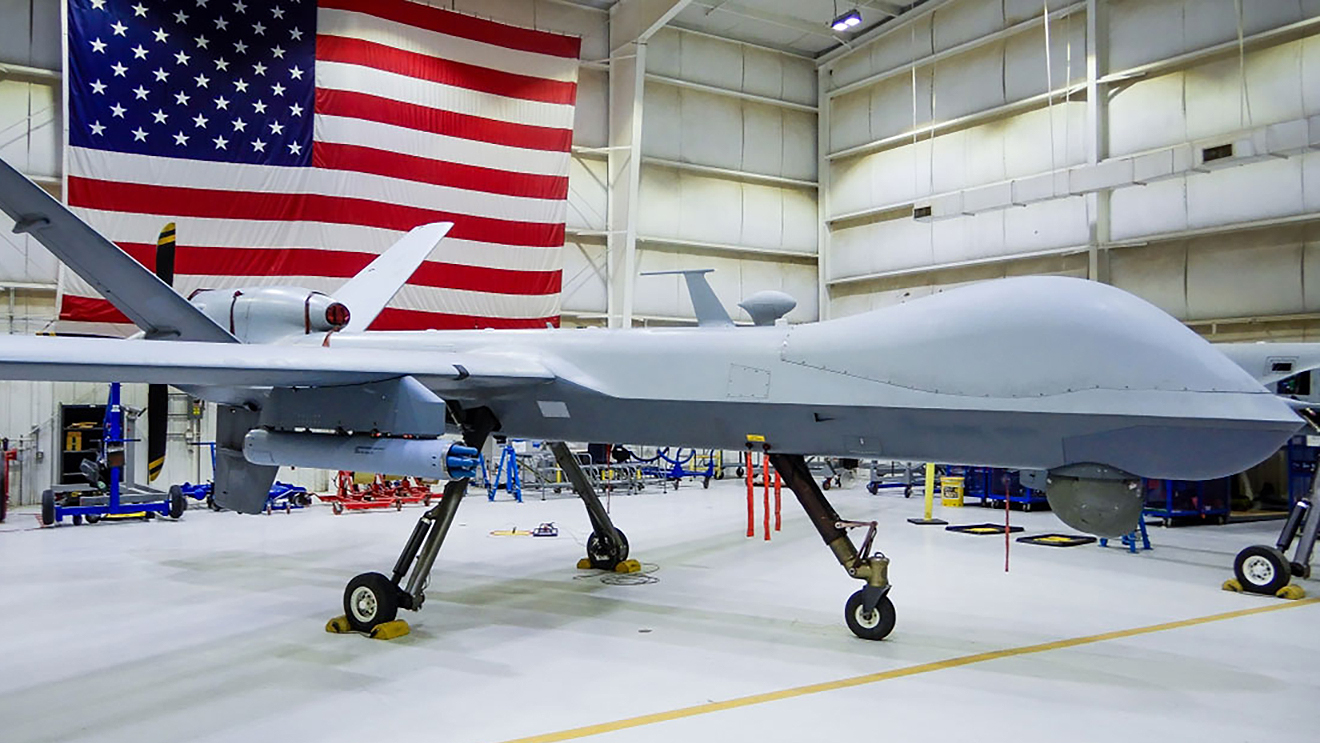
- MQ-9 Reaper drones now fire laser-guided APKWS rockets in U.S. Air Force tests
- Tests included both ground and aerial targets in Nevada
- APKWS rockets expand MQ-9’s strike capabilities against drones
The U.S. Air Force has conducted flight tests of an MQ-9A Reaper drone armed with laser-guided Advanced Precision Kill Weapon System (APKWS) rockets, marking a significant expansion of the drone’s combat capabilities. The tests, confirmed by manufacturer General Atomics Aeronautical Systems, Inc. (GA-ASI) General Atomics, were carried out at the Nevada Test and Training Range. The trials demonstrated the MQ-9’s ability to fire APKWS rockets in both standard air-to-ground attacks and against aerial targets, including drones.
MQ-9 Reaper adds air-to-air capability with APKWS
The MQ-9 Reaper, a medium-altitude, long-endurance unmanned aerial vehicle (UAV), has long been used for strike missions against ground targets. However, the recent tests introduce a new air-to-air capability, allowing the drone to engage aerial threats directly. This development is particularly relevant amid growing concerns over small, uncrewed aircraft systems (UAS) posing risks to military operations. The APKWS, a 70mm laser-guided rocket, has been adapted for this role, offering a cost-effective alternative to missiles for intercepting drones.
The Nevada tests followed GA-ASI’s announcement that it had modified an Air Force MQ-9A to carry the APKWS in both configurations. The air-to-air optimized variant of the rocket enables the Reaper to engage slower-moving, low-flying targets, such as reconnaissance drones or commercial quadcopters repurposed for hostile use. This capability aligns with the U.S. military’s increasing focus on counter-unmanned aircraft systems (C-UAS) operations.
Expanding drone strike options amid rising drone threats
The MQ-9 Reaper is already a workhorse in U.S. counterterrorism and surveillance missions, with over 300 deployed worldwide. Its ability to carry a variety of weapons, including Hellfire missiles and guided bombs, has made it a cornerstone of America’s drone fleet. The addition of APKWS rockets, however, provides a lighter, more flexible option for engagements requiring precision without the overkill of larger munitions.
Military analysts note that the shift toward counter-drone operations reflects broader trends in modern warfare, where adversaries increasingly rely on small, cheap drones for surveillance and strikes. The MQ-9’s new APKWS capability could prove valuable in conflicts where drone swarms or loitering munitions pose significant threats. The tests come as the U.S. and its allies continue to develop countermeasures against these emerging challenges.
GA-ASI has not disclosed whether the APKWS integration will enter full-scale production or deployment. However, the successful tests suggest that the capability could soon be operational, pending further evaluations. The company has also emphasized the modular nature of the APKWS system, which can be rapidly swapped between configurations depending on mission requirements.
The broader implications of this development extend beyond the MQ-9. If proven effective, the APKWS air-to-air variant could be integrated into other U.S. drones, such as the MQ-1C Gray Eagle or even smaller platforms like the RQ-7 Shadow. Such adaptations would enhance the military’s ability to neutralize drone threats at a fraction of the cost of traditional air-to-air missiles.
Military officials have not commented on whether the APKWS-equipped MQ-9 will be deployed operationally in the near term. However, the successful tests underscore the Pentagon’s ongoing efforts to adapt existing platforms to meet evolving threats in an era dominated by drone warfare.
What You Need to Know
- Source: The Drive
- Published: May 11, 2026 at 21:59 UTC
- Category: War
- Topics: #military · #weapons · #conflict · #war · #reaper-fires-laser · #guided-rockets
Read the Full Story
This is a curated summary. For the complete article, original data, quotes and full analysis:
All reporting rights belong to the respective author(s) at The Drive. GlobalBR News summarizes publicly available content to help readers discover the most relevant global news.
Curated by GlobalBR News · May 11, 2026
Related Articles
- Wembanyama’s Spurs reach Western finals, Pistons stay alive in NBA playoffs
- 🎉 250 Articles in War!
- 🎉 100 Articles in War!
🇧🇷 Resumo em Português
O Exército estadunidense acaba de dar um passo decisivo rumo ao futuro da guerra assimétrica: os drones MQ-9 Reaper, já conhecidos por suas missões de reconhecimento e ataques com mísseis Hellfire, agora testam o lançamento de foguetes APKWS guiados por laser, uma inovação que promete transformar a capacidade de combate aéreo com precisão cirúrgica e menor risco para as tripulações. A demonstração, conduzida pela Força Aérea dos EUA, marca uma evolução tecnológica que redefine o papel dos veículos aéreos não tripulados (VANTs) em cenários de conflito, ampliando seu espectro de atuação contra alvos tanto terrestres quanto aéreos.
O desenvolvimento chega em um momento crucial para o Brasil, que, embora não possua sistemas como o MQ-9, tem investido em modernização de suas forças armadas e na integração de tecnologias de defesa para proteger fronteiras e interesses estratégicos, como a Amazônia e o pré-sal. A adoção de armamentos guiados por laser — mais baratos e adaptáveis do que mísseis de longo alcance — poderia inspirar ou pressionar o mercado de defesa brasileiro a buscar soluções similares, especialmente diante de ameaças cada vez mais diversificadas, como drones inimigos ou grupos irregulares armados. Além disso, o avanço reforça a tendência global de substituição de aeronaves tripuladas por sistemas autônomos em missões de alto risco, um debate que já permeia a estratégia militar brasileira.
Enquanto os EUA ampliam o leque de operações para seus Reaper, a pergunta que fica é: até quando o Brasil, que recentemente adquiriu drones israelenses e desenvolve projetos como o Falcão, resistirá à pressão por atualizar sua doutrina de emprego de VANTs com armas de precisão?
🇪🇸 Resumen en Español
La Fuerza Aérea de Estados Unidos ha dado un paso crucial en la modernización de sus drones de combate al probar con éxito el lanzamiento de cohetes APKWS guiados por láser desde un MQ-9 Reaper, una capacidad que amplía su versatilidad en operaciones contra blancos terrestres y aéreos.
Este avance tecnológico refuerza la posición de Washington en el escenario de defensa global, especialmente en un contexto donde los conflictos asimétricos y las amenazas híbridas exigen mayor precisión y menor riesgo para las tripulaciones. Para los países hispanohablantes, la proliferación de estas armas plantea desafíos estratégicos, desde la necesidad de invertir en sistemas antiaéreos efectivos hasta la reevaluación de alianzas militares en un entorno donde la superioridad tecnológica puede inclinar la balanza en futuras crisis.
The Drive
Read full article at The Drive →This post is a curated summary. All rights belong to the original author(s) and The Drive.
Was this article helpful?



Discussion